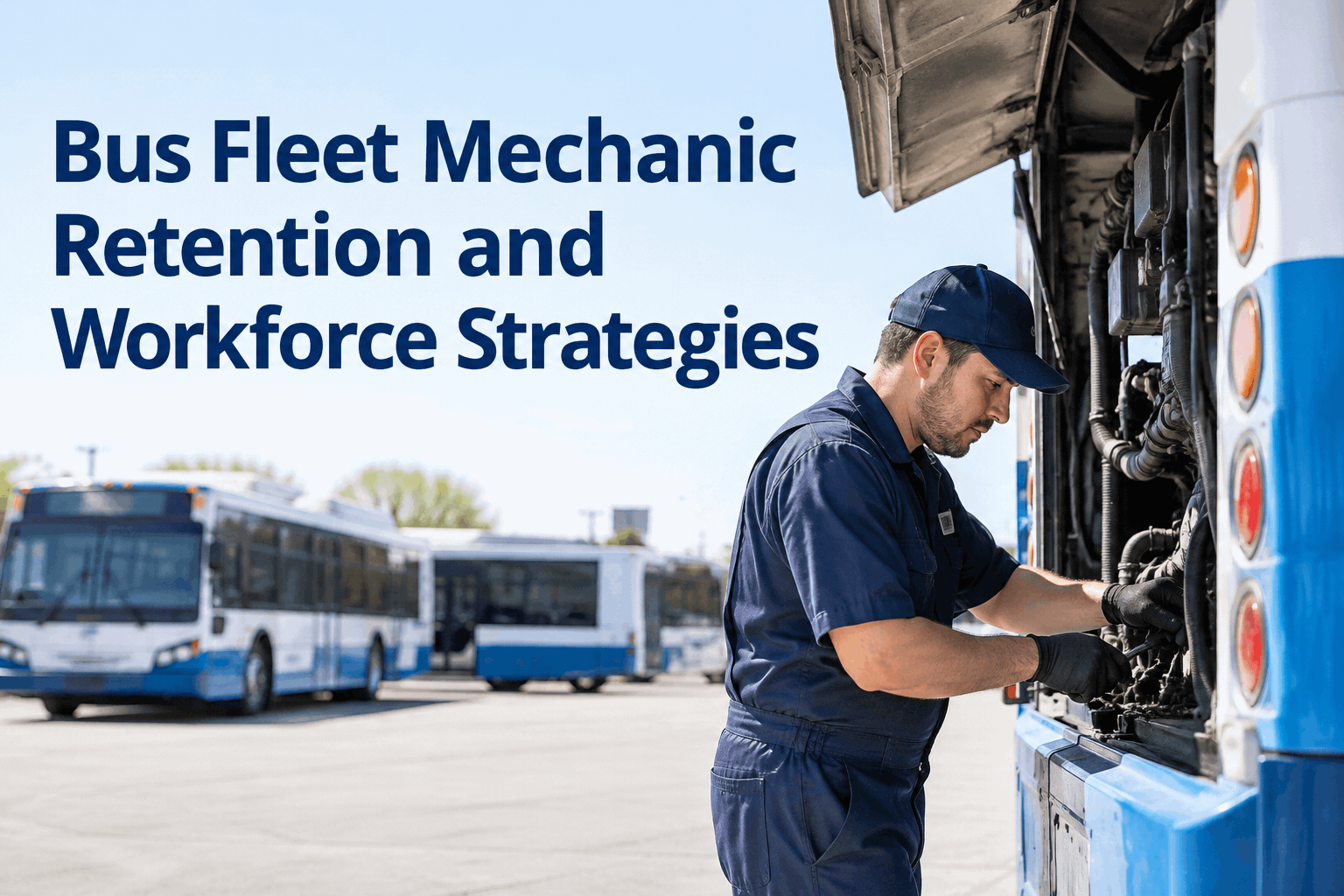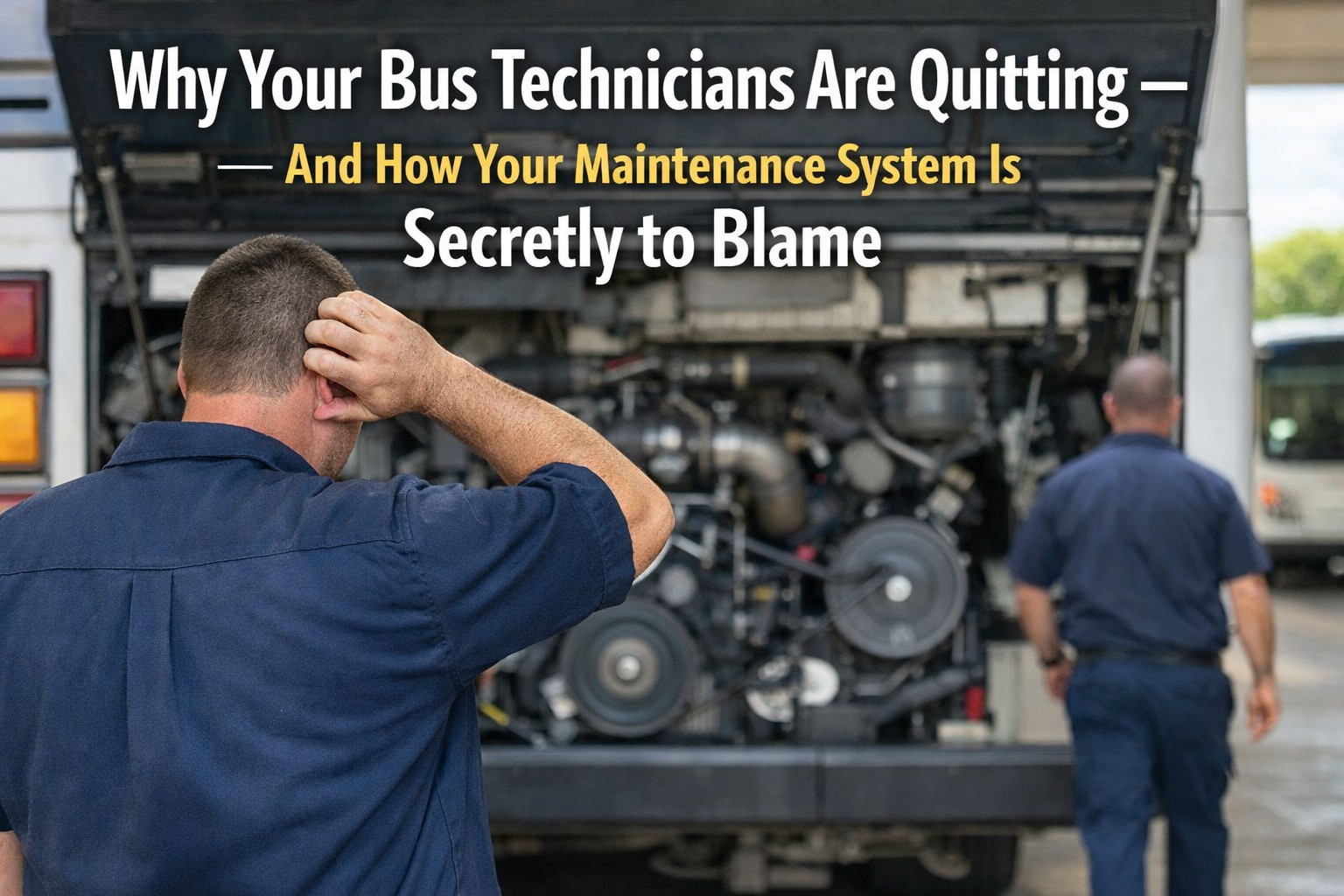
Your best technician just gave two weeks' notice. You're surprised—they seemed fine. But here's what you didn't see: the 20 minutes they spent hunting for yesterday's work order that somehow vanished. The brake job they repeated because nobody documented what actually fixed it last time. The parts run that wasted an hour because inventory was "somewhere." With 65.5% of diesel shops understaffed and 42% of new technicians leaving within two years, the real question isn't why they're quitting—it's why you think compensation is the problem.
The 6 Daily Frustrations Driving Techs Out
Post-exit interviews reveal a pattern. It's not the big things—it's the daily grind of fighting systems that should help them but don't.
Every frustration traces back to broken maintenance systems—not broken technicians. Sign up for BusCMMS to eliminate the daily frustrations driving your techs out the door.
What the Exit Data Actually Shows
ATRI surveyed thousands of diesel technicians. The reasons they leave aren't what most fleet managers assume.
Only 21% of technicians would recommend the industry to a friend. That's a system problem, not a people problem. Book a demo to see how BusCMMS makes technician work visible.
The True Cost of Each Technician You Lose
Replacement costs go far beyond the job posting. Here's what one departure actually costs your operation.
At 16.5% annual turnover, a 10-technician shop loses 1-2 techs per year. That's $30,000-$50,000 annually in pure replacement costs—before counting the repairs that didn't happen. Sign up now and start capturing institutional knowledge before it walks out.
Expert Review: Paper vs. Digital Technician Experience
The maintenance system shapes every minute of your technician's day. Here's how paper-based shops compare to CMMS-equipped operations.
Shops with streamlined work order systems see 25% lower operational costs and 20% higher productivity. The math is clear: better systems = happier techs = lower turnover. Book a demo to see the mobile technician experience.
Frequently Asked Questions
What's the real cost of losing a bus technician?
Research shows replacing a skilled technician costs between $15,000-$25,000 when you include recruiting ($3,000-$6,500), training to proficiency ($8,200-$15,000), and lost productivity during ramp-up ($12,000-$20,000). Additionally, undocumented institutional knowledge walks out the door—the vehicle quirks, proven fixes, and supplier relationships that took years to build. At 16.5% annual turnover, a 10-tech shop can lose $30,000-$50,000 yearly in pure replacement costs.
Why do bus technicians quit if not for pay?
ATRI research shows compensation ranks fifth among reasons technicians leave. The top drivers are feeling undervalued (88% report considering leaving), poor management communication (72%), limited advancement clarity (65%), and inadequate tools/systems (58%). Technicians want their work to be visible, their expertise recognized, and their daily frustrations minimized. Paper-based systems fail on all three counts.
How does a CMMS improve technician retention?
A well-implemented CMMS eliminates the daily frustrations that drive technicians out. Work orders arrive automatically on mobile devices—no hunting. Repair history is two clicks away—no repeating diagnostic work. Parts inventory shows real availability—no wasted trips. Every completed job is tracked and visible to leadership—recognition happens. Shops with streamlined digital systems report turnover rates around 8% versus 18%+ in understaffed, paper-based operations.
What percentage of diesel shops are understaffed?
According to ATRI's 2025 research, 65.5% of diesel shops are understaffed, with an average of 19.3% of positions unfilled. The industry requires nearly 1 million new technicians between 2024-2028 (per TechForce Foundation), but technical schools graduate only about 50,000 annually. This supply-demand gap makes retention critical—every tech you keep is one you don't have to recruit from an empty pipeline.
How long does it take new technicians to become fully productive?
ATRI data shows untrained new hires require an average of 357 hours of on-the-job training before reaching proficiency—that's 9+ weeks at full-time hours. Even formally trained technicians need 172 hours (~4 weeks). During this ramp-up period, productivity runs 40-60% below experienced levels. A CMMS with documented procedures, repair histories, and guided workflows can accelerate this timeline by 20-30%, getting new hires productive faster while reducing strain on veteran techs doing the training.