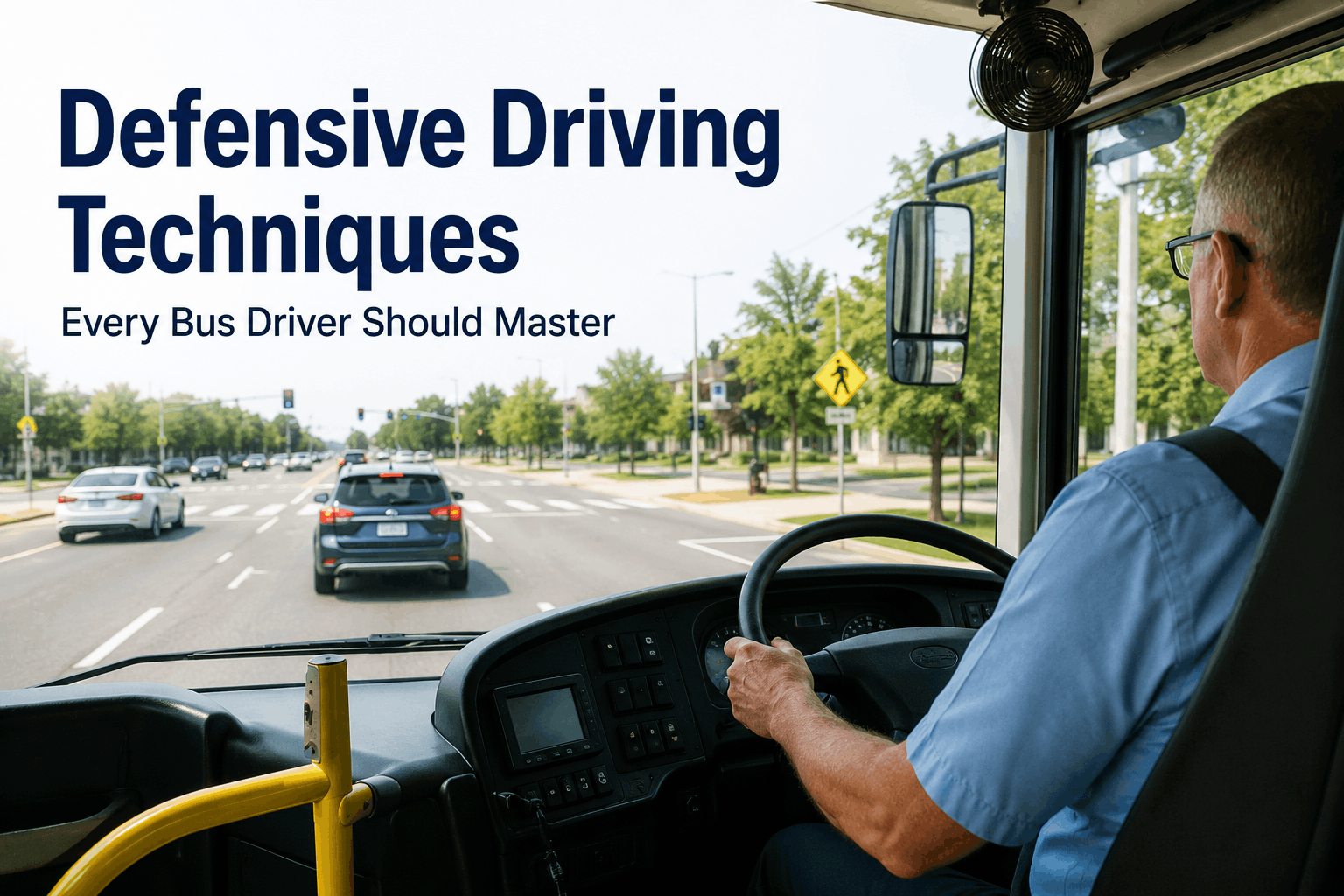
For professional bus drivers, defensive driving is not just a skill, it is a life-saving responsibility. Every day, American bus drivers navigate crowded urban streets, rural highways, school zones, and unpredictable weather conditions while carrying precious cargo, students, transit passengers, or travelers. The difference between a safe trip and a catastrophic accident often comes down to split-second decisions rooted in proven defensive driving techniques. This comprehensive guide presents the essential defensive driving skills every bus driver should master, from hazard recognition and space management to intersection safety and distracted driving avoidance. Implement these techniques across your driver training program to reduce accidents, lower insurance costs, protect passengers, and build a culture of safety excellence in your American transit operation.
Defensive Driving Techniques Every Bus Driver Should Master
Reduce accidents and insurance costs with proven defensive driving techniques for bus drivers, covering hazard spotting, space management, and more for American transit operations.
Why Defensive Driving Matters for Bus Operators
Buses present unique defensive driving challenges compared to passenger vehicles. Their size creates massive blind spots, their weight requires longer stopping distances, their length demands wider turning radius, and their passenger load means higher stakes in any collision. According to FMCSA data, bus-involved accidents cost American transit agencies an average of $85,000 per non-fatal incident and exceed $1 million for fatal crashes. Insurance premiums for fleets with poor safety records can be 30 to 50 percent higher than industry average. Defensive driving techniques directly reduce accident frequency, lower claim costs, and protect your fleet's reputation.
The Smith System: Five Keys to Defensive Driving
The Smith System is the most widely taught defensive driving framework for commercial drivers in the United States. These five principles form the foundation of professional bus driving safety.
Aim High in Steering
Look 15 to 20 seconds ahead, not just at the vehicle in front. This gives you time to spot hazards early and plan smooth reactions for American bus drivers.
Get the Big Picture
Constantly scan mirrors and check blind spots. Know what is happening in all directions around your bus, not just what is ahead.
Keep Your Eyes Moving
Do not fixate on any single object. Scan mirrors, instruments, ahead, and sides continuously to stay aware of changing conditions.
Leave Yourself an Out
Maintain escape routes in all directions. Position your bus so you have space to maneuver if another driver makes a dangerous move.
Make Sure They See You
Use signals early, make eye contact at intersections, and position your bus visibly. Never assume other drivers see your bus.
Essential Defensive Driving Techniques for Bus Drivers
Beyond the Smith System, these specific techniques address the unique challenges of operating large buses in American traffic environments.
Technique 1: Maintain Safe Following Distance
Use the 4 to 6 second rule in good conditions, 8 to 10 seconds in rain or snow. Buses need 40 percent longer stopping distance than cars.
Technique 2: Scan Intersections Before Entering
Look left, center, right, and left again before proceeding through any intersection. Assume cross traffic may run red lights.
Technique 3: Manage Blind Spots Actively
Check mirrors every 5 to 8 seconds. Be aware of the no-zone directly behind and alongside the bus where cars can disappear.
Technique 4: Brake Early and Smoothly
Apply brakes gently and early to alert following traffic. Sudden stops increase rear-end collision risk for American bus drivers.
Technique 5: Use Turnouts for Traffic
If you are holding up traffic on a two-lane road, use designated turnouts to let following vehicles pass safely.
Technique 6: Anticipate Door and Pedestrian Hazards
Expect passengers to run for the bus, children to dart into streets, and pedestrians to behave unpredictably near bus stops.
Hazard Recognition and Response
The ability to recognize developing hazards before they become emergencies separates expert bus drivers from novices. These common hazards require immediate defensive responses.
Space Management for Large Buses
Managing the space around a bus requires constant attention to six zones: front, rear, left side, right side, and both front corners. Effective space management prevents collisions and reduces driver stress.
Maintain 4-6 Second Following Distance
Count seconds from when the vehicle ahead passes a fixed object until you pass it. Increase to 8-10 seconds in poor weather for American bus drivers.
Monitor Following Traffic
Tap brakes gently to alert tailgaters. Increase following distance ahead to give yourself more reaction time if rear-ended.
Avoid Blind Spot Positions
Never linger alongside another vehicle. Either pass or drop back so they can see your bus in their mirrors.
Take Wide Turns Safely
Move toward center line before right turns to prevent rear wheels from mounting curb. Check mirrors for cyclists.
Managing Distractions Behind the Wheel
Distracted driving is a leading cause of bus accidents across the United States. Professional drivers must eliminate all non-driving activities while operating a bus.
Prohibited Activities
Zero Tolerance
Handheld phone use, texting, eating, drinking, adjusting GPS, reading, personal grooming, and headphone use while driving.
Permitted Only When Parked
Safe Stopping Required
Radio adjustments, climate controls, two-way radio communication, and passenger assistance should wait until safely stopped.
Mental Distractions
Focus Required
Worrying about personal issues, route anxiety, fatigue, and stress all reduce reaction time for American bus drivers.
Weather and Road Condition Adaptation
American bus drivers face diverse weather conditions across different regions. Adjusting driving techniques to conditions is essential for safety.
Our transit agency had 27 preventable accidents in 2024, costing over $2 million in claims and lost service time. We implemented a comprehensive defensive driving training program based on the Smith System and these specific bus techniques. Every driver completed 8 hours of classroom training plus on-road coaching. Within 12 months, preventable accidents dropped to 9 incidents, a 67 percent reduction. Our insurance carrier reduced our premium by 22 percent. The most important change was driver attitude, our team now takes pride in their defensive driving skills and actively coaches each other. Every American bus operator should prioritize defensive driving training as their highest safety investment.
Frequently Asked Questions About Defensive Driving for Bus Drivers
What is the recommended following distance for buses in seconds?
American bus drivers should maintain 4 to 6 seconds in good conditions and 8 to 10 seconds in rain, snow, or fog for safe stopping distance.
How often should bus drivers check their mirrors?
Professional bus drivers should scan mirrors every 5 to 8 seconds, with more frequent checks when changing lanes or in heavy traffic.
What is the most common cause of bus accidents?
Rear-end collisions caused by following too closely and intersection accidents from failure to scan are the most common bus accidents in America.
How do you handle a tire blowout on a bus?
Grip steering wheel firmly, do not brake suddenly, ease off accelerator, and coast to a controlled stop on the shoulder.
What should a bus driver do when brake failure occurs?
Use engine braking, apply parking brake gradually, steer to a safe area like an uphill ramp or runaway truck ramp if available.
How does fatigue affect defensive driving ability?
Fatigue reduces reaction time by 50 percent, impairs hazard recognition, and is comparable to drunk driving for American commercial drivers.
What is the proper way to turn a bus at an intersection?
Signal early, move toward center line for right turns, check mirrors for cyclists, and take the turn slowly to prevent rear wheel curbing.
How can bus drivers manage aggressive drivers safely?
Do not engage, let aggressive drivers pass, avoid eye contact, and report aggressive drivers to dispatch if safety is threatened.
Master Defensive Driving Across Your Bus Fleet
Reduce accidents by 40 to 60 percent with proven defensive driving training. Join 500+ American transit agencies using BusCMMS to track driver performance and safety metrics.