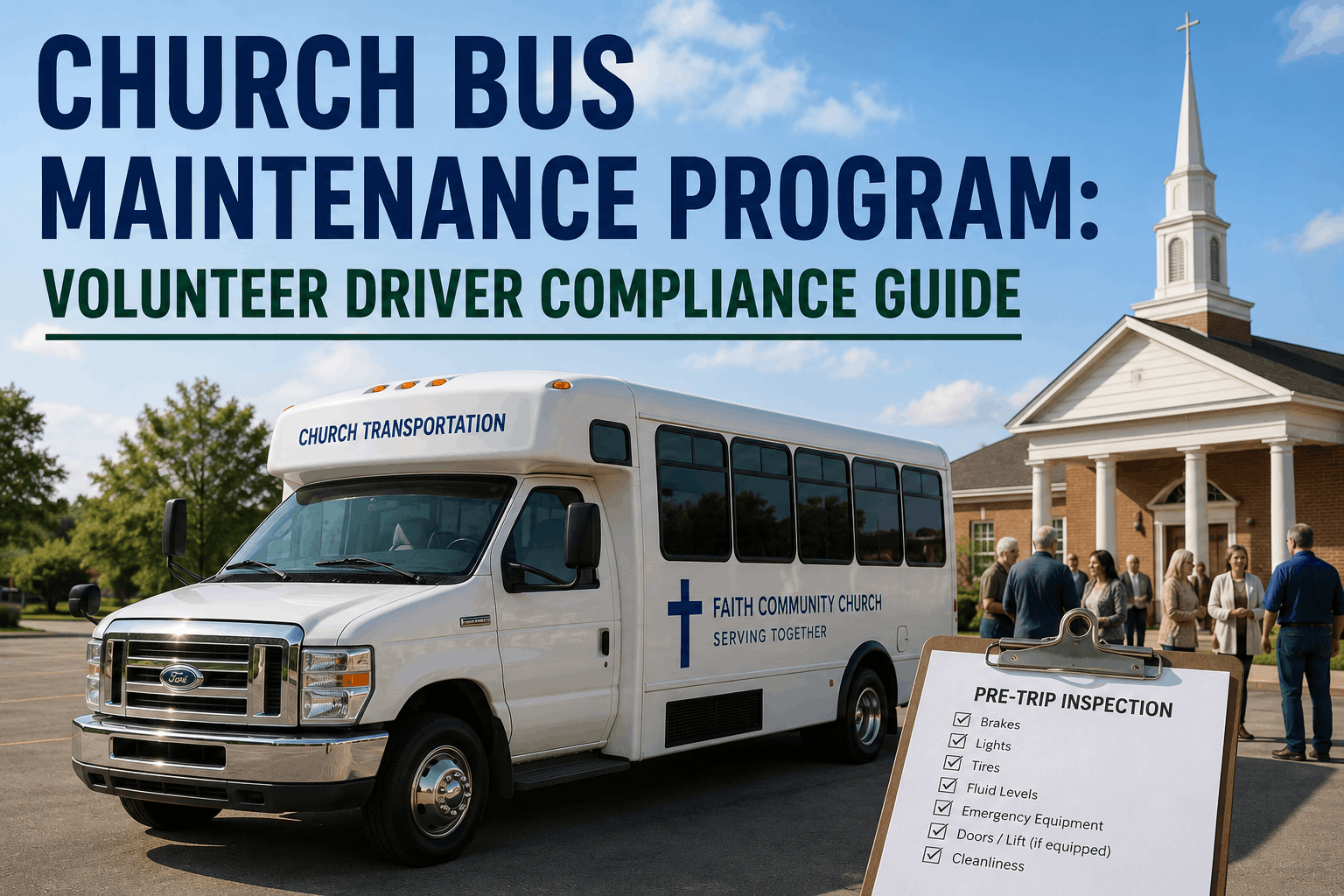
Church bus and van ministries provide essential transportation for congregations, youth groups, seniors, and community outreach programs. However, operating a church bus program with volunteer drivers introduces a complex set of compliance and safety considerations that differ significantly from commercial carrier operations. This church bus maintenance program guide addresses the critical intersection of FMCSR applicability, CDL exemption requirements, volunteer driver qualifications, insurance considerations, pre-trip inspection protocols, and preventive maintenance scheduling. Churches that implement structured maintenance and driver compliance programs protect their congregations, volunteers, and ministries while maintaining the operational reliability needed for effective community outreach.
Build a Safe and Compliant Church Bus Program
BusCMSS helps churches and ministries manage vehicle maintenance, volunteer driver records, and inspection protocols — ensuring safety, compliance, and operational reliability.
Understanding FMCSR Applicability to Church Bus Operations
The Federal Motor Carrier Safety Regulations (FMCSR) apply to church bus operations based on vehicle weight, passenger capacity, and whether the operation is interstate or intrastate. Many churches operate under exemptions that may eliminate CDL requirements or certain FMCSR provisions, but these exemptions do not remove the fundamental responsibility for safe vehicle operation and maintenance. Understanding the specific regulations that apply to church bus programs is essential for developing appropriate maintenance and driver compliance protocols.
CDL Exemption for Religious Organizations
FMCSA provides specific exemptions that may allow church bus drivers to operate without a CDL under certain conditions. These exemptions require that the vehicle is used for non-commercial religious purposes and that drivers are volunteers. Understanding the exemption requirements is critical for compliance.
FMCSR Applicability by Vehicle Weight
Vehicles with a gross vehicle weight rating (GVWR) of 10,000 pounds or less may be subject to fewer FMCSR requirements. However, larger church buses often exceed this threshold and require full compliance with safety regulations and maintenance standards.
Interstate vs. Intrastate Operations
Church buses that cross state lines are subject to federal FMCSR requirements. Intrastate operations may be subject to state-specific regulations. Churches must determine which regulations apply to their specific routes and service areas.
Volunteer Driver Qualifications and Training
Volunteer drivers must meet qualification standards including valid licenses, driving record reviews, and training on vehicle operation and safety procedures. Churches should implement consistent qualification and training programs for all volunteers.
Insurance and Liability Considerations
Church bus programs require appropriate insurance coverage that addresses liability, passenger safety, and volunteer driver coverage. Insurance requirements often exceed standard auto policies and should be reviewed regularly with an experienced provider.
Vehicle Maintenance and Inspection Standards
Regardless of regulatory exemptions, church buses must maintain safe operating condition through regular inspections and preventive maintenance. Establishing formal maintenance programs protects passengers, volunteers, and the ministry itself.
Church Bus Maintenance Program: Essential Components
An effective church bus maintenance program combines preventive maintenance scheduling, driver inspection protocols, recordkeeping, and compliance documentation. The following components represent the essential elements of a comprehensive church bus and van maintenance program.
Volunteer Driver Pre-Trip Inspection Protocol
Safety Foundation
Train volunteer drivers to conduct thorough pre-trip inspections before each departure. Provide simplified inspection checklists covering brakes, tires, lights, steering, and emergency equipment. Require documentation of each inspection and immediate reporting of any safety concerns to the designated maintenance coordinator.
Inspection Points
Brakes, tires, lights, emergency exits
Training Need
Driver inspection checklist usage
Documentation
Digital or paper inspection logs
Scheduled Preventive Maintenance Intervals
Vehicle Reliability
Establish PM intervals based on mileage or calendar schedules — typically every 5,000 miles or 6 months for oil and filter changes, and annual comprehensive vehicle inspections. Churches should maintain records of all maintenance activities and schedule services during low-usage periods to minimize service disruptions.
Interval
5,000 miles or 6 months
Key Tasks
Oil, filters, brake inspection, tire rotation
Documentation
Maintenance records, receipts
Volunteer Driver Qualification File Management
Driver Compliance
Maintain qualification files for each volunteer driver including valid driver's license, annual MVR review, training completion records, and medical certification if required. Review qualification files annually and verify credentials prior to any scheduled driver assignment.
Documentation
License, MVR, training records
Review Frequency
Annual qualification review
Best Practice
Automated expiration alerts
Emergency Equipment and Safety Systems Check
Passenger Safety
Conduct monthly inspections of emergency equipment including fire extinguishers, first aid kits, emergency exits, and seat belts. Replace expired or depleted items immediately and document all inspections and replacements.
Equipment
Fire extinguishers, first aid, emergency exits
Inspection Frequency
Monthly
Documentation
Equipment inspection log
Insurance and Liability Coverage Review
Risk Management
Review insurance coverage annually to ensure adequate liability limits, volunteer driver coverage, and passenger protection. Confirm that coverage meets church and ministry requirements and is updated to reflect fleet additions or operational changes.
Coverage Areas
Liability, volunteer drivers, passenger
Review Frequency
Annual insurance review
Documentation
Insurance certificates, policy documents
Annual Vehicle Safety Inspection and Certification
Regulatory Readiness
Schedule an annual comprehensive vehicle inspection by a certified mechanic. The inspection should cover all safety systems, chassis, drivetrain, and passenger area. Address all identified deficiencies immediately and maintain inspection records for review.
Inspection Scope
All safety systems, chassis, passenger area
Timing
Annual inspection
Documentation
Inspection report, repair records
Common Church Bus Fleet Issues: Visual Overview
Based on church bus and van ministry data, the following chart illustrates the most frequent issues affecting church-operated vehicles. Understanding these problem areas helps ministry leaders prioritize maintenance resources and implement preventive measures.
Brake System Issues (Insufficient maintenance)
67%
Tire Wear and Pressure Issues
58%
Battery and Electrical Failures
46%
Fluid Leaks (Oil, coolant, transmission)
39%
Suspension and Steering Wear
31%
Volunteer Driver Management and Compliance Matrix
Effective volunteer driver management requires consistent tracking of qualifications, training, and compliance documentation. The following table summarizes key driver management requirements for church bus and van programs.
| Driver Requirement | Documentation Needed | Review Frequency | Common Gap | Best Practice |
|---|---|---|---|---|
| Valid Driver's License | Copy of current license | Annual renewal | Expired or outdated license | Automated expiration alerts |
| MVR Review | Motor vehicle record report | Annual | Insufficient driving record review | Annual MVR verification |
| Training and Orientation | Training completion records | Upon hire, annually | Inconsistent training delivery | Standardized orientation program |
| Medical Certification | Medical card (if required) | Bi-annual or as required | Expired medical certification | Medical certification tracking |
| Pre-Trip Inspection | Inspection logs | Before each trip | Inconsistent inspection completion | Digital inspection checklists |
How BusCMSS Supports Church Bus Maintenance Programs
BusCMSS provides churches and ministries with the tools to manage vehicle maintenance, volunteer driver records, and inspection protocols in a single, accessible platform. The system automates PM scheduling, tracks volunteer driver qualifications, and maintains complete maintenance records for each vehicle. By centralizing church bus operations data, BusCMSS helps ministries maintain safety compliance, protect volunteers, and ensure reliable transportation for their congregations.
Vehicle Maintenance Tracking
BusCMSS tracks PM schedules, repair history, and inspection records for each church bus and van — ensuring reliable vehicle operation and safety compliance.
Volunteer Driver File Management
BusCMSS maintains volunteer driver qualification files, tracks license expiration, and stores training records — providing audit-ready driver documentation.
Digital Inspection Checkpoints
BusCMSS provides digital pre-trip inspection checklists that volunteer drivers can complete on mobile devices — ensuring consistent and complete vehicle inspections.
Compliance and Reporting
BusCMSS generates vehicle maintenance reports, driver qualification summaries, and inspection histories — supporting insurance reviews and ministry accountability.
Church Bus Maintenance Program: Implementation Steps
Audit Existing Church Bus Program
Review current vehicles, maintenance records, driver qualifications, and insurance coverage. Identify gaps in compliance and safety protocols requiring immediate attention.
Develop Maintenance Program and Standards
Establish PM intervals, inspection protocols, and maintenance documentation procedures. Define roles and responsibilities for maintenance coordination and driver oversight.
Implement Digital Vehicle and Driver Tracking
Deploy BusCMSS to centralize vehicle records, PM schedules, driver qualification files, and inspection documentation — enabling efficient program management.
Train Volunteer Drivers on Inspection and Safety
Provide training on pre-trip inspection procedures, safety protocols, and incident reporting. Ensure drivers understand the importance of documentation and compliance.
Establish Annual Review and Improvement Process
Schedule annual program reviews that include vehicle condition assessments, driver qualification updates, and insurance coverage verification. Use BusCMSS data to identify improvement opportunities.
Maintain Communications with Ministry Leaders
Provide regular updates to church leadership on program status, maintenance needs, and compliance activities. Use BusCMSS reports to demonstrate program effectiveness and resource requirements. Book Demo to see BusCMSS's church bus management tools.
Frequently Asked Questions
Do church bus drivers need a CDL?
In many cases, church bus drivers may be exempt from CDL requirements if the vehicle is used for non-commercial religious purposes and the driver is a volunteer. However, exemptions vary by vehicle weight, passenger capacity, and state regulations. Churches should verify applicable regulations and document the basis for any exemption.
What FMCSR requirements apply to church bus operations?
FMCSR applicability depends on vehicle weight, passenger capacity, and interstate operation. Vehicles with a GVWR over 10,000 pounds that operate interstate may be subject to full FMCSR requirements. Churches should consult with transportation compliance professionals to determine specific regulatory obligations.
How often should church buses be inspected?
Church buses should be inspected before each trip by the volunteer driver and undergo comprehensive preventive maintenance at least annually. Additional inspections should occur after any significant service or repair event, and before extended trips or seasonal usage increases.
Can BusCMSS help manage volunteer driver records?
Yes, BusCMSS maintains volunteer driver qualification files including license verification, MVR records, training documentation, and medical certification — with automated alerts for expiring credentials that need renewal.
What insurance coverage should church bus programs have?
Church bus programs should carry commercial auto liability insurance with adequate coverage limits, volunteer driver coverage, and passenger protection. Some policies may also include umbrella liability coverage for added protection. Insurance should be reviewed annually and updated to reflect fleet and operational changes.
Keep Your Church Bus Program Safe and Compliant
BusCMSS helps churches and ministries manage vehicle maintenance, volunteer driver records, and inspection protocols — ensuring safety, compliance, and operational reliability for your congregation.