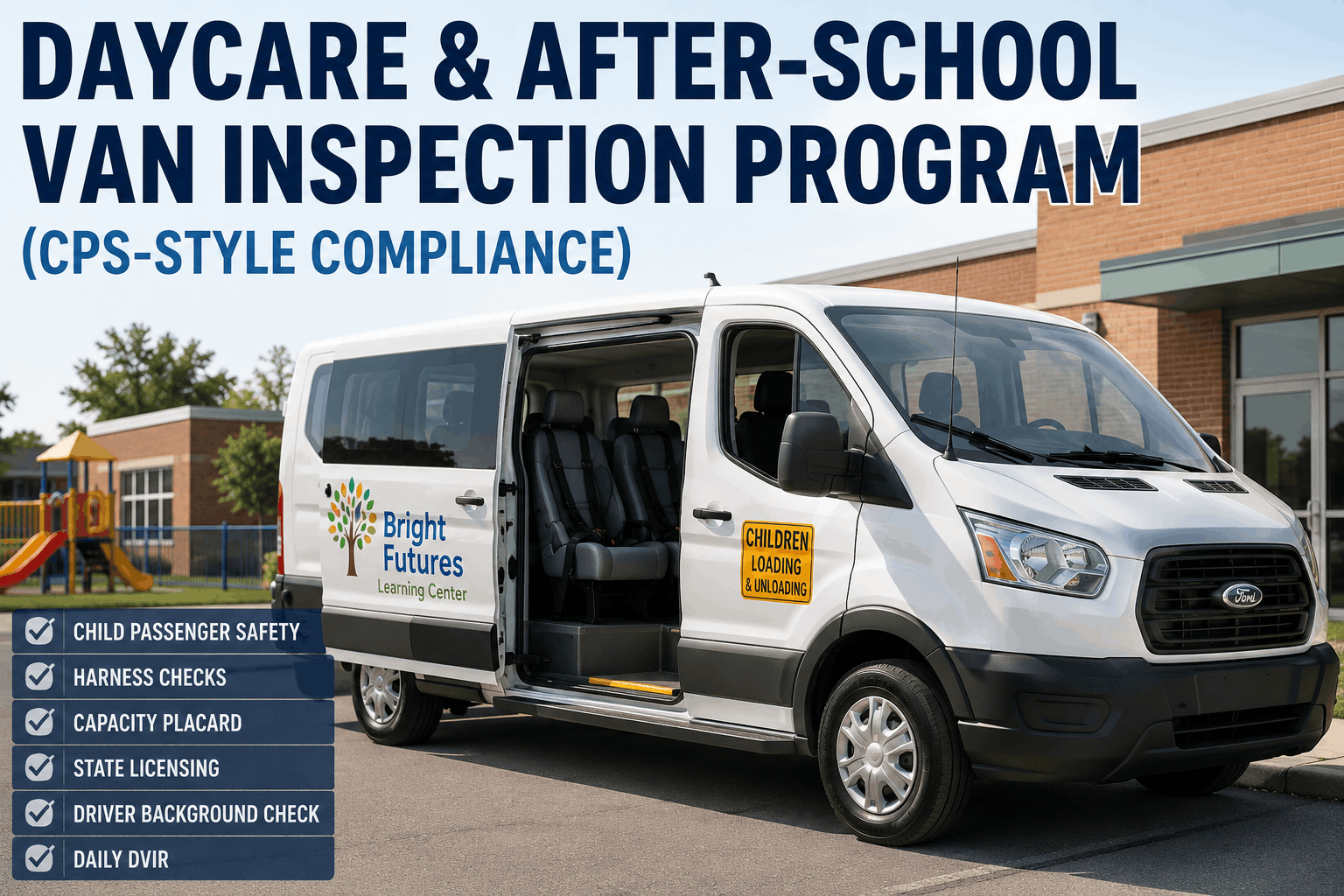
Daycare centers, after-school programs, and child care facilities that provide transportation services face a unique set of safety and compliance requirements that go beyond standard motor vehicle regulations. Child passenger safety, harness and car seat checks, capacity placarding, state licensing requirements, driver background checks, and daily vehicle inspection reports (DVIR) are essential components of a comprehensive van inspection program. This daycare and after-school van inspection program guide provides child care providers with a structured approach to vehicle safety compliance that protects children, satisfies state licensing requirements, and builds parent confidence. Programs that implement consistent inspection and safety protocols demonstrate their commitment to child well-being and reduce the risk of incidents that could jeopardize their license or reputation.
Build a Child-Safe Van Inspection Program
BusCMSS helps daycare and after-school programs manage vehicle inspections, child safety seat tracking, driver qualifications, and licensing compliance — keeping children safe on every trip.
Core Components of a Daycare Van Inspection Program
A comprehensive daycare and after-school van inspection program must address both vehicle safety and child passenger protection. The program should include daily pre-trip inspections, child safety seat and harness checks, capacity verification, driver qualification monitoring, and state licensing compliance documentation. Each component contributes to a safety system that protects children and satisfies regulatory requirements.
Child Passenger Safety and Harness Systems
Inspect all child safety seats, booster seats, and harness systems before each trip. Verify that seats are appropriate for each child's age, weight, and height. Ensure proper installation and secure fastening of all restraint systems.
Daily Vehicle Inspection Reports (DVIR)
Drivers must complete pre-trip and post-trip DVIR inspections documenting vehicle condition, safety equipment, and any defects. Digital inspection checklists ensure consistency and provide a permanent record for licensing audits.
Capacity Placarding and Child Counting
Display the vehicle's passenger capacity prominently and verify that the number of children and staff does not exceed the rated capacity. Implement child counting procedures at pickup and drop-off to prevent any child from being left unattended.
State Licensing and Regulatory Compliance
Daycare van programs must comply with state child care licensing regulations that specify vehicle requirements, driver qualifications, inspection frequency, and safety equipment standards. Maintain complete documentation for licensing inspections.
Driver Background and Qualification Checks
All van drivers must undergo criminal background checks, driving record reviews, and child safety training. Maintain current qualification files for each driver with documentation of all required checks and training.
Emergency Equipment and Communication
Equip each van with emergency equipment including first aid kits, fire extinguishers, emergency contact information, and two-way communication devices. Inspect emergency equipment monthly and replace expired items immediately.
Daycare Van Inspection Checklist: Essential Items
This comprehensive van inspection checklist covers all critical safety items that daycare and after-school program vans require. Each item should be verified before the vehicle departs for any trip with children aboard.
Child Safety Seat and Harness Inspection
Passenger Protection
Verify that each child safety seat is appropriate for the child's age, weight, and height. Check that all harness straps are in good condition, secure, and properly adjusted. Confirm that car seats are installed correctly and tightly secured to the vehicle seat. Replace any seats that show wear, damage, or have been involved in a collision.
Inspection Points
Seat age, harness condition, installation
Frequency
Pre-trip daily
Documentation
Safety seat checklist
Vehicle Brake and Tire Condition
Mechanical Safety
Inspect brake function, brake pedal feel, and parking brake operation. Check tire pressure and tread depth on all tires, including the spare. Look for any cuts, bulges, or uneven wear patterns that could indicate alignment or suspension issues.
Inspection Points
Brake function, tire pressure, tread depth
Frequency
Pre-trip daily
Documentation
Brake and tire log
Lights, Signals, and Mirrors
Visibility Systems
Verify that all exterior lights including headlights, taillights, turn signals, brake lights, and hazard flashers are operational. Check that all mirrors are clean, properly adjusted, and free from cracks or damage. Ensure that interior lights are functional for child supervision during evening trips.
Inspection Points
Lights, mirrors, signal function
Frequency
Pre-trip daily
Documentation
Light and signal checklist
Emergency Equipment and Communication
Emergency Readiness
Inspect first aid kit for completeness and expiration dates. Verify fire extinguisher gauge is in the green zone and not expired. Check that two-way communication devices are operational and fully charged. Ensure emergency contact cards and pickup authorization documents are present.
Inspection Points
First aid, fire extinguisher, communications
Frequency
Weekly
Documentation
Emergency equipment log
Fluids, Belts, and Hoses
Vehicle Health
Check engine oil, coolant, transmission fluid, brake fluid, and windshield washer fluid levels. Inspect belts for wear or cracking. Examine hoses for leaks, bulges, or brittleness. Address any fluid leaks promptly to prevent breakdowns and maintain safe vehicle operation.
Inspection Points
Fluid levels, belts, hoses
Frequency
Weekly
Documentation
Fluid and belt log
Child Counting and Capacity Verification
Child Accountability
Implement a child counting system that includes headcounts at pickup, during transport, and at drop-off. Verify that the number of children plus staff does not exceed the vehicle's rated passenger capacity. Use child name checklists and maintain transport logs for accountability.
Inspection Points
Headcount, capacity, name check
Frequency
Each trip
Documentation
Transport log, headcount records
Common Daycare Van Safety Issues: Visual Overview
Based on data from child care transportation safety programs, the following chart illustrates the most frequent safety issues identified in daycare and after-school van inspections. Understanding these common issues helps programs target their inspection and training efforts effectively.
Improper Child Safety Seat Installation
78%
Tire Pressure and Tread Issues
62%
Expired or Missing Emergency Equipment
54%
Incomplete DVIR Documentation
47%
Brake System Wear
38%
State Licensing Compliance and Documentation Matrix
Daycare van programs must comply with state-specific child care licensing requirements. The following matrix summarizes the typical documentation and compliance items required for daycare van programs across most states.
| Compliance Area | Documentation Required | Inspection Frequency | Common Deficiency | Best Practice |
|---|---|---|---|---|
| Vehicle Safety Inspection | Annual inspection certificate, DVIR logs | Annual + daily DVIR | Missing or outdated inspection | Digital inspection tracking |
| Child Safety Seats | Seat age, condition, installation records | Pre-trip daily | Expired or damaged seats | Regular seat rotation and replacement |
| Driver Background Checks | Criminal background, MVR, references | Upon hire and annually | Outdated background checks | Automated renewal alerts |
| Driver Training | Child safety, CPR, first aid, driver training | Upon hire and annually | Incomplete training records | Standardized training curriculum |
| Emergency Preparedness | Emergency plan, drills, equipment checks | Monthly and annually | Missing emergency equipment | Monthly equipment audits |
Staff Training and Parent Communication Requirements
An effective daycare van program requires ongoing staff training and clear parent communication. Staff must be trained in child passenger safety, vehicle inspection procedures, emergency response, and child accountability protocols. Parents should receive clear information about transportation policies, safety procedures, and how to prepare their children for van transport.
Child Passenger Safety Technician Training
Designate staff members trained as child passenger safety technicians who can verify correct car seat installation and educate other staff on child safety seat best practices.
Driver Safety and Inspection Training
Provide comprehensive training on pre-trip inspection procedures, vehicle safety systems, and DVIR documentation. Include hands-on practice with inspection checklists.
Emergency Response and Evacuation Drills
Conduct regular emergency evacuation drills with staff and children. Practice rapid unloading from the van in a safe location and review emergency communication procedures.
Parent Transportation Policy Communication
Provide parents with clear written policies on van safety, pick-up and drop-off procedures, child seat requirements, and emergency protocols. Maintain signed acknowledgment forms.
How BusCMSS Supports Daycare Van Inspection Programs
BusCMSS provides daycare and after-school programs with the tools to manage van inspections, child safety seat tracking, driver qualifications, and licensing compliance documentation. The system centralizes vehicle records, digital inspection checklists, and compliance documentation in one accessible platform. By using BusCMSS, child care providers can demonstrate their commitment to safety during licensing inspections and build parent confidence in their transportation program.
Daycare Van Safety Program: Implementation Steps
Audit Current Van Fleet and Safety Program
Review all vans, safety equipment, driver qualifications, and inspection procedures. Identify gaps in compliance with state licensing requirements and child passenger safety standards.
Develop Comprehensive Inspection Checklists
Create detailed pre-trip and post-trip inspection checklists that cover vehicle safety systems, child safety seats, emergency equipment, and child accountability procedures.
Implement Digital Inspection Tracking
Deploy BusCMSS to digitize van inspection documentation, track maintenance history, and maintain complete records for licensing audits and parent transparency.
Train Staff on Safety and Inspection Protocols
Provide comprehensive training for all staff involved in child transportation, covering inspection procedures, child safety seat use, emergency response, and child accountability.
Establish Regular Safety Review Process
Schedule monthly safety reviews that include vehicle inspections, equipment checks, and incident reviews. Use BusCMSS data to identify trends and improvement opportunities.
Communicate Safety Program to Parents
Share your van safety program details with parents, including inspection procedures, driver qualifications, and safety equipment. Build trust through transparency and accountability. Book Demo to see BusCMSS's daycare van management tools.
Frequently Asked Questions
What is the difference between a daycare van and a school bus?
Daycare vans are typically smaller vehicles (15-passenger or less) used for child care transportation and are regulated by state child care licensing agencies. School buses are larger vehicles regulated by state education departments with specific safety and inspection requirements.
Do daycare van drivers need special licenses?
License requirements vary by state and vehicle size. Most states require a standard driver's license with passenger endorsement for vans under 15 passengers. However, some states may require a commercial driver's license for larger vehicles. Check your state's child care licensing requirements.
How often should child safety seats be replaced?
Child safety seats typically have an expiration date 6-10 years from manufacture. Seats should also be replaced after any collision or if they show signs of wear, damage, or deterioration. Check expiration labels on all seats regularly.
Can BusCMSS help with daycare van compliance documentation?
Yes, BusCMSS provides digital inspection checklists, maintenance tracking, and driver qualification documentation — all organized for easy access during licensing inspections and parent inquiries.
What should be in a daycare van emergency kit?
An emergency kit should include a first aid kit, fire extinguisher, emergency contact cards, child-specific medical information, blankets, water, flashlights, and a two-way communication device. Inspect the kit monthly and replace expired items.
Keep Children Safe with a Complete Van Inspection Program
BusCMSS helps daycare and after-school programs manage van inspections, child safety seats, driver qualifications, and licensing compliance — ensuring safe, reliable transportation for every child.