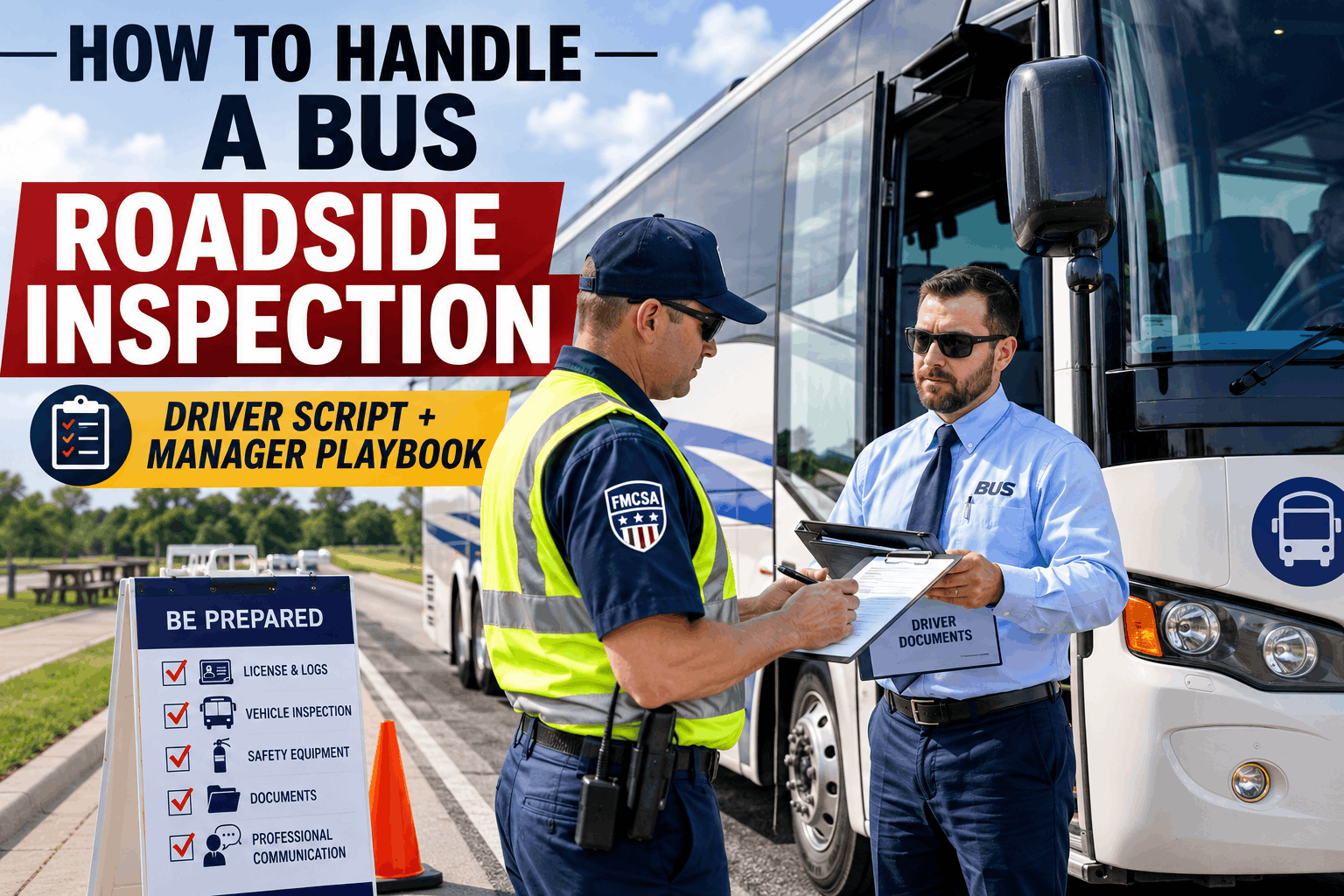
A roadside inspection can happen to any bus at any time. How your driver responds and how your team manages the aftermath determines whether a minor stop becomes a major violation. This guide gives drivers a script to follow and managers a complete playbook for handling inspections, protecting your CSA score, and challenging unfair violations through DataQs.
How to Handle a Bus Roadside Inspection 2026 (Driver Script + Manager Playbook)
How to Handle a Bus Roadside Inspection (Driver Script + Manager Playbook)
Driver script + manager playbook for bus roadside inspections. What to say, what to show, common gotchas, post-inspection DataQs and CSA score protection.
The High Cost of a Mishandled Roadside Inspection
A single failed roadside inspection can increase your CSA scores, trigger FMCSA interventions, and raise insurance premiums by thousands of dollars annually. Training drivers and managers turns a stressful event into a routine process that protects your safety record.
85%
Pass rate with trained drivers
$3,200+
Average fine per OOS violation
60%
Reduction in violations after training
48 Hours
Window to challenge via DataQs
Roadside Inspection Playbook: Step-by-Step Process
1
Prepare Vehicle & Driver Kit
Ensure all documents, permits, and pre-trip inspection reports are current and accessible before every trip.
2
Driver Script During Stop
Driver uses a calm, cooperative script; presents documents promptly and answers only what is asked.
3
Post-Inspection Documentation
Manager immediately collects inspection report, photos, and driver statement within one hour of the stop.
4
Violation Review & DataQs
Evaluate any violations for accuracy. File DataQs challenge within 48 hours with supporting evidence.
5
Trend Monitoring & Prevention
Track all inspections in BusCMMS, analyze violation patterns, and adjust training and PM schedules.
Driver Script: 5 Things to Say (and 5 to Avoid)
Stay Polite and Professional
Always
"Good morning, Officer. Here are my documents. Let me know what you need." Courteous tone sets a cooperative atmosphere.
Present Documents Promptly
Immediate Action
Have CDL, medical card, registration, and insurance ready. Never make the inspector wait or search.
Answer Only What Is Asked
Keep It Simple
If asked about trip details, provide concise, factual answers. Do not volunteer extra information or admit fault.
Ask to See the Violation
If Cited
"Could you show me the specific issue so I can document it for my maintenance team?" Never argue; gather evidence.
Contact Dispatch Immediately
After Release
Call your manager before leaving the scene to relay what happened and share photos or notes while fresh.
Common Roadside Violations by Category
Brake system defects lead all roadside violation categories at 38%, followed by lighting at 28%. Comprehensive pre-trip inspections and consistent PM programs eliminate the majority of these before the stop occurs.
Inspection Pass Rate Improvement After Training
Implementing the driver script and manager playbook lifts clean inspection pass rates from a baseline of 55% to over 90% annually, directly reducing violations and protecting your CSA BASIC scores.
5 KPIs to Monitor Roadside Inspection Performance
Track these metrics monthly to ensure your playbook is delivering measurable improvements:
Clean Inspection Rate
Target: Above 90%. Percentage of inspections with zero violations.
Average Violations per Inspection
Target: Under 1.0. Dropping trend indicates better vehicle and driver readiness.
Out-of-Service Rate
Target: Below 2%. Immediate grounding for critical defects; must be minimized.
DataQs Challenge Win Rate
Target: Over 70%. Percentage of challenges resulting in violation removal or downgrade.
CSA Score Change
Target: Stable or improving. Monitor Vehicle Maintenance BASIC percentile monthly.
Roadside Inspection Readiness Pass/Fail Checklist
Driver Document Kit
Pass: CDL, medical card, registration, insurance, and daily pre-trip report in a single accessible folder.
Fail: Expired medical card or missing insurance card causes immediate violation.
Vehicle Pre-Trip Discipline
Pass: All defects documented and repaired before dispatch; nothing left to chance.
Fail: Known issues ignored or pencil-whipped on inspection forms.
Driver Demeanor Training
Pass: Driver has practiced the script and remains calm, cooperative, and professional.
Fail: Arguing, refusing requests, or volunteering unnecessary information.
Post-Inspection Protocol
Pass: Manager notified within 5 minutes, report and photos uploaded to BusCMMS.
Fail: Driver discards report or waits days to notify, preventing timely DataQs challenge.
DataQs Management
Pass: All violations reviewed within 24 hours; challenges filed with evidence within 48 hours.
Fail: Missing the 48-hour window or filing without supporting documentation.
Trend Analysis & PM Integration
Pass: Inspection results trigger PM work orders automatically in BusCMMS for recurring issues.
Fail: Inspection data sits in a file; no connection to maintenance operations.
After rolling out the driver script and manager playbook, our clean inspection rate jumped from 61% to 94% in 10 months. When we did get a violation, BusCMMS helped us file a DataQs challenge within hours, and we won 80% of the time. Our CSA score is now the best in our region.
Turn Roadside Inspections into a Non-Event
BusCMMS centralizes inspection reports, triggers PM alerts from violation trends, and streamlines DataQs challenges. Equip your team with the tools to ace every stop and protect your safety scores.
Roadside Inspection FAQs
What should a driver do when first pulled over?
Remain calm, pull over safely, turn off the engine, and greet the officer politely. Have license and documents ready but do not exit the vehicle unless instructed.
Can a driver refuse a roadside inspection?
No. Refusing an inspection results in an automatic out-of-service order and severe penalties. Cooperate fully while documenting the process.
How quickly must a DataQs challenge be filed?
You have 48 hours from the inspection to file a DataQs challenge. Gather photos, maintenance records, and driver statements immediately after the stop.
Does BusCMMS help with inspection documentation?
Yes. Drivers can upload inspection reports and photos directly to BusCMMS, which flags violations, attaches them to vehicle records, and sends alerts for DataQs deadlines.
What are the most common out-of-service violations?
Brake system defects, tire blowouts, and lighting failures are the top three. Thorough pre-trip inspections prevent the vast majority.
How can I lower my CSA score after violations?
Focus on clean inspections over time, successfully challenge erroneous violations, and implement corrective actions documented in your safety management system.
The Bottom Line
Handling a bus roadside inspection effectively requires both a prepared driver and a responsive management team. Following the five-step playbook and using the driver script turns a potentially negative encounter into a routine documentation exercise. With targeted pre-trip practices, violations drop sharply, and clean pass rates exceed 90%. When violations do occur, rapid DataQs challenges and trend analysis in BusCMMS prevent them from dragging down your CSA scores. Equip your entire team with this playbook, and every roadside stop becomes an opportunity to prove your fleet's commitment to safety.