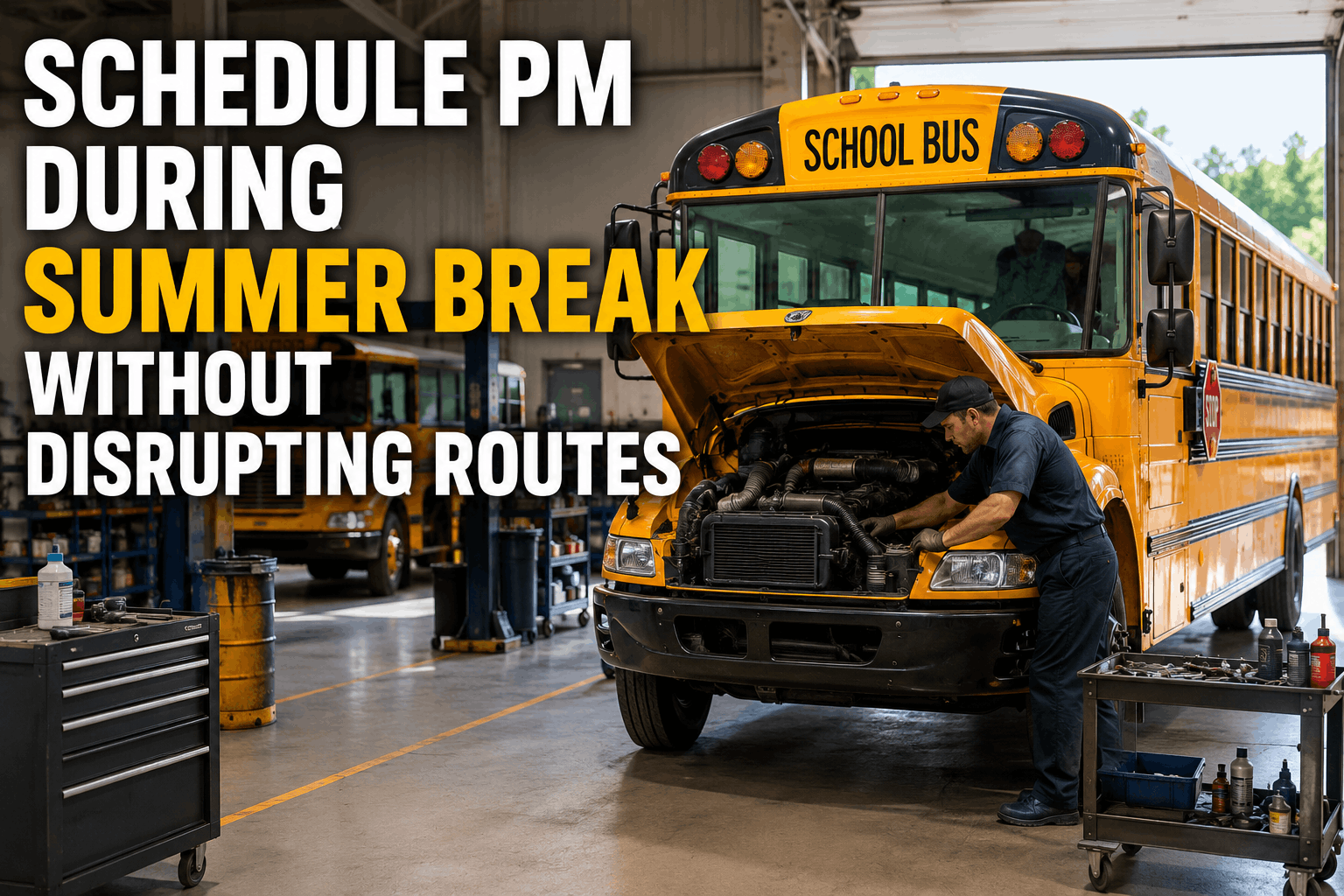
Summer break is the most critical maintenance window for school bus fleets. Without a structured plan, shops waste precious weeks and buses roll out in August with unfinished work. This guide shows you how to schedule a PM blitz that maximizes the 10-week break, pre-stages parts, optimizes technician overtime, and ensures every bus is route-ready before the first day of school.
How to Schedule PM Over Summer Break (School Buses) 2026
How to Schedule PM During Summer Break Without Disrupting Routes
Plan your summer break bus PM blitz: list build, parts pre-staging, tech overtime model, ATF/coolant/brake batch jobs, vendor coordination, August readiness.
Why a Structured Summer PM Plan Pays Off
Fleets that treat summer as a free-for-all miss critical work and overspend on overtime. A structured plan that pre-stages parts, batches fluid changes, and staggers technician shifts increases shop throughput by 35% and ensures 100% route readiness by mid-August.
10–12 Weeks
Summer maintenance window
40%
Of annual PM completed in summer
35%
Higher shop throughput with batching
100%
Fleet readiness by August 15 target
Summer PM Blitz Progress Tracker
1
May: Build Master Bus List & PM Scope
Audit every bus, identify due services, and create a prioritized work order list before summer starts.
2
Early June: Parts Pre-Staging & Ordering
Order filters, fluids, brake kits, and belts in bulk. Pre-stage parts by bus in the shop to eliminate tech downtime.
3
Mid-June: Tech Overtime & Shift Planning
Assign staggered shifts or voluntary overtime to maximize bay utilization without burning out staff.
4
July: Batch PM Execution
Run ATF changes, coolant flushes, brake jobs, and annual inspections as batch operations for speed.
5
Late July: Vendor Coordination
Schedule major overhauls and recall work with dealers or mobile vendors while buses are already out of service.
6
August: Final QC & Road Testing
Complete all open work orders, road test every bus, and sign off readiness two weeks before school starts.
Key Summer PM Strategies Ranked by Impact
Batch Fluid Changes (ATF, Coolant, Oil)
Highest Efficiency Gain
Perform all fluid services for the fleet in dedicated days. A single ATF flush station can process 8 buses per day.
Pre-Stage Parts Kits Per Bus
Eliminates Tech Wait Time
Assemble brake kits, filter packs, and gasket sets into bus-specific carts before the technician starts work.
Staggered Technician Shifts
Maximizes Bay Utilization
Run early and late shifts to keep bays occupied for 14–16 hours a day without doubling headcount.
Vendor Bookings for Major Repairs
Captures External Capacity
Schedule engine overhauls, transmission swaps, and body work with outside vendors during the window to free your techs for PMs.
Daily Progress Huddle & Digital Tracking
Keeps the Plan on Track
15-minute morning meetings with a CMMS dashboard showing completion versus plan keeps everyone aligned.
Summer PM Completion Curve (Cumulative % Over 10 Weeks)
A well-planned summer blitz reaches 50% completion by mid-July and finishes 95% of all work by week 10. The steepest progress occurs during batch fluid and brake weeks when techs operate at peak efficiency.
Year-Over-Year August Readiness Score Improvement
Before adopting a structured summer plan, the average fleet readiness score was 72%. After implementing batching, pre-staging, and digital tracking, readiness hit 100% for the past three years.
5 KPIs to Monitor During Your Summer PM Blitz
Track these metrics weekly to keep your summer plan on schedule and within budget:
PM Completion vs. Plan
Target: Within 5% of schedule each week. Adjust tech assignments immediately if you fall behind.
Parts Availability Rate
Target: 98%+ of required parts on hand. Late parts orders are the top reason summer plans fail.
Technician Overtime Efficiency
Target: 1.5x normal output per overtime hour. Monitor billable hours versus overtime cost.
Vendor On-Time Delivery
Target: 100% of contracted repairs complete by deadline. Hold vendors accountable to your schedule.
Buses Road-Ready by August 15
Target: 100% of fleet. This is the ultimate measure of summer PM success.
Summer PM Plan Pass/Fail Checklist
Master Vehicle List Accuracy
Pass: Every bus listed with mileage, last PM date, and open defects before summer starts.
Fail: Missing buses discovered in July, scrambling to fit them in.
Parts Bulk Ordering
Pass: All filters, fluids, brake components, and belts ordered 2 weeks before summer and staged by bus.
Fail: Technicians waiting at the parts counter because consumables weren't pre-ordered.
Technician Overtime Plan
Pass: Voluntary overtime sign-ups, a staggered shift schedule, and clear daily production targets.
Fail: Burnout, no shows, or no clear schedule leading to idle bays.
Vendor Contract Coordination
Pass: Engine, transmission, and body vendors booked 30 days in advance with confirmed pickup dates.
Fail: Last-minute calls to vendors who are already booked for the summer.
Daily Progress Tracking
Pass: CMMS dashboard updated daily with completion percentage and red flags for any delayed bus.
Fail: No visibility into actual progress until the last week of summer.
Final Road Test & Sign-Off
Pass: Every bus road-tested and signed off by a supervisor before being marked ready.
Fail: Buses sitting in the yard with open work orders on the first day of school.
Our district used to scramble every August. After adopting this summer PM plan and tracking it in BusCMMS, we now finish all 130 buses by August 10th every year. Parts are pre-staged in June, techs work a voluntary overtime schedule they love, and we haven't had a single bus miss the first day of school in four years.
Plan Your Best Summer PM Season Yet
BusCMMS helps you build a master work order list, track parts inventory, manage tech schedules, and monitor real-time completion dashboards. Walk into August with every bus ready to go.
Summer PM Scheduling FAQs
How early should we start planning summer PMs?
Begin building your bus list and parts order in April or early May. This gives you enough time to audit every bus and pre-stage parts before the shop gets busy.
What is the most common mistake in summer maintenance?
Waiting until July to order parts. Suppliers run out of common filters and fluids. Pre-ordering in bulk ensures you have everything on hand.
Can BusCMMS help manage the summer PM blitz?
Yes. BusCMMS generates a prioritized work order list, tracks parts availability, and provides a real-time completion dashboard so you can see daily progress against the plan.
How do I keep technicians motivated during summer overtime?
Offer voluntary overtime with a clear schedule, recognize top performers, and show the daily completion progress. A visible dashboard creates a healthy sense of team achievement.
What should be done in the final two weeks before school?
Complete all open work orders, road test every bus, and have a supervisor sign off on readiness. BusCMMS can generate a final readiness report for your transportation director.
Does batching really save that much time?
Absolutely. Batching fluid changes or brake jobs reduces tool setup time by 40% and allows technicians to develop a rhythm, increasing daily output significantly.
The Bottom Line
Summer break is your fleet's most valuable maintenance window. By implementing a structured plan with pre-staged parts, batched PMs, staggered tech shifts, and daily progress tracking, you can finish 100% of your work before the first school bus rolls out in August. Use the six-step progress tracker to organize your summer, the five KPIs to keep the plan on track, and the pass/fail checklist to ensure nothing is missed. With BusCMMS, you turn summer from a scramble into a predictable, productive season that keeps your fleet safe and ready.