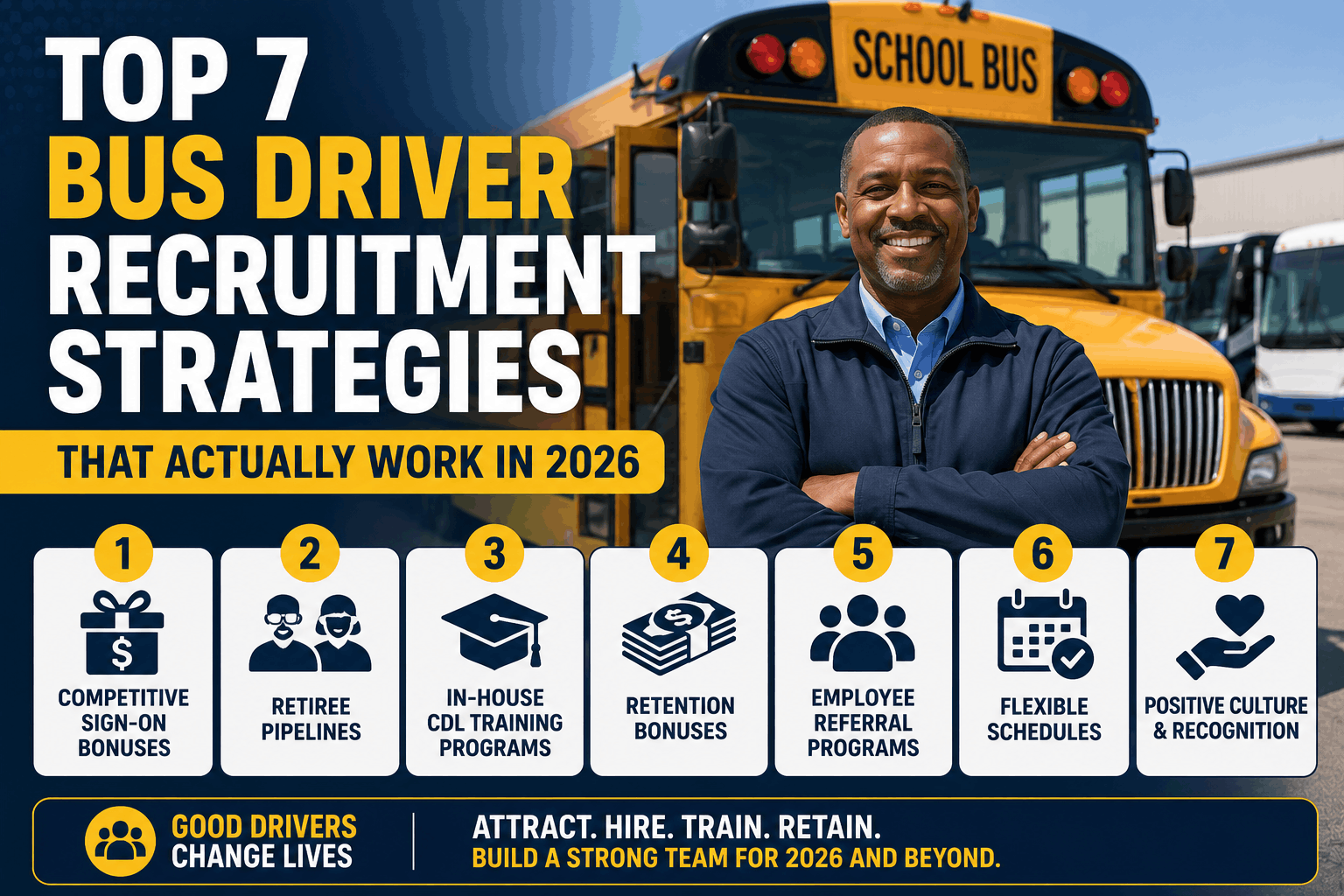
Bus driver shortages remain the top operational challenge for fleets nationwide. Traditional hiring methods fail to produce enough qualified candidates. This guide presents seven proven recruitment strategies that are delivering real hires in 2026, from sign-on bonuses to in-house CDL programs.
Top 7 Bus Driver Recruitment Strategies 2026
Top 7 Bus Driver Recruitment Strategies That Actually Work in 2026
7 bus driver recruitment strategies producing real hires. Sign-on bonuses, retiree pipelines, in-house CDL programs, retention bonuses, referrals.
The True Cost of the Driver Shortage
Unfilled driver positions force route cancellations, spike overtime costs, and burn out existing staff. The right recruitment strategy protects service reliability and your bottom line.
78%
Fleets reporting a driver shortage
$12,800
Average cost to hire and train one driver
34 Days
Average time-to-fill a driver vacancy
41%
Turnover reduction with retention bonuses
Building Your Recruitment Engine: Step-by-Step Progress
1
Audit Current Hiring Funnel
Map every step from job posting to first day. Identify drop-off points and bottlenecks.
2
Deploy Multiple Sourcing Channels
Combine job boards, social media, community outreach, and referral programs simultaneously.
3
Launch Incentive Programs
Introduce sign-on bonuses, referral rewards, and retention incentives tied to milestones.
4
Create Internal CDL Pipeline
Develop paid CDL training for internal candidates and community members to grow your own drivers.
5
Measure, Optimize, and Retain
Track cost-per-hire, quality-of-hire, and first-year retention; continuously improve the process.
Top 7 Bus Driver Recruitment Strategies That Deliver
#1 Competitive Sign-On Bonuses
Upfront bonuses of $2,500–$7,500 attract experienced CDL holders immediately. Structure payments over 6-12 months to boost retention.
#2 Retiree & Veteran Pipelines
Tap military veterans and retired commercial drivers seeking part-time work. They bring experience, clean records, and strong work ethic.
#3 In-House CDL Training Program
Sponsor candidates through CDL school while paying a training wage. Creates a loyal pipeline and removes the $5,000 barrier for applicants.
#4 Employee Referral Program
Offer current drivers $1,000–$3,000 for successful referrals. Referred hires stay longer and integrate faster into your culture.
#5 Retention & Stay Bonuses
Pay quarterly or annual bonuses to drivers who stay. Even $1,500/year reduces turnover by 41% and saves replacement costs.
#6 Targeted Digital Advertising
Run geo-targeted social ads highlighting pay, schedule, and benefits. Focus on local audiences with CDL or passenger endorsement interest.
#7 Community & School Partnerships
Partner with community colleges, workforce boards, and veterans groups to create a local feeder system for your driver openings.
Recruitment Strategy Effectiveness Comparison
Fleets using in-house CDL programs average 9.2 new hires per month, the highest across all strategies. Employee referrals follow at 8.6, while sign-on bonuses alone produce 7.8. Combining multiple methods yields the strongest pipeline.
Driver Shortage Trend and Hiring Improvement
Driver vacancy rates spiked to 18% during the post-pandemic surge but are now declining as fleets adopt the strategies in this guide. The projected 2025 rate is 13%, with further improvement expected in 2026 as CDL pipelines mature.
5 KPIs to Track Recruitment Success
Measure these metrics to know if your recruitment engine is working and where to invest next:
Cost Per Hire
Target: Below $10,000 all-in. Track ad spend, incentives, training, and recruiter time per driver.
Time to Fill
Target: Under 25 days. Shortening the hiring window reduces lost trips and overtime expense.
Quality of Hire
Target: 90%+ pass probation. Rate new drivers on safety, attendance, and customer feedback at 90 days.
First-Year Retention
Target: Above 80%. New hires staying a full year validate your selection and onboarding process.
Referral Program Participation
Target: 40%+ of employees making referrals. High participation signals a healthy culture that attracts others.
Recruitment Strategy Pass/Fail Checklist
Market-Competitive Pay
Pass: Base pay above local median; total comp with bonuses visible in job ads.
Fail: Pay hidden until the interview; offers below what competitors advertise publicly.
Fast Application Process
Pass: Mobile-friendly application under 10 minutes; same-day response to qualified candidates.
Fail: Paper forms, long delays, and no communication that cause candidates to drop off.
Paid CDL Training Path
Pass: Full sponsorship with training wage; clear contract terms that are fair and transparent.
Fail: No training option, or requiring candidates to self-fund with vague reimbursement promises.
Retention Infrastructure
Pass: Stay bonuses, regular check-ins, career paths, and flexible schedules that reduce turnover.
Fail: Hire-and-forget culture; no engagement until the exit interview.
Referral Program Design
Pass: Simple payout structure, quick rewards, and recognition that encourages repeat participation.
Fail: Complex rules, delayed payments, or low amounts that make referrals not worth the effort.
Employer Brand & Reputation
Pass: Positive online reviews, active social proof, and driver testimonials featured in job ads.
Fail: Negative Glassdoor ratings, ignored candidate feedback, and a reputation for high turnover.
We implemented in-house CDL training and employee referrals alongside BusCMMS workforce management. Our vacancy rate dropped from 22% to 6% in 18 months. The system helps us track training progress, license expirations, and retention milestones automatically. We now have a waiting list of candidates.
Build a Driver Pipeline That Keeps Your Fleet Moving
BusCMMS helps you manage recruitment, onboarding, CDL tracking, and retention in one platform. Turn driver shortages into a steady stream of qualified hires with integrated workforce tools.
Bus Driver Recruitment FAQs
What is the most effective bus driver recruitment strategy?
In-house CDL training programs produce 9.2 hires per month on average. They remove the cost barrier for candidates and build loyalty from day one. Combined with employee referrals, they create a sustainable pipeline.
How much should a bus driver sign-on bonus be in 2026?
Effective sign-on bonuses range from $2,500 to $7,500 depending on region and CDL experience. Structure payments over 6–12 months to encourage retention beyond the initial hire.
Can BusCMMS help with driver recruitment and retention?
Yes. BusCMMS tracks driver applications, training milestones, CDL expiration dates, and retention bonus eligibility. It automates reminders and reports so you never miss a license renewal or stay-bonus trigger.
How do I start an in-house CDL training program?
Partner with a certified CDL school, hire a qualified instructor, or sponsor candidates through a local program. Federal and state grants may offset costs. BusCMMS tracks each trainee's progress and credentialing.
What retention strategies work best for bus drivers?
Quarterly stay bonuses, predictable schedules, career advancement paths, and recognition programs reduce turnover significantly. Fleets using these tactics report 41% lower annual turnover.
How long does it take to fill a bus driver position?
The industry average is 34 days, but fleets with optimized processes and multiple sourcing channels fill roles in under 25 days. A fast, mobile-friendly application is critical to speed.
The Bottom Line
The bus driver shortage doesn't have to be a permanent crisis. The seven strategies in this guide—from in-house CDL training to referral programs—are delivering real results for fleets across the country. In-house CDL pipelines alone average 9.2 hires per month, while referral programs add 8.6. By combining competitive pay, fast hiring processes, and strong retention infrastructure, you can turn a chronic shortage into a reliable workforce. Use the five KPIs to measure what's working, apply the pass/fail checklist to fix broken processes, and leverage BusCMMS to automate tracking, training, and retention so your recruitment engine keeps running smoothly.