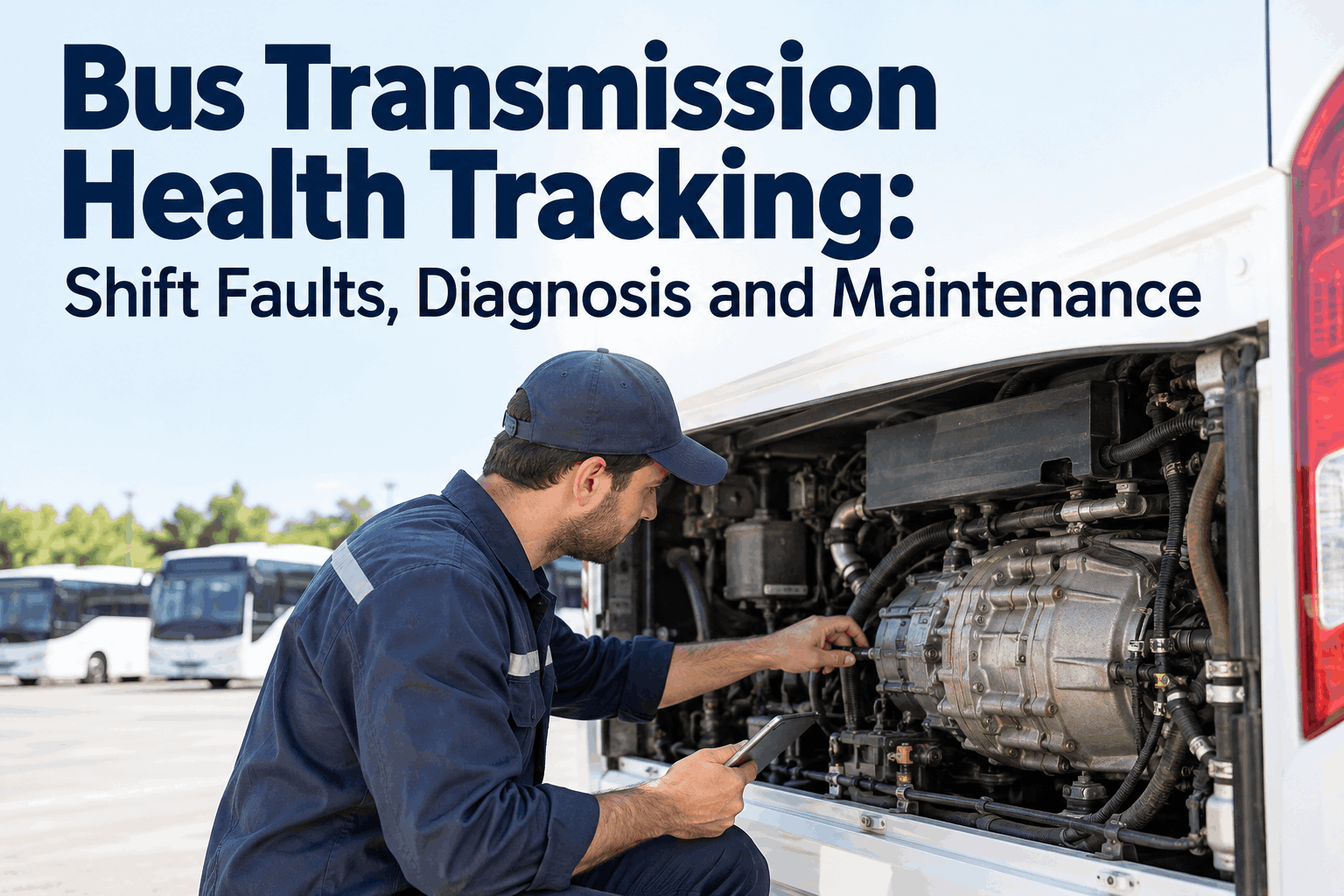
Bus transmission slipping is a serious issue that affects drivability, fuel economy, and safety. A slipping transmission can leave a bus stranded and require expensive repairs. This guide covers the top causes of transmission slipping—low fluid, contaminated fluid, worn clutches, valve body issues, and solenoid failure—with diagnostic steps, repair options, and cost estimates for Allison and ZF transmissions.
Transmission Slipping Guide 2026
Bus Transmission Slipping: Causes & Repair Options
Bus transmission slipping? Causes ranked: low fluid, contaminated fluid, worn clutches, valve body issues, solenoid failure. Repair options and cost.
Transmission Slipping Impact: The Cost of Power Loss
Transmission slipping is a critical issue that affects bus performance, fuel economy, and passenger safety. Ignoring slipping can lead to complete transmission failure and expensive rebuilds or replacements costing $8,000-$15,000.
$8,000-$15,000
Transmission rebuild/replacement
$2,500-$5,000
Major transmission repair
20-40 min
Average diagnostic time
55%
Issues related to fluid condition
Transmission Slipping Diagnostic Flowchart
Step 1: Check Fluid Level
Check transmission fluid level with engine running. Low fluid causes slipping. Top up if needed.
Step 2: Inspect Fluid Condition
Check fluid color and smell. Dark or burnt fluid indicates internal wear. Burned smell means overheating.
Step 3: Check for Codes
Scan transmission control module for fault codes. Solenoid and sensor codes indicate electrical issues.
Step 4: Perform Stall Test
Stall test checks torque converter and clutch condition. Engine RPM should be within specification.
Step 5: Test Solenoids
Check solenoid resistance and operation. Failed solenoids cause slipping and shifting issues.
Step 6: Check Valve Body
Valve body wear causes pressure loss. Inspect for sticking valves or worn bores.
Step 7: Success
Transmission slipping resolved! Document diagnosis and repair.
Top 5 Causes of Bus Transmission Slipping
1. Low Transmission Fluid
Frequency: 30% of slipping cases. Caused by leaks or insufficient fluid. Check level and inspect for leaks.
2. Contaminated Fluid
Frequency: 25% of slipping cases. Fluid degradation from heat or debris. Change fluid and filter.
3. Worn Clutch
Frequency: 20% of slipping cases. Friction material worn from age or abuse. Requires transmission rebuild.
4. Valve Body Issues
Frequency: 15% of slipping cases. Worn valve body causing pressure loss. Replace or rebuild valve body.
5. Solenoid Failure
Frequency: 10% of slipping cases. Failed shift solenoids causing pressure issues. Replace solenoids.
Transmission Slipping Causes Distribution
Low transmission fluid is the #1 cause at 30%, followed by contaminated fluid at 25%. Worn clutches account for 20%. Together, these three causes represent 75% of all transmission slipping failures. Valve body issues and solenoid failure make up the remaining 25%.
Repair Cost by Cause
Fluid top-up averages $50. Fluid and filter change averages $180. Solenoid replacement averages $350. Valve body work averages $600. Clutch replacement averages $1,200. Complete transmission rebuild is the most expensive at $10,000 average.
Allison vs ZF Transmission Comparison
Allison transmissions have moderate maintenance requirements with rebuild costs averaging $6,000. ZF transmissions have high maintenance requirements with rebuild costs averaging $10,000. Allison parts are more widely available in North America, while ZF parts may require longer lead times.
Transmission Slipping Quick Reference
Fluid Level Check
Check with engine running and transmission warm. Low fluid causes slipping and erratic shifting. Top up with correct fluid type.
Fluid Condition
Healthy fluid is red and clear. Dark or burnt fluid indicates internal wear. Burnt smell means overheating. Change immediately.
Code Scan
Scan transmission control module for fault codes. Solenoid and sensor codes indicate electrical issues that can cause slipping.
Stall Test
Perform stall test to check torque converter and clutch condition. Engine RPM should be within manufacturer specification.
Quick Fix Decision
If fluid low: top up and check for leaks. If fluid dark: change fluid and filter. If codes present: address electrical issues first.
Repair Options
Minor issues: fluid change, solenoid replacement. Major issues: valve body repair, clutch replacement, complete rebuild.
Transmission Diagnostic KPIs
Track these five metrics to measure your transmission diagnostic program effectiveness:
Slipping Incident Rate
Target: Decreasing trend per 100,000 miles. Track monthly. Spike indicates PM gaps.
Diagnostic Time
Target: Under 25 minutes average. Track by cause. Longer times indicate training gaps.
Fluid Change Compliance
Target: 100% at recommended intervals. Track by bus. Missed changes cause contamination.
Transmission Rebuild Rate
Target: Decreasing trend. Track monthly. High rate indicates operational or maintenance issues.
Roadside Transmissions
Target: Zero preventable calls. Track monthly. Spike indicates maintenance gaps.
Our fleet of 85 buses with Allison and ZF transmissions implemented this diagnostic workflow. In the first year, transmission slipping incidents decreased by 52%. Average diagnostic time dropped from 38 to 18 minutes. Fluid change compliance improved from 62% to 96%. Transmission rebuilds decreased by 35% with early detection.
Digitize Your Transmission Diagnostic Program
BusCMMS guides technicians through every transmission diagnosis—fluid level verification, fluid condition inspection, code scanning, stall testing, and solenoid testing. Track slipping incidents, diagnostic time, and PM compliance. Auto-schedule transmission fluid changes to prevent slipping before it starts.
Bus Transmission Slipping FAQs
What does transmission slipping feel like?
Transmission slipping feels like the engine revs up but the bus doesn't accelerate as expected. You may notice delayed engagement when shifting, high RPMs at cruising speed, or a feeling of the transmission "hunting" for the right gear.
How do I check transmission fluid on a bus?
Start the engine and let it warm up to operating temperature. With the engine running and transmission in park or neutral, pull the dipstick, wipe it clean, reinsert, and pull again. Check level against the "hot" marks. Fluid should be red and clear.
What causes transmission fluid to burn?
Transmission fluid burns from excessive heat caused by heavy loads, towing, stop-and-go traffic, or internal wear. A burnt smell and dark color indicate overheating and clutch material contamination. Change fluid immediately and diagnose the cause.
How much does a bus transmission rebuild cost?
Allison transmission rebuilds average $6,000-$8,000. ZF transmission rebuilds average $8,000-$12,000. Costs vary by model, region, and additional parts needed. Preventive maintenance is much cheaper than rebuilds.
How often should transmission fluid be changed?
Transmission fluid should be changed every 25,000-50,000 miles depending on duty cycle. School and transit buses in stop-and-go service should change fluid at the lower interval. Refer to manufacturer recommendations for your specific transmission.
Can BusCMMS track transmission diagnostics?
Yes. BusCMMS tracks all transmission diagnostics, fluid changes, code scans, stall tests, and repairs. The system generates diagnostic checklists, captures fluid conditions, and creates complete records for every transmission service in your fleet.
The Bottom Line
Bus transmission slipping is a serious issue that affects drivability, fuel economy, and safety. Understanding the top 5 causes—low fluid (30%), contaminated fluid (25%), worn clutches (20%), valve body issues (15%), and solenoid failure (10%)—helps technicians diagnose problems fast and make smart repair decisions. The diagnostic flowchart provides a systematic approach: check fluid level, inspect fluid condition, scan for codes, perform a stall test, test solenoids, and check the valve body. Most diagnoses can be completed in under 25 minutes. Fluid-related issues account for 55% of all slipping cases, making regular fluid changes and leak detection critical preventive measures. Allison and ZF transmissions have different maintenance requirements and costs. When combined with BusCMMS diagnostic checklists, fluid condition tracking, and repair documentation, your maintenance team becomes proactive—catching transmission issues before they leave your bus stranded or require expensive rebuilds.