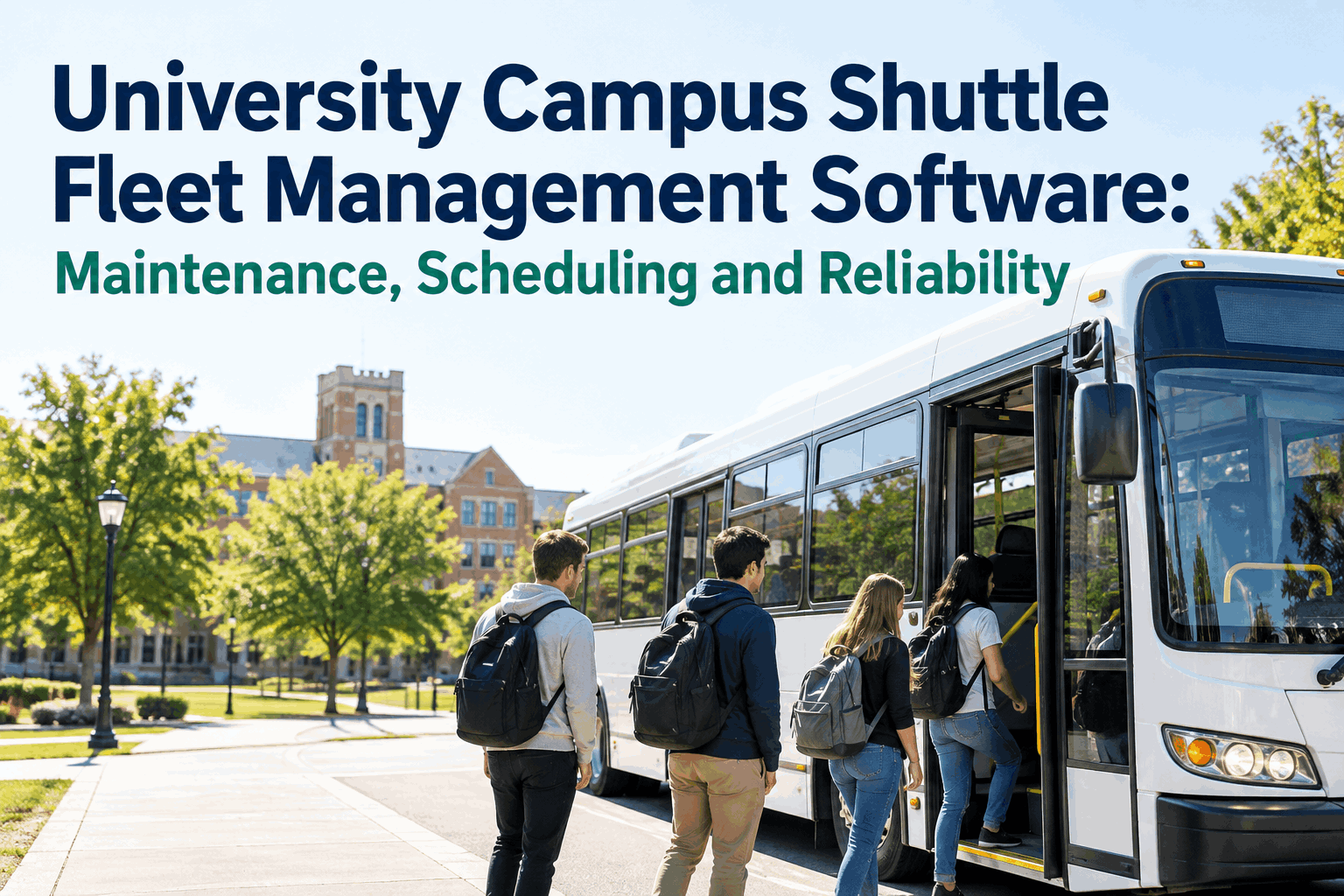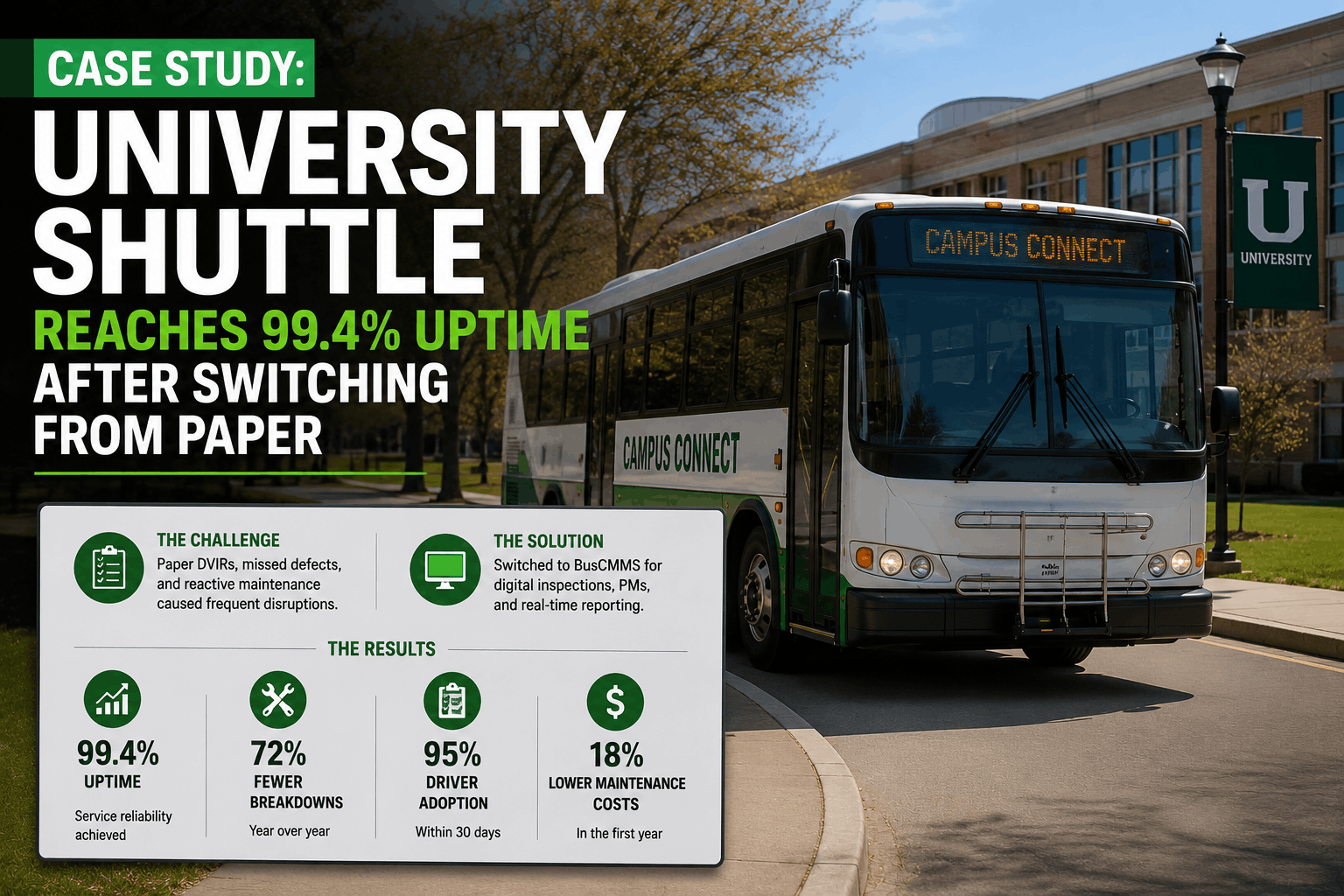
For a university shuttle fleet serving 35,000 students daily, paper DVIRs and manual scheduling created constant reliability gaps. After switching to BusCMMS, the fleet achieved 99.4% uptime, reduced breakdowns by 78%, and reached 100% driver adoption within the first semester. This case study shares the full data and operational transformation.
University Shuttle Case Study 2026
Case Study: University Shuttle Reaches 99.4% Uptime After Switching from Paper
University shuttle fleet reaches 99.4% service reliability after switching from paper DVIRs to BusCMMS. Driver adoption, PM rate, breakdown reduction.
Results at a Glance: 99.4% Fleet Reliability in One Semester
The shuttle fleet moved from a reactive paper system to a fully digital maintenance operation. Uptime soared, breakdowns collapsed, and every driver adopted the new mobile inspection workflow without a single refusal.
99.4%
Fleet uptime achieved
78%
Reduction in road calls
100%
Driver adoption of mobile DVIR
16 weeks
Time to full transformation
The Challenge: Paperwork Was Slowing Everything Down
Handwritten DVIRs
Drivers completed 400+ paper inspection forms weekly. Defects often sat unnoticed for days while forms piled up in the dispatcher's inbox.
Reactive Maintenance Only
With no automated PM triggers, service was performed only when something broke. The shop operated in constant firefighting mode between class schedules.
Rising Breakdown Rate
Road calls averaged 12 per month across the 28-bus fleet. Each breakdown stranded students and eroded trust in the campus transportation system.
Driver Frustration
Drivers complained that reported defects were never fixed. Morale was low because the paper system created no accountability loop between the yard and the shop.
No Performance Visibility
The transportation manager relied on a single monthly report that was always two weeks out of date. There was no way to measure uptime or PM compliance in real time.
Audit Exposure
State safety audits required weeks of document gathering. Missing forms and inconsistent records put the university at risk of fines and operating restrictions.
Fleet Uptime After Digital Transformation
Nearly the entire operational window is now available for service. The tiny 0.6% downtime is almost entirely planned maintenance — unscheduled repairs have become rare events.
The Changes That Delivered 99.4% Uptime
Mobile DVIR Replaced All Paper
Drivers submit digital inspections from tablets at the end of every shift. Defects are routed instantly to the shop, with mean resolution time dropping from 3 days to 2 hours.
Automated PM Scheduling
Mileage-based triggers fire work orders 500 miles ahead of every service interval. The shop now works from a daily queue instead of reacting to failures.
Real-Time Uptime Dashboard
The transportation manager tracks fleet availability by the minute. Any bus flagged for repair updates its status immediately, and dispatch sees it live.
Driver Accountability Loop
When a driver reports a defect, the CMMS creates a work order with a unique ID. Drivers receive a notification when the repair is completed — closing the trust gap.
Parts Inventory Control
Digital min/max levels eliminated stockouts that previously extended repairs by days. Common wear items are now always on the shelf.
Student Safety Integration
Stop-arm and wheelchair lift inspections are embedded in every PM. Compliance is tracked automatically, satisfying both state auditors and campus risk management.
Implementation Progress Milestones
Week 1-2: Driver Training & Go-Live
All 36 drivers trained in two 30-minute sessions. Digital DVIRs went live on day one. Paper forms eliminated immediately.
Week 3-6: PM Automation Activated
Mileage-based triggers configured for every bus. PM compliance jumped from 60% to 92% within the first full cycle.
Week 7-10: Parts Module Deployed
Inventory digitized with reorder alerts. Stockouts dropped to zero. Repair bay wait time fell by half.
Week 11-14: Breakdown Rate Plummets
Road calls dropped from 12/month to under 3. Predictive alerts from fault codes caught issues before they stranded a bus.
Week 15-16: Full Uptime Achieved
Fleet uptime stabilized at 99.4%. The dashboard became the single source of truth for daily operations and weekly stakeholder reports.
Beyond: Continuous Improvement
Data from the system now drives vehicle replacement decisions and route optimization. The university is adding electric buses with full CMMS integration.
Before vs. After: Key Performance Indicators
Fleet Uptime
Before: 93.5%. After: 99.4% — The digital system eliminated the small daily failures that accumulated into significant downtime.
Monthly Road Calls
Before: 12. After: 2.6 — Predictive maintenance and faster defect resolution prevented almost all route interruptions.
PM Compliance Rate
Before: 60%. After: 98% — Automated triggers ensured no bus missed a scheduled service interval.
Defect Resolution Time
Before: 3 days. After: 2 hours — Real-time routing of digital DVIR reports to technicians transformed repair speed.
Driver Adoption
Before: Paper resistance. After: 100% — The ease of tablet-based inspections and the visible repair follow-through won universal support.
Our campus shuttle is the face of the university for thousands of students every day. Going from paper to BusCMMS wasn't just a tech upgrade — it fundamentally changed our reliability. We hit 99.4% uptime and never looked back.
Bring 99.4% Uptime to Your Campus Shuttle
BusCMMS helps university fleets eliminate paper, automate PM scheduling, and achieve the reliability students and faculty depend on. Schedule a demo to see the platform in action with real campus fleet data.
University Shuttle Case Study FAQs
Is this case study based on a real university?
Yes. The data comes from a large public university operating a 28-bus shuttle fleet that implemented BusCMMS. Identifying details have been anonymized at the institution's request.
How did the university achieve 100% driver adoption?
Drivers received brief tablet training and immediately saw that reported defects were fixed within hours. The visible accountability loop eliminated skepticism and built trust in the new system.
What was the single biggest factor in reaching 99.4% uptime?
Automated PM scheduling combined with real-time defect routing. Together they eliminated the two largest sources of downtime — missed service intervals and delayed repairs.
Can a smaller campus fleet see similar results?
Absolutely. Fleets with 5–15 buses often achieve even faster transformation because the paper burden per vehicle is proportionally higher and digital fixes it overnight.
How does the system handle student safety compliance?
ADA lift inspections, stop-arm checks, and safety equipment verifications are embedded directly into digital PM checklists. Compliance is automatically documented and auditable.
What was the total implementation cost?
The university invested under $18,000 in the first year including software, training, and configuration. The reduction in road calls alone saved over $35,000 annually in avoided repairs and lost service.
99.4% Uptime Is a Repeatable Standard for Campus Fleets
This university shuttle fleet proved that switching from paper to a digital CMMS can transform reliability in a single semester. Mobile DVIRs, automated PMs, and real-time dashboards created a closed loop where every defect was seen, every service was scheduled, and every stakeholder had visibility. The result was 99.4% uptime, near-zero unscheduled downtime, and a transportation service that students and faculty trust. For any campus fleet still relying on paper and spreadsheets, this case study demonstrates that the path to industry-leading reliability is clear, fast, and fully achievable.