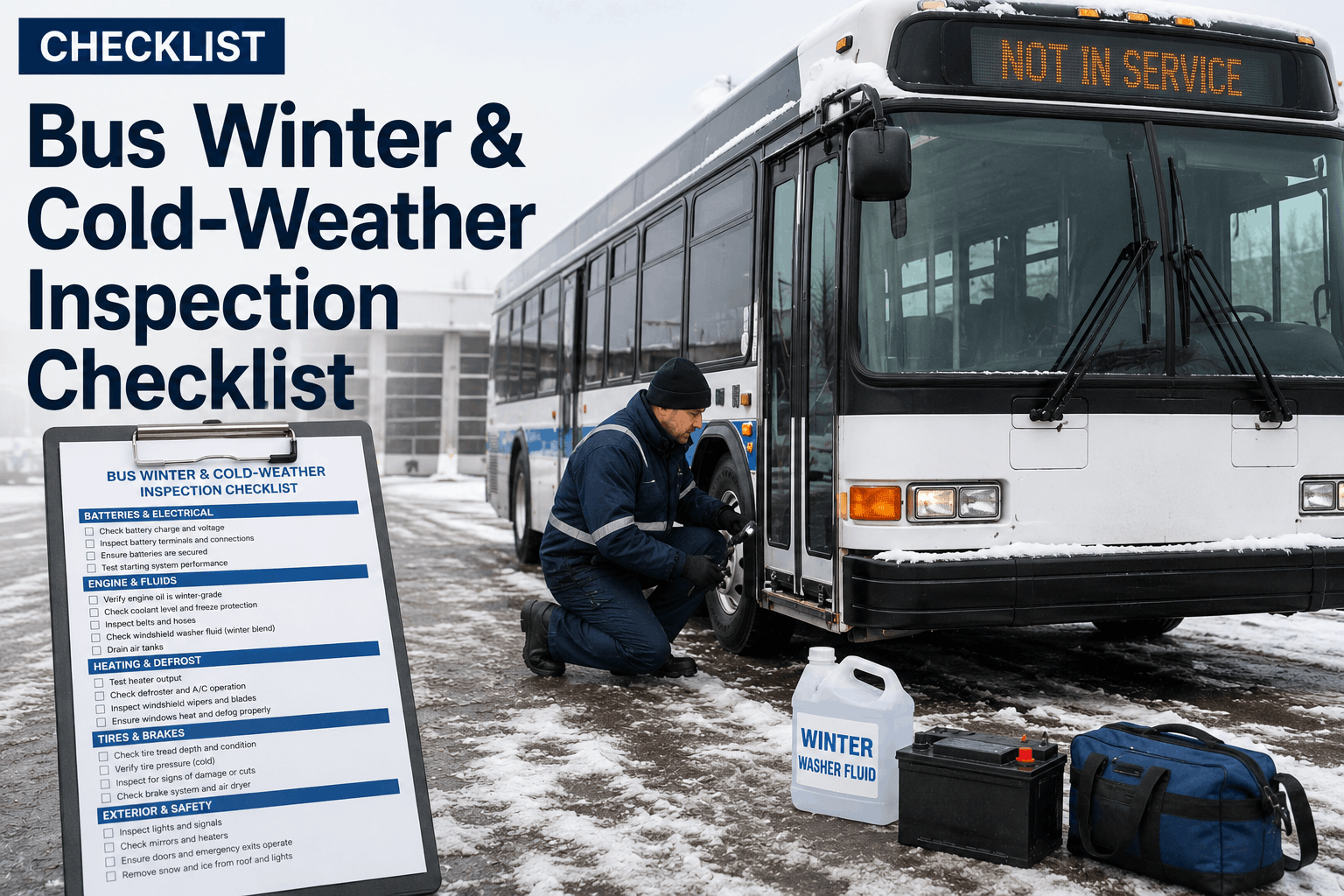
Winter weather is merciless on transit buses. Subzero temperatures thicken engine oil, drain batteries below starting capacity, freeze air brake lines, and turn diesel fuel into gel. A bus that ran perfectly in October can fail to start on a 10-degree January morning, stranding passengers and disrupting entire routes. Cold weather exposes every weakness in a bus: weak batteries die, coolant freezes in unprotected systems, heaters fail to defrost windshields, and tires lose pressure overnight. The difference between a fleet that runs through winter storms and one that collapses is preparation. FMCSA does not grant exemptions for cold-weather failures. This winter inspection checklist covers batteries, engine heaters, coolant freeze protection, air dryer systems, heater and defroster performance, winter tires, and cold-weather fluid specifications. Complete this inspection before winter arrives and monthly throughout cold-weather months. Keep your fleet moving when temperatures drop.
Bus Winter & Cold-Weather Inspection Checklist
Prepare your bus fleet for winter conditions: batteries, block heaters, coolant freeze protection, air dryers, defrosters, and cold-weather fluids.
Complete this cold-weather inspection before winter season begins and monthly during freezing months. Items marked Critical address operation below 32°F. Items marked Recommended improve reliability in extreme cold. Document all findings. Buses failing critical winter items must be repaired before operating in freezing conditions.
Winter Breakdown Reduction
-61%
With pre-winter inspection
Cold Start Success Rate
94%
With winterized battery system
Top Winter Failures
Batteries, fuel gelling, air brakes
Battery System & Cold Cranking
CriticalEngine Block Heater & Cold Start
CriticalCoolant System & Freeze Protection
CriticalAir Brake System & Air Dryer
CriticalHeater, Defroster & HVAC System
CriticalWinter Tires & Tire Pressure
CriticalWinter Fluids & Fuel Treatment
CriticalWinter Emergency Equipment
Recommended"The winter of 2024 taught us hard lessons when 23 of our 110 buses failed to start during a polar vortex. We implemented this winter inspection checklist for 2025-2026. This year, even at -15°F, we had 96% first-start success. The air dryer heater checks and battery load tests made all the difference. Every fleet in snow states needs this."
Winter Fleet Readiness Protocol
Pre-winter (September-October): Complete all Critical items before first freeze. Test coolant freeze protection, replace air dryer cartridges, load test batteries, and switch to winter-grade fuel and oil.
During winter months: Perform monthly cold-weather checks. Drain air tanks daily. Verify block heater operation weekly. Monitor tire pressure as temperatures fluctuate.
Extreme cold events (below 0°F): Plug in block heaters overnight. Use fuel anti-gel additive. Allow extended warm-up time before departure. Check for ice in air system daily.
BusCMMS winter tracking: Schedule pre-winter inspections, track block heater testing, set alerts for air dryer service intervals, and monitor cold-start success rates across your fleet.
Bus Winter Inspection FAQs (2026)
When should winterization inspections be completed on a bus fleet?
Complete pre-winter inspections by October 15 or before first expected freeze, whichever comes first. Monthly checks during December through March.
What coolant freeze protection level is required for transit buses in cold climates?
Minimum -34°F protection required. Test with refractometer, not test strips. Replace coolant if protection level is marginal.
How does cold weather affect bus air brake systems?
Moisture in air lines freezes, preventing brake release. Functional air dryer heater and daily tank draining prevent ice formation.
What battery CCA rating is recommended for diesel buses in winter?
Minimum 1,000 CCA per battery for most transit diesel engines. Load test at 70% of CCA rating to verify cold cranking ability.
How long should a bus idle to warm up in freezing temperatures?
5-10 minutes with block heater; 10-15 minutes without. Wait for air pressure build and windshield defrost before driving.
What fuel additive prevents diesel gelling in extreme cold?
Winter-grade diesel already contains anti-gel. For extreme cold below -10°F, add supplemental anti-gel at every fill.
How often should air dryer desiccant cartridges be replaced for winter?
Replace annually before winter or every 12 months. Test air dryer heater operation before freezing season begins.
How does BusCMMS help manage winter fleet maintenance?
Schedule pre-winter inspections, track battery testing dates, set air dryer replacement alerts, log cold-start performance data.
Keep your bus fleet moving through winter's coldest days. BusCMMS helps schedule pre-winter inspections, track block heater testing, monitor battery health, and maintain cold-weather readiness documentation for every bus.