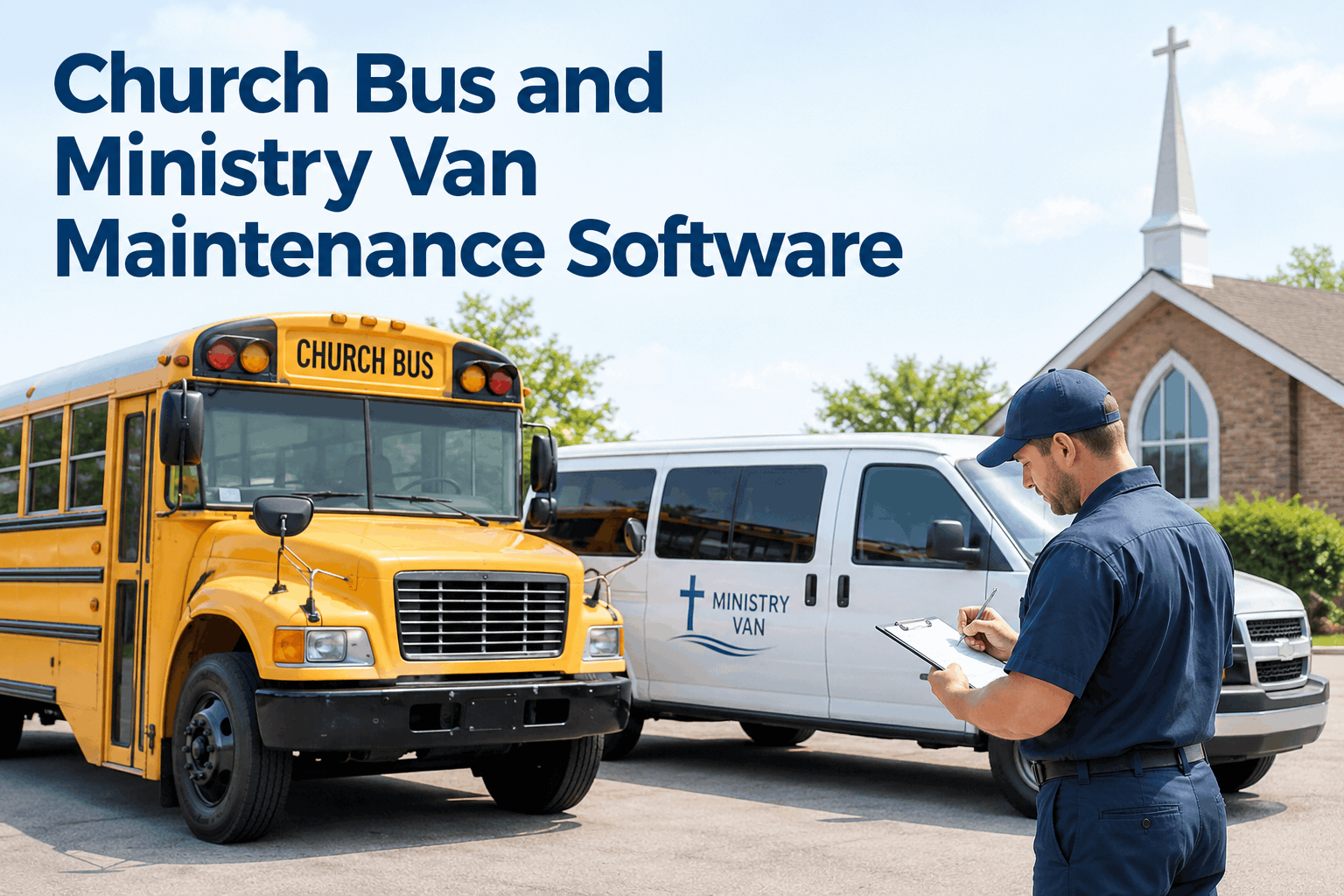
The church bus and two vans sit in the lot all week and only move on Sunday, which is why their maintenance is so easy to forget. Nobody on staff is a mechanic, and the first sign of trouble is a van that will not start with a group already waiting. Church bus maintenance software carries that memory for a volunteer-run fleet, so a service that is due gets done. See how service reminders work in a demo.
Church Bus and Ministry Van Maintenance Software
A small ministry fleet rarely has a dedicated mechanic or a maintenance budget to match. What it needs is something that remembers the service, runs a simple safety check, and keeps the records, so volunteers can focus on the trip, not the wrench.
Why a Ministry Fleet Is Different From a Transit Fleet
A church fleet is not a scaled-down transit operation. It is a handful of vehicles, no shop, and a rotating cast of volunteers, and the things that keep a big fleet on track simply are not there. That is why church vehicle maintenance slips in ways a professional fleet's does not.
It lives in a volunteer's memory
When the one person who knew the service schedule steps down, the knowledge leaves with them. A system that remembers does not step down.
Every dollar answers to the budget
A ministry cannot justify enterprise fleet pricing. A deferred repair that becomes a breakdown is the expensive outcome a small budget can least afford.
The passengers are your congregation
Kids on a youth trip, seniors to a service. A 15-passenger van has real safety considerations, and the stakes of a missed defect are personal.
Insurers expect a record
Church insurers look for maintenance and inspection records. A clean history is easier to show, and it is the kind of diligence that protects the ministry.
None of this needs a professional fleet department, it just needs the maintenance to live somewhere other than one busy volunteer's head. Teams that move it into a shared tool stop losing track at the worst moment, and you can sign up free and set up your vehicles in an afternoon.
The Difference a Reminder Makes
Almost every church fleet problem traces back to the same root: a service that was due and nobody was reminded. Follow an oil change due date down both paths and you can see where the volunteer-memory version breaks, which is the moment the value of a reminder you can set up in a demo becomes obvious.
The only real difference between the two paths is whether anything reminds you. Everything downstream, the breakdown or the ready van, follows from that one step.
What a Church Fleet Should Stay on Top Of
You do not need a complicated program. A ministry van maintenance routine comes down to a short list that, kept current, covers almost everything that strands a vehicle or raises a safety flag.
Swipe sideways to see all columns.
Keep those five on a schedule and most of what goes wrong with a ministry fleet never gets the chance to. You can see how simple the setup is in a demo and judge for yourself whether it fits how your team actually works.
Your Church Fleet Readiness Checklist
Run this against your own ministry fleet. Tick every box and a van is ready when the group shows up, not a surprise that strands them. The gaps are usually where memory was doing a job a system should.
-
Every vehicle has a service reminder setOil and routine service are on a schedule that flags them, so nothing depends on a volunteer remembering.CORE
-
A simple pre-trip check anyone can runA short safety checklist on a phone means any approved driver can confirm the van is good before loading up.CORE
-
Inspection and registration dates are trackedAnnual state inspection and registration renewals are flagged before they lapse, not discovered after.CORE
-
A found problem becomes a logged repairWhen the check turns up an issue, it is recorded and tracked to done rather than mentioned and forgotten.PLAN
-
Records survive a change in volunteersThe full history lives in the system, so when someone hands off the role, nothing is lost with them.PLAN
-
You can show a clean maintenance historyA complete record is easy to produce for your insurer or board, the kind of diligence that protects the ministry.PLAN
Six boxes, and the first three are where a stranded group or a safety scare gets prevented. You can sign up free and set up your bus and vans before the next trip.
How BusCMMS Fits a Ministry Fleet
BusCMMS is built for bus fleets, which means a church with a bus and a few vans gets the right tools without the enterprise weight. Three things do most of the work for a small, volunteer-run team.
Service reminders that do the remembering
Each vehicle's routine service is scheduled by mileage or date and flagged before it is due, so the job gets done without anyone having to keep it in their head.
A pre-trip check any driver can run
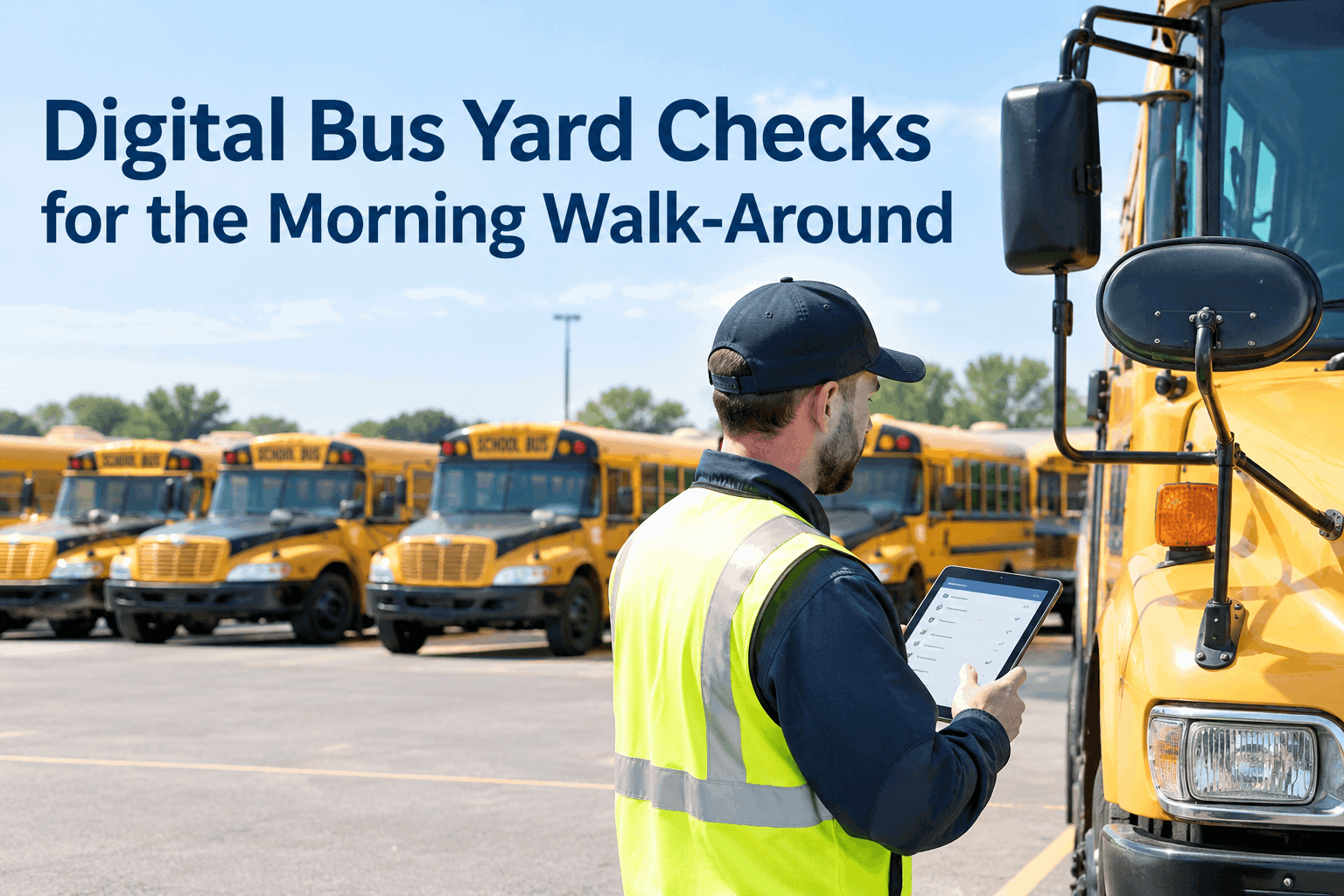
A simple digital safety checklist on a phone lets any approved volunteer confirm a van is ready, and a flagged issue turns into a tracked repair on its own.
One record that outlasts turnover
Service and repair history lives on each vehicle's record, so when the person running it changes, the knowledge stays put and the records are ready to show.
It is the same preventive maintenance engine that transit agencies rely on, sized and priced for a ministry fleet rather than a city bus system.
A Ministry Transportation Coordinator's Take
I run our transportation as a volunteer, and for two years the whole schedule was in a notebook I kept meaning to update. We missed a van inspection once and did not realize until we got pulled over with the youth group aboard. Now the reminders just show up, and anyone who drives can run the pre-trip check from their phone. It took the worry off me completely.
- No more missed inspections
- Any driver can check a van
- Records kept in one place
Key Takeaways on Church Bus Maintenance Software
For a ministry fleet, good maintenance is less about expertise and more about not forgetting. Four things to carry away.
The weak point is memory
Most church fleet trouble traces to a service nobody was reminded of; a system fixes exactly that.
Keep it simple
Service reminders, a pre-trip check, and repair records cover almost everything a small fleet needs.
Anyone can run it
A phone checklist means you are not dependent on one person being there on trip day.
Records protect the ministry
A clean, handoff-proof history is both safer and easier to show an insurer or board.
Put church bus maintenance software to work on those four points, and keeping the fleet safe stops riding on one volunteer's memory and becomes something the whole team can trust, so the only thing anyone thinks about on trip day is the trip.