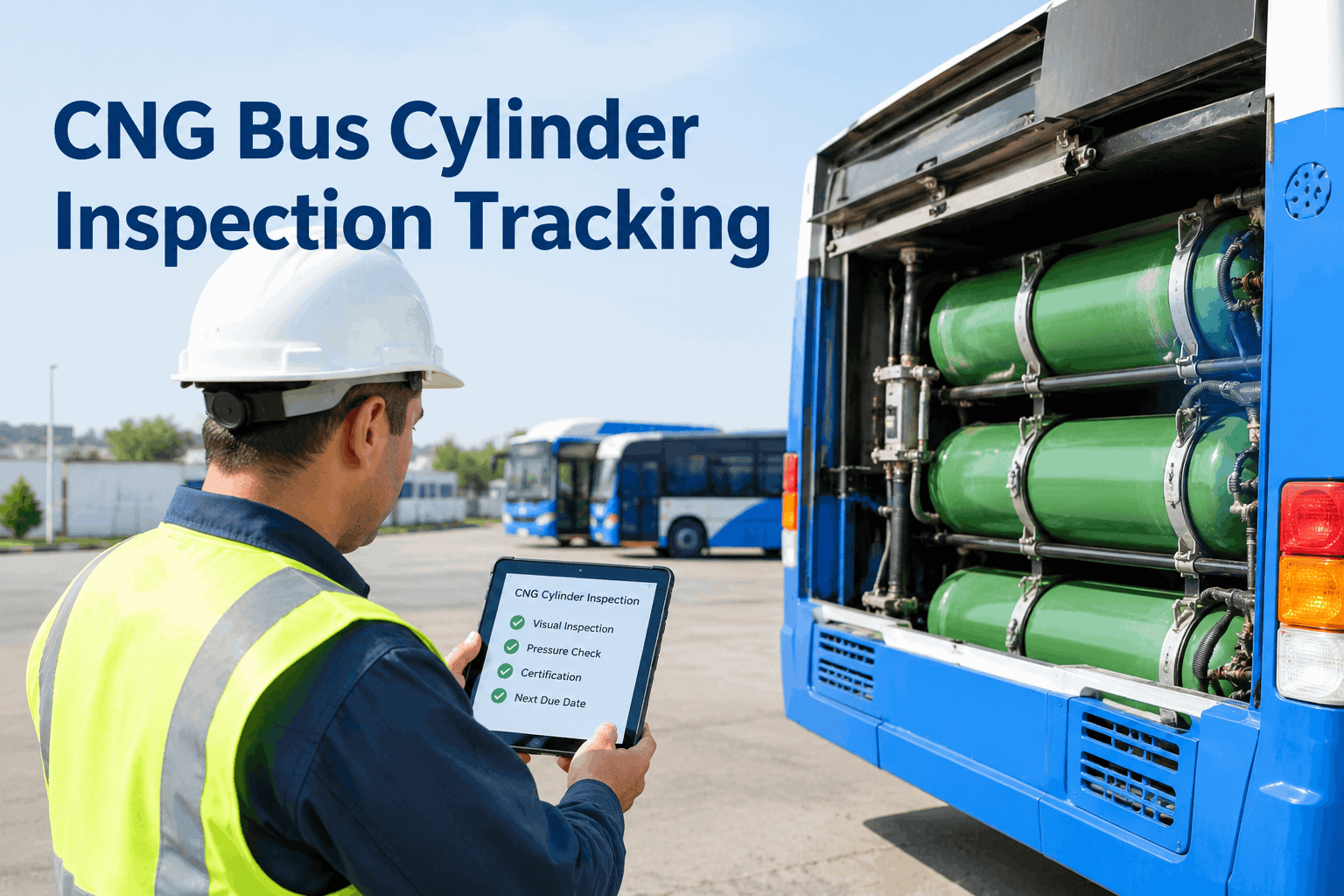
Somewhere in your yard is a CNG bus with a cylinder stamped "DO NOT USE AFTER 03/2027," and the only thing between you and running an expired tank is whether someone wrote that date where you will see it. No agency will remind you. CNG bus cylinder inspection tracking means keeping every tank's inspection dates and hard expiration in one place you check. A quick demo of due-date tracking shows how those dates stop hiding in a binder.
CNG Bus Cylinder Inspection Tracking
Every CNG fuel cylinder has a recurring inspection due date and a one-way expiration. Miss either and the bus is unsafe and out of compliance. Tracking both per tank is what keeps the fleet legal and rolling.
Why CNG Cylinder Tracking Falls Entirely on You
Unlike a recall, where a manufacturer mails a notice, there is no national system that tells a fleet when a CNG cylinder inspection is due or when a tank expires. The whole burden of CNG compliance tracking sits with the owner, and that is exactly where it quietly goes wrong.
Nobody sends a reminder
There is no recall-style notice for a cylinder coming due or expiring. If it is not on a schedule you watch, the first warning you get is a failed inspection or a flagged tank.
Two different deadlines per tank
Each cylinder has a recurring inspection due date and a one-time expiration. Tracking one and forgetting the other still leaves a bus out of compliance.
Dates buried per cylinder, per bus
A bus can carry several cylinders, each with its own stamp and history. Spread across a fleet, that is hundreds of dates no spreadsheet row reminds you about.
The records have to prove it
A qualified inspector's certification has to be on file and producible. A box of paper reports is almost impossible to pull cleanly when someone asks for proof.
None of this is hard once the dates live in a system that watches them for you. Fleets that move cylinder dates out of a binder and onto a schedule stop getting surprised, and you can sign up free and load your cylinder dates to see every due date at once.
The Two Deadlines Every CNG Cylinder Carries
The reason CNG cylinder inspection is trickier than ordinary PM is that each tank runs on two clocks at once, and they behave differently. Track them the same way and one will catch you out, which is the first thing that clicks for fleets when they see both clocks side by side in a demo.
A tank past its date cannot be requalified. When a cylinder expires, replacement is the only path, which is why the expiration needs to be on your radar years ahead, not weeks.
What to Track for Each CNG Cylinder
CNG cylinder certification tracking comes down to a handful of fields per tank. Keep these current on the bus record and both clocks stay visible long before either runs out.
Swipe sideways to see all columns.
Always inspect a tank after any fire, accident, or incident that could have damaged it, on top of the recurring schedule, and use a qualified CNG fuel system inspector. With the fields above on each record, you can see every cylinder due date in one view during a demo instead of reading stamps in the yard.
Your CNG Cylinder Tracking Checklist
Run this against your CNG fleet. Tick every box and no cylinder inspection comes due unseen and no tank runs past its expiration. The gaps are where a safe, legal fleet turns into a flagged one.
-
Every cylinder's inspection due date is scheduledThe recurring inspection, often every 12 months for a bus, is on a schedule that flags it before it lapses.CRITICAL
-
The expiration date is tracked years aheadThe stamped do-not-use-after date is on the record early enough to budget and plan the replacement.CRITICAL
-
A qualified inspector does the workCylinder inspections are done by a certified CNG fuel system inspector, and their report is kept.CRITICAL
-
After any incident, the tank gets inspectedA fire, accident, or impact triggers an inspection on top of the schedule, before the bus runs again.PLAN
-
Certifications are on file, not in a drawerEach inspection report is attached to the cylinder record so proof is an export, not a paper search.PLAN
-
Each tank is tracked by ID, not just by busA bus with several cylinders has each one tracked separately, so no single tank slips through.PLAN
Six boxes, and the first three are where a lapsed inspection or an expired tank becomes a real safety exposure. You can sign up free and build a cylinder record for each bus this week.
How BusCMMS Tracks CNG Cylinder Inspections
Tracking recurring due dates and a hard expiration across a CNG fleet is exactly what a maintenance system is built to watch. BusCMMS keeps both clocks on each cylinder record and flags them before they run out.
Due dates that flag before they lapse
Each cylinder's recurring inspection and its expiration are scheduled on the bus record, with alerts well ahead, so neither clock runs out unseen.
Certifications on the cylinder record
The qualified inspector's report is attached to the tank it belongs to, so the proof lives with the cylinder instead of in a filing cabinet.
One view of the whole CNG fleet
A dashboard shows which cylinders are due, which are coming up, and which tanks are nearing expiration, so planning and budgeting happen early.
Because the cylinder schedule sits in the same system as the rest of your preventive maintenance, a due inspection becomes a work order in the same queue your techs already work from, not a separate reminder to chase.
A Fleet Safety Manager's Take
We run thirty CNG buses, and tracking cylinder dates on a spreadsheet was a part-time job that still missed things. A tank came up expired once and we did not catch it until the annual inspection, which is not a sentence you want to say out loud. Now every cylinder has both dates on the record with alerts, and I can see the whole fleet's status in one screen.
Key Takeaways on CNG Bus Cylinder Inspection Tracking
CNG cylinder tracking is a safety and compliance discipline that lives or dies on due dates. Four things to carry away.
The reminder is on you
No agency notifies a fleet; if the date is not on a schedule you watch, nothing warns you it is due.
Two clocks per tank
A recurring inspection and a one-way expiration, tracked separately, because one repeats and one is final.
Expired means replace
A tank past its date cannot be requalified, so the expiration has to be on your radar years ahead.
Keep the proof with the tank
A qualified inspector's certification on the record turns a compliance check into an export.
Build CNG bus cylinder inspection tracking into one system that watches both clocks, and the dates stop being a part-time worry and become something you glance at, confident that nothing is about to lapse out of sight.