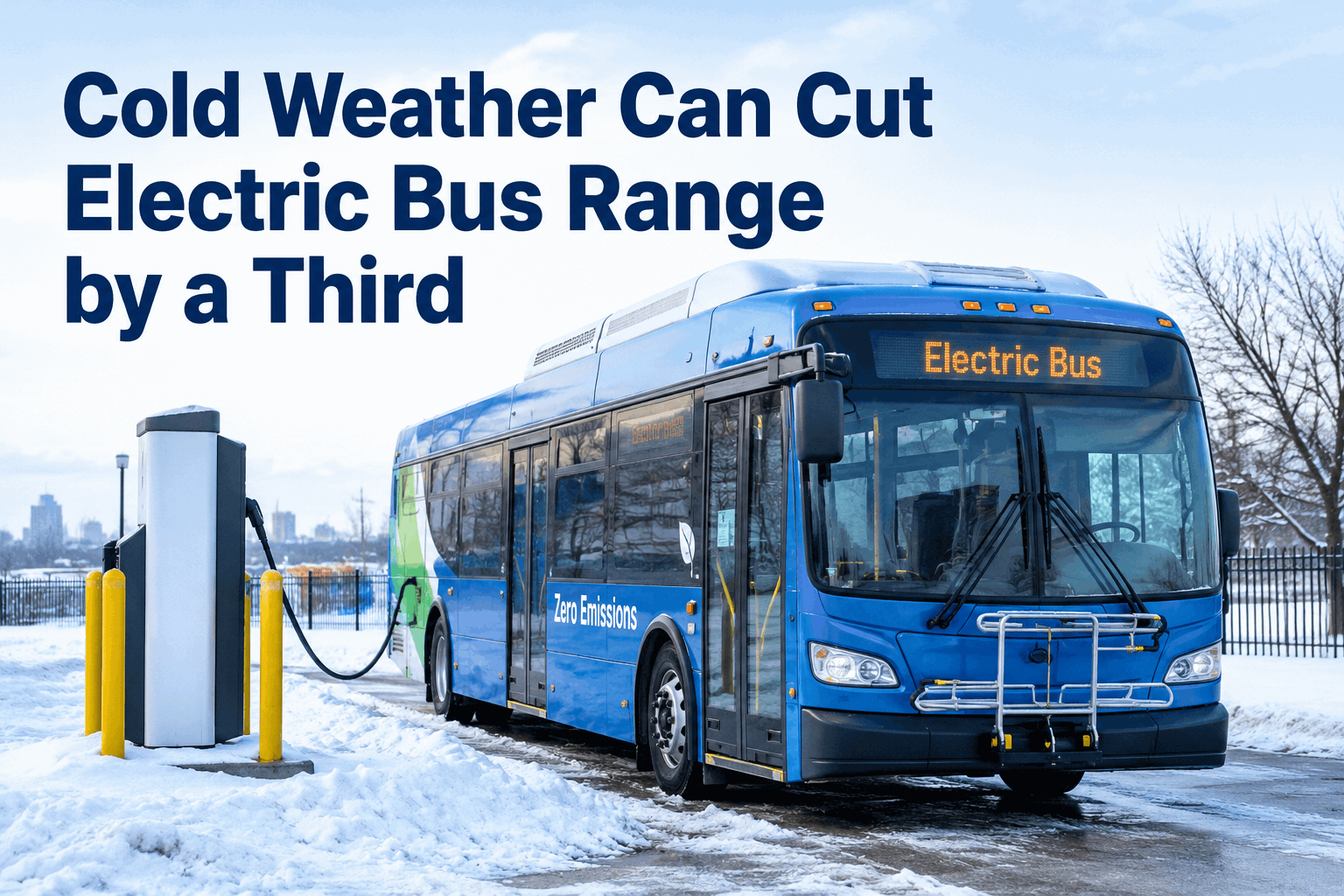
Cornell University researchers tracked seven electric buses across more than 50,000 miles in upstate New York and found something fleet managers couldn't ignore: between 25°F and 32°F, the buses used 48% more energy than they did in mild weather. Run that number forward and it means roughly a third less range on a single charge — the same battery, the same route, a noticeably shorter day. If your fleet is electric and your winters aren't mild, this isn't a research footnote. It's a maintenance planning problem. For the full range-loss data set across multiple studies, see our EV Bus Cold-Weather Range Guide; this piece focuses on what to do about it.
Cold Weather Can Cut Electric Bus Range by a Third
Discover how cold weather affects electric bus range and how fleets can plan routes, charging, and preventive maintenance for winter operations.
Why Cold Weather Drains Electric Bus Range
The Cornell study points to two causes, and they account for nearly all of the loss.
Battery self-heating
Batteries perform best around 75°F. The colder the pack, the more energy it spends warming itself before any of that energy moves the bus — researchers found this accounts for about half the winter energy increase.
Cabin heating and door cycling
Heating the passenger cabin draws directly from the same battery, and frequent stops with open doors let that heat escape repeatedly across a route.
A separate CTE study of eight transit agencies found a similar pattern — battery-electric buses lost 37.8% of range between 50–60°F and 22–32°F, more than the 23.1% loss seen in hydrogen fuel cell buses over the same swing. Two independent studies, the same conclusion: this is a predictable, seasonal hit, not a one-off.
What This Means for Your Maintenance Team
Route planners can shorten routes or add charging stops. Your maintenance team's job is different: make sure every bus is delivering as much of its rated winter range as the battery and systems allow, and that you have the data to prove it when a route doesn't make it back on one charge.
Winterization Checklist: Is Your Fleet Ready for Cold-Weather Range Loss?
Run this against every electric bus before the first hard freeze. Four or more "no" answers means range loss will catch you by surprise this winter, not just cost you some.
Winter vs. Standard PM: What Actually Changes
Expert Review: Logging Nothing vs. Logging Winter Performance
The range loss happens either way. The difference is whether you find out about it from a stranded route or from a report.
No Winter Tracking
- Range loss discovered when a route doesn't make it back
- No baseline to tell normal winter loss from a battery problem
- Preconditioning depends on driver habit, not a logged task
- Route planning guesses at range instead of using real data
Logged Winter Performance
- Every bus has a baseline range to measure cold-weather drop against
- A battery losing more than expected gets flagged before it fails on route
- Preconditioning and heater checks are tracked tasks, not habits
- Route planners work from real per-vehicle winter data
Book a demo to see winter performance logging set up on your own fleet.
The Bottom Line
A third less range in cold weather isn't a flaw in your electric buses — it's physics, confirmed by two independent studies. What's avoidable is being surprised by it. Fleets that log preconditioning, tighten winter PM, and track per-vehicle range going into the cold months turn a known seasonal hit into a planned one.