A 15-minute daily inspection can prevent a $50,000 breakdown. For electric buses, daily checks aren't just about DOT compliance they're about catching battery anomalies, thermal issues, and safety concerns before they strand passengers or damage expensive components.
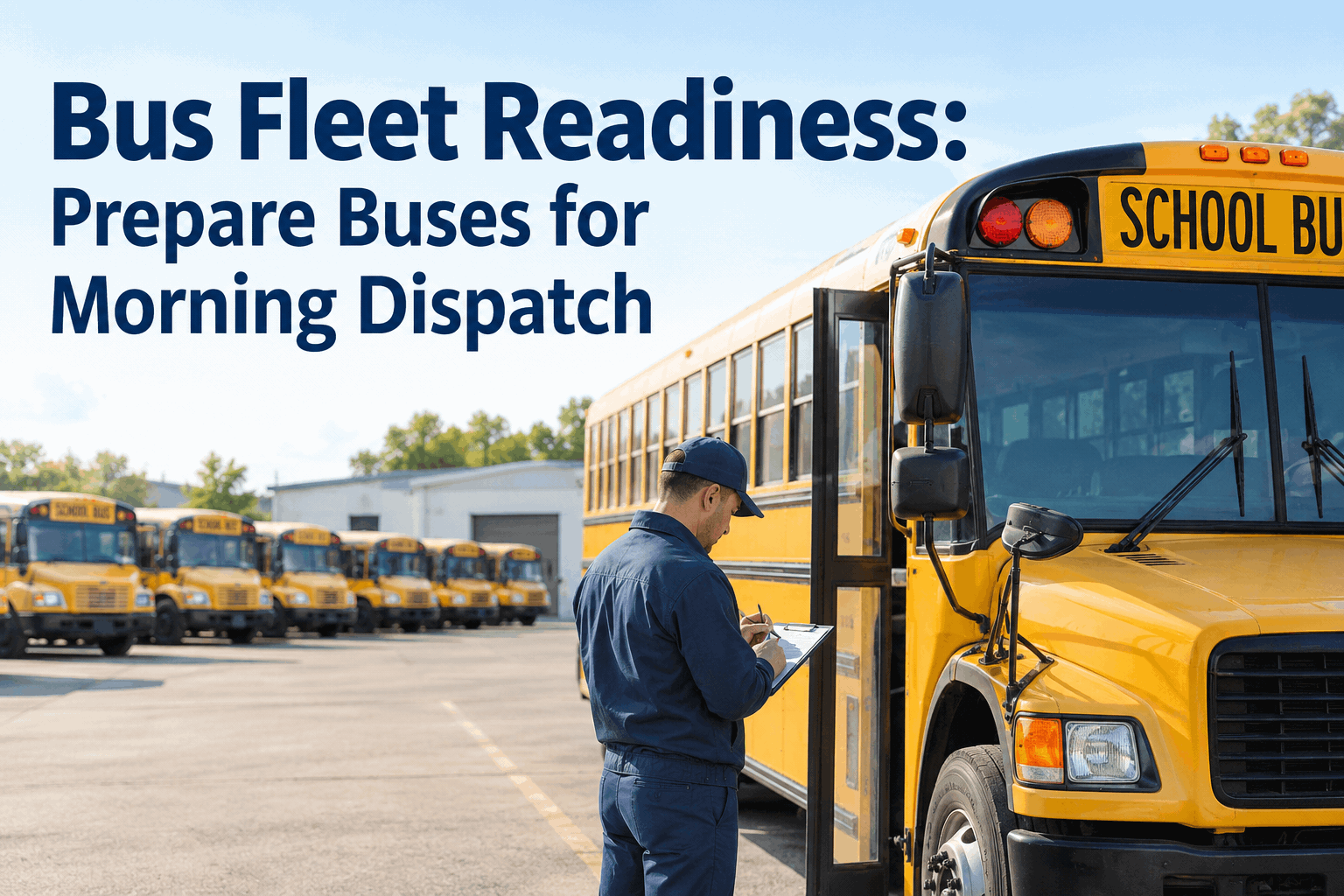
This checklist covers everything EV bus drivers and fleet managers need to verify every day before the first route. Whether you're running school buses, transit, or charter operationsthese checks keep your fleet safe, compliant, and running efficiently. Want digital checklists? Start free with BusCMMS →
1. Battery & EV Systems Check
EV-Specific2. Exterior Walk-Around
Standard3. Interior & Safety Equipment
StandardGo Digital With Your Daily Inspections
Paper checklists get lost. Digital inspections create instant records, auto-flag defects to maintenance, and keep your DVIR compliance bulletproof.
4. Systems Startup Test
EV-SpecificDVIR Compliance Requirements
Per FMCSA regulations, drivers of passenger-carrying CMVs must complete and submit DVIRs at the completion of each day's work — regardless of whether defects are found. Learn more about compliance reporting →
What Happens When You Find a Defect?
Document It
Record the defect with details: what, where, severity. Photos help maintenance diagnose faster.
Classify Severity
Out-of-Service: Bus cannot operate until repaired. Minor: Schedule repair, bus can operate.
Notify Maintenance
Report immediately. Digital systems auto-route to the right technician.
Verify Repair
Next driver reviews DVIR and confirms repairs before operating the bus.
What's Different About EV Bus Inspections?
Electric buses share 70% of inspection items with diesel buses but the 30% that's different involves your most expensive components.
Added for EVs
- Battery SOC verification
- Battery temperature monitoring
- HV cable visual inspection
- Charging port condition
- Regenerative braking test
- Thermal system indicators
Removed vs Diesel
- Engine oil level
- Transmission fluid
- DEF level
- Exhaust system
- Fuel leaks
- Belt condition
The net result? EV inspections take about the same time — but you're checking different systems. Drivers need training on what to look for, and your checklist needs to be EV-specific. See our full EV maintenance comparison →
Why Digital Checklists Beat Paper
Paper Checklists
- Easy to lose or damage
- Illegible handwriting
- Manual filing and storage
- No photo documentation
- Delayed defect reporting
- Hard to audit
Digital with BusCMMS
- Stored automatically forever
- Standardized, complete data
- Instant cloud backup
- Photo attachments included
- Real-time maintenance alerts
- One-click audit reports
Daily Inspection = Daily Protection
Ready to Digitize Your Daily Inspections?
BusCMMS turns 15-minute paper checklists into 10-minute digital inspections with automatic defect routing, photo documentation, and instant compliance reports. Built specifically for electric and mixed bus fleets.
Related: Why Fleets Use CMMS · EV Maintenance Trends 2026
Frequently Asked Questions
A thorough daily pre-trip inspection typically takes 12-15 minutes for an experienced driver. This includes the exterior walk-around, battery/EV systems check, interior safety verification, and startup systems test. With digital checklists, inspections can be completed faster while capturing more detailed documentation.
Industry best practice requires SOC sufficient for the planned route plus a 20% safety reserve. This buffer accounts for unexpected delays, weather-related HVAC demands, and potential detours. If your route typically uses 60% SOC, you should depart with at least 80% charge.
Yes. Under 49 CFR 396.11 and 396.13, electronic DVIRs (eDVIRs) are fully compliant with FMCSA regulations. In fact, FMCSA has proposed explicit language encouraging electronic completion. Digital records must be retained for at least 3 months and be readily accessible for inspection.
Electric buses require daily verification of: battery state of charge (SOC), battery temperature indicators, HV system warning lights, charging port condition, visible HV cable integrity, and regenerative braking function. These replace diesel-specific checks like engine oil, transmission fluid, DEF levels, and exhaust systems.
When a defect is discovered, document it immediately with specific details and photos if possible. Safety-critical defects (brakes, steering, HV systems) put the bus out of service until repaired. Minor defects should be scheduled for repair. The carrier must certify repairs on the original DVIR, and the next driver must review and acknowledge before operating.