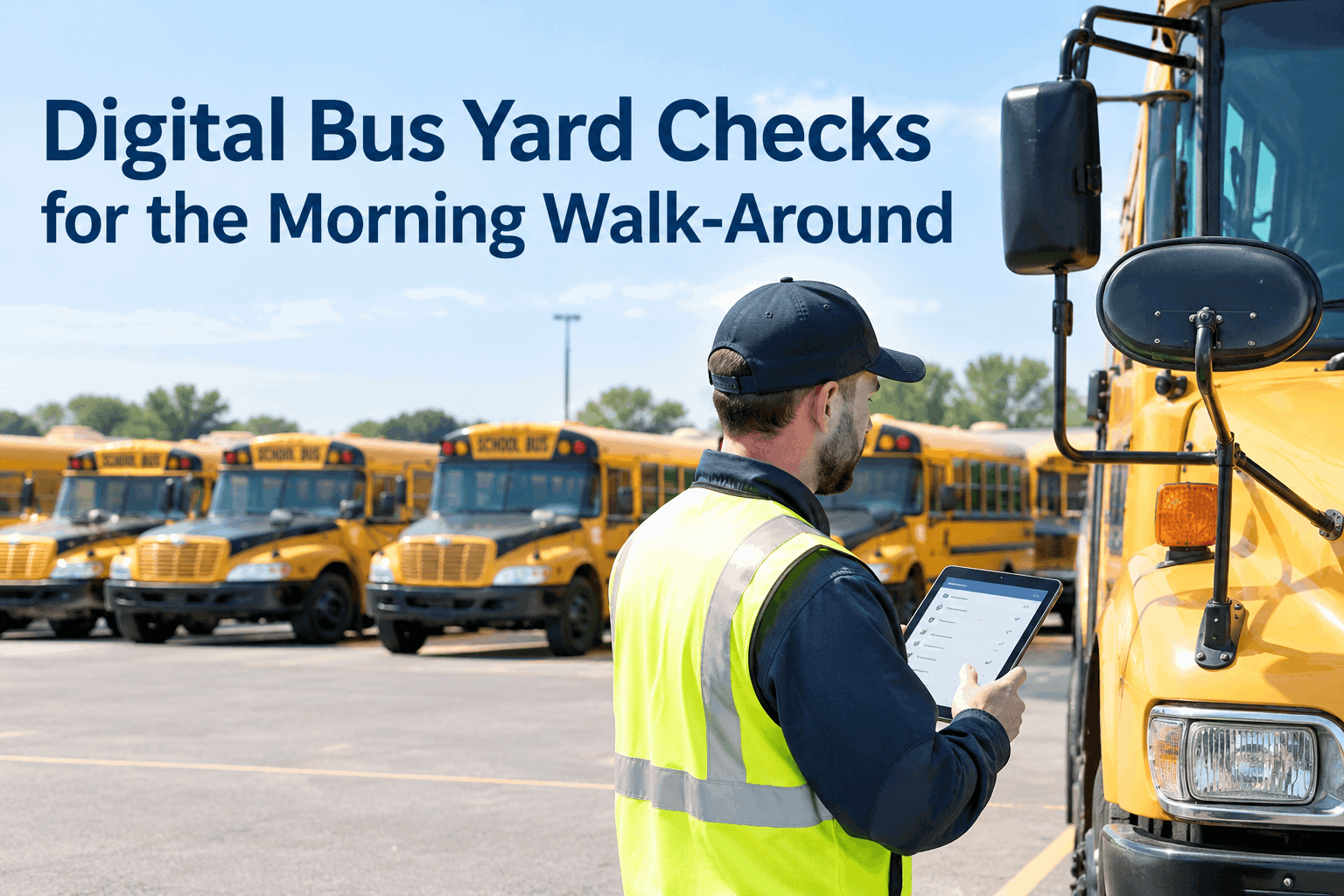
It is 5:40 a.m. and still dark, and you are walking the yard with a flashlight and a clipboard, checking forty buses before drivers pull out at six. Digital bus yard checks take that same morning walk-around and put it on a phone, so a defect you spot at 5:40 is a work order before the bus ever moves. Seeing it run in a quick demo of digital inspections makes the paper version look slow.
Digital Bus Yard Checks for the Morning Walk-Around
The morning walk-around decides whether every route rolls on time. Done on a phone instead of paper, it turns a stack of smeared notes into live readiness you can see bus by bus before the first pull-out.
Why the Paper Morning Walk-Around Keeps Letting You Down
The clipboard is not failing because anyone is careless. It fails because a paper morning bus walk-around has too many places for a defect to fall through, and every one of them ends the same way: a bus that should have been held rolls out on a route.
The note never reaches the shop
A defect scribbled at 5:40 sits on a clipboard until someone walks it to the shop, if they remember. The bus is already pulling out by the time the paper lands.
No way to see the whole yard
Paper lives on forty separate sheets. Nobody can glance at one view and see which buses are ready and which are held, so dispatch finds out the hard way.
A word does not show the damage
Cracked lens means different things to different people. Without a photo, the shop cannot judge severity or parts until they walk out to the bus themselves.
Nothing to show in an audit
A box of paper DVIRs is almost impossible to produce cleanly for an FMCSA or state DOT review. Digital records pull up the history in seconds.
A digital walk-around closes each of those gaps at the point they happen, on the phone in the inspector's hand. Teams that make the switch usually start with a single depot and expand, and you can sign up free and run one yard first to feel the difference before rolling it out fleet-wide.
Paper vs Digital: The Same Defect, Two Mornings
The gap between a paper and a digital bus inspection is not the walk itself, it is everything that happens to a defect after you spot it. Follow one flat tire through both and the difference is obvious, and it is the first thing most fleets notice when they see a walk-around in a demo.
The digital path is not just faster, it removes the step where the report gets lost. A photo-based defect report goes from the inspector's hand to the shop queue without passing through a clipboard.
What a Good Bus Walk-Around Checklist Covers
A digital bus inspection is only as good as the checklist behind it. A bus-specific walk-around covers the safety items a generic vehicle app leaves off, and groups them so nobody skips a zone in the dark.
Swipe sideways to see all columns.
Because the checklist ships pre-built for buses, you are not building these zones from scratch the way you would in a generic tool. If you want the deeper how-to on moving the forms themselves off paper, our guide to automating DVIR checklists in five steps walks through it, and you can see the bus-specific forms in a demo to compare against what you run today.
Your Digital Yard Check Checklist
Run this against your own morning routine. Tick every box and the walk-around stops being a stack of paper you hope gets read, and becomes a readiness picture dispatch can trust before six.
-
The walk-around runs on a phone, not paperEvery bus is checked against a bus-specific digital checklist the inspector carries in their hand.CORE
-
A defect gets a photo, not just a wordThe inspector snaps the cracked lens or the flat so the shop sees the damage and judges severity without a trip to the bus.CORE
-
A failed item opens a work order on its ownThe defect lands in the shop queue the moment it is logged, so nothing waits on a clipboard reaching the office.CORE
-
Dispatch sees ready vs held in one viewA live board shows which buses cleared the walk-around and which are held, so routes get planned around facts, not guesses.PLAN
-
Every check is time-stamped and keptEach walk-around is logged with who, when, and what, so an FMCSA or state DOT review is an export, not a search.PLAN
-
Repeat defects on a bus are visibleThe same item flagged week after week stands out in the record, so a recurring problem gets fixed, not re-noted.PLAN
Six boxes, and the first three are where a missed defect turns into a bus held instead of a bus broken down on a route. You can sign up free and set up your first digital yard check before tomorrow's walk-around.
How BusCMMS Runs the Digital Morning Walk-Around
Digital bus yard checks are the part BusCMMS was built for from day one. The forms ship pre-loaded for buses, and the defect-to-repair path is wired in, so the morning walk-around produces action instead of paper.
Pre-built bus walk-around forms
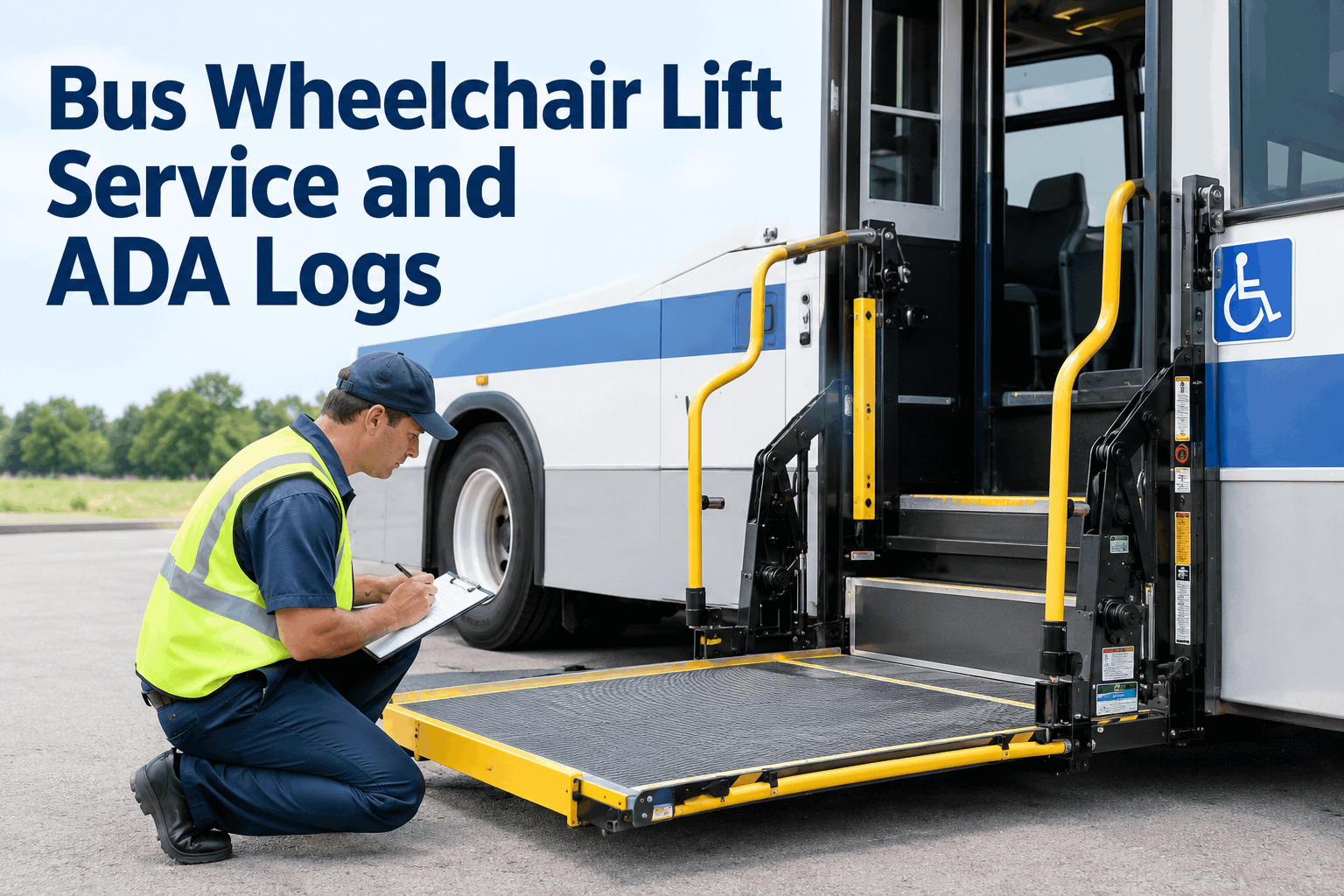
Digital DVIRs come pre-loaded with the bus-specific items, from stop arms to wheelchair lifts, so the checklist is right on day one instead of built from scratch.
Photo defect reports to work orders
A flagged item with a photo becomes a work order automatically, so the shop sees the defect and the damage the instant the inspector logs it.
A live yard-readiness view
A real-time board shows which buses cleared the walk-around and which are held, so dispatch plans the morning around what is actually ready.
And because the failed-inspection work orders sit in the same system as your scheduled maintenance, the morning walk-around feeds the same queue your preventive maintenance runs through, instead of living in a separate pile.
A Transportation Director's Take
My foreman and I used to split the yard with two clipboards and still miss things, because a note written in the dark at 5:45 does not always make it to the shop. The first week we ran the walk-around on phones, a flagged brake light was a work order before the driver even showed up. We have not rolled a bus we should have held since.
Key Takeaways on Digital Bus Yard Checks
A digital morning walk-around is one of the fastest wins a bus fleet can make, because it fixes the gap between finding a defect and acting on it. Four things to carry.
The gap is after the walk
Paper fails not in the checking but in getting the defect from the clipboard to the shop in time.
A photo beats a word
A photo defect report lets the shop judge severity and parts without walking out to the bus.
See the whole yard
A live ready-vs-held view beats forty loose sheets dispatch cannot read at a glance.
Records that audit themselves
Time-stamped digital checks export clean for FMCSA or state DOT instead of filling a box.
Move your digital bus yard checks onto a phone with photo defect reports and a live readiness view, and the morning walk-around stops being a race against pull-out and becomes the thing that keeps every route rolling on time.