It is July, your tour is sold out, and the double-decker meant to run route one is in the yard with a brake fault the driver flagged yesterday. Every seat on it is a refund and a one-star review. Double-decker sightseeing bus fleet software keeps a flagged defect from becoming a ruined tour day. See exactly how it catches that brake fault the day before — book a 20-minute demo.
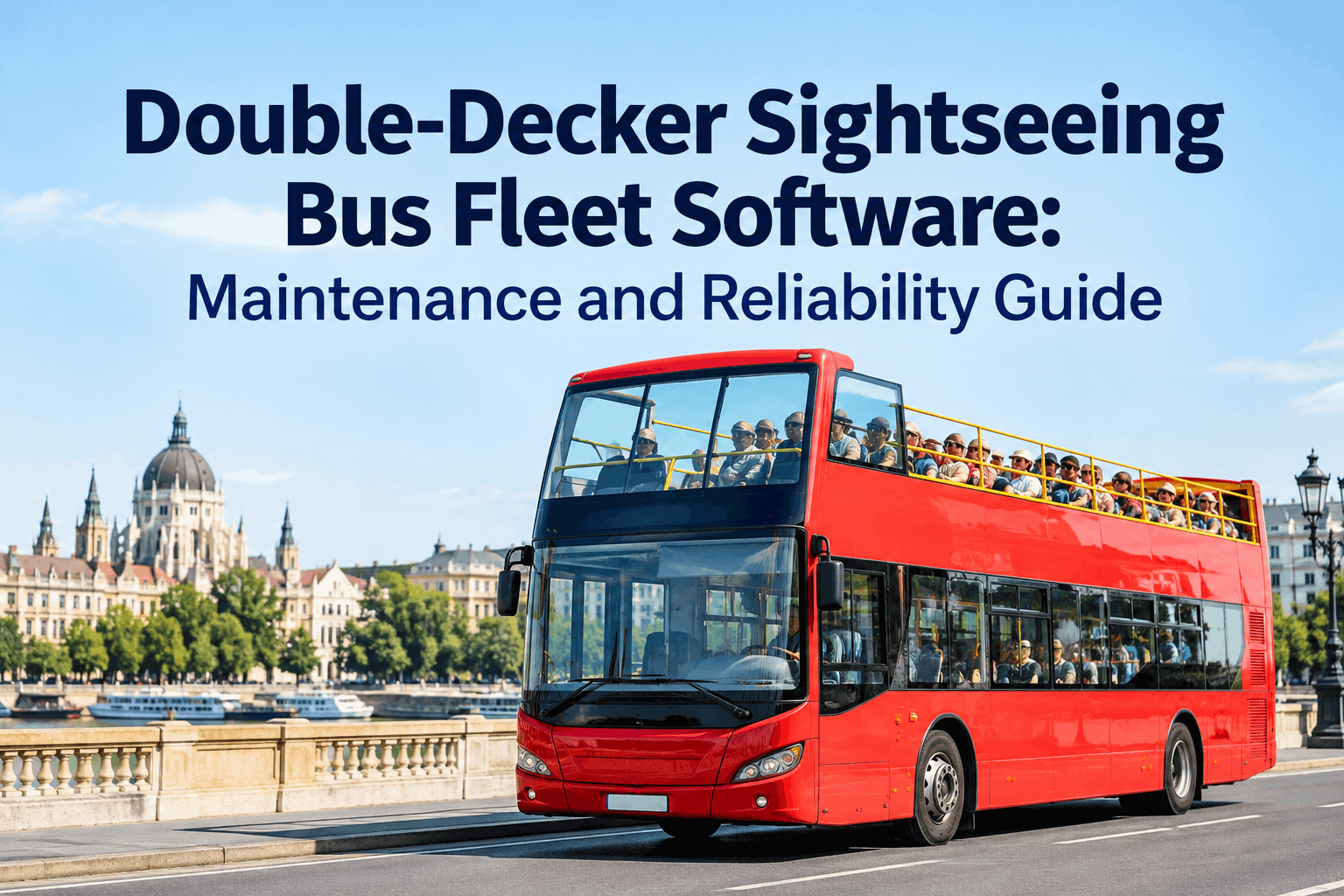
Double-Decker Sightseeing Bus Fleet Software: Maintenance and Reliability Guide
A double-decker is not just a bigger bus. Its height, open top deck, staircase and stop-start city duty create a maintenance profile that generic fleet tools miss — and in a seasonal, tourist-facing business, a vehicle down in peak week is money and reputation you cannot get back.
Why a Double-Decker Is Not Just a Bigger Bus
Every operator who has run both knows it: the sightseeing double-decker eats maintenance in ways a single-deck coach never does. Height and a high center of gravity make stability safety-critical, the open top deck lives outdoors in all weather, and the stop-start crawl through a city center punishes brakes and tires on a loop that runs all day. A generic fleet tool does not know any of that.
Top-heavy means safety-critical
A high center of gravity makes brakes, steering, suspension and tire condition matter more, not less. On a loaded double-decker these are not routine items — they are stability.
The open deck lives outside
Open-top seating, flooring and drainage take sun, rain and grime every day, plus a staircase that passengers use constantly. Items a single-deck bus simply does not have.
All-day stop-start duty
A sightseeing loop is constant braking and crawling, not highway cruising. Brakes, tires and driveline wear on a tighter clock, so the PM interval has to be tighter too.
Maintain a double-decker on a single-deck schedule and you will find the gaps the hard way — mid-loop, with a full upper deck of tourists.
The Season Is Why Downtime Hurts So Much
Sightseeing demand is not flat. It climbs to a hard summer peak where every bus you own is earning, and that is exactly the window where a breakdown costs the most — there is no spare sitting idle to swap in when you are already running the whole fleet.
The job of sightseeing bus maintenance software is to get the fleet into peak season already sorted — PM done, defects closed, every bus ready — so the busy months run on buses, not on luck. Get a head start on it today — create a free account and map your pre-season PM in an afternoon.
Stop-Start Duty Means a Tighter PM Clock
Mileage alone lies to you on a sightseeing fleet. A double-decker crawling a 10-mile city loop all day does far more braking and heat cycling than a coach doing 10 highway miles, so brakes, tires and fluids wear on a much tighter schedule. The maintenance software has to let you set intervals by that real duty cycle, not by odometer alone.
Set PM by mileage and calendar, with tighter brake and tire intervals for the stop-start loop — and the wear stops catching you off guard.
The Double-Decker Inspection Checklist
A double-decker pre-trip covers everything a normal bus does, plus the items that are unique to carrying people on a second, open level. These are the checks that keep a sightseeing bus safe and in service — and you can watch a driver run one live on a quick demo.
- Brakes, tires & steeringThe stop-start wear items on a top-heavy vehicle. First to check, checked often, never deferred.EVERY DAY
- Staircase, rails & upper-deck accessTreads, handrails and the stairwell passengers climb all day — a fall risk if worn or loose.EVERY DAY
- Open-top deck, seating & drainageSeat security, floor condition and water drainage on the exposed upper deck, plus any safety netting or covers.INSPECT
- Height marking & clearance awarenessHeight placards legible and the route cleared of low bridges — the one mistake that writes off a top deck.VERIFY
- Logged with a timestamp & signatureEvery check and repair recorded, so the safety trail is complete — and a flagged defect opens a work order, not a sticky note.RECORD
A defect written on paper and left in the yard office is the one that ends up on the road. Catch it on the digital pre-trip and it becomes a work order instead.
What Double-Decker Sightseeing Bus Fleet Software Should Do
The job is to keep distinctive, hard-working vehicles on the road through a season that does not forgive downtime. BusCMMS is built for buses from day one, so you set it up around your double-deckers rather than forcing a generic tool to understand them. Add your first bus free and see for yourself — start a free account in minutes.
Duty-based PM scheduling
Set tighter brake, tire and fluid intervals for stop-start sightseeing loops, by mileage or calendar, and run diesel and electric double-deckers on their own schedules side by side.
Double-decker inspections & work orders
Digital pre-trips that include the upper deck, staircase and clearance items, where a failed check auto-opens a work order so defects never sit on paper.
Fleet-availability dashboard
See which buses are ready for the day's tours at a glance — the number that matters most when every seat in peak season is already sold.
Parts control for high-wear items
Brake and tire consumables turn over fast on a sightseeing fleet. Auto-reorder alerts keep the shelf stocked so a repair never waits on a part during peak week.
Availability, cost-reduction and rollout figures above are BusCMMS's own reported results from its customer data, not independently audited benchmarks.
A Tour Fleet Manager's Take
Key Takeaways on Double-Decker Sightseeing Bus Fleet Software
Choosing double-decker sightseeing bus fleet software comes down to matching the tool to what makes these buses different — and to a season that punishes downtime. Four things to carry into the decision.
Not just a bigger bus
Height, open deck, staircase and stop-start duty create wear a single-deck schedule will miss.
Schedule by duty, not just miles
City loops wear brakes and tires on a tighter clock — set intervals to match the real duty cycle.
Win the season before it starts
Peak has no slack. Get PM done and defects closed before the busy months begin.
A flagged defect is a work order
Catch it on the digital pre-trip and it never becomes a refunded, one-star tour.
Run your double-decker sightseeing bus fleet software around what these buses actually are — top-heavy, open-topped, hard-working and seasonal — and the tours roll, the reviews stay five stars, and the busy months run on buses instead of luck. The fastest way to know if it fits your operation is to book a demo with your own buses on screen, or read the complete guide to what a bus CMMS does first. The buses are the easy part — keeping them ready is the win.