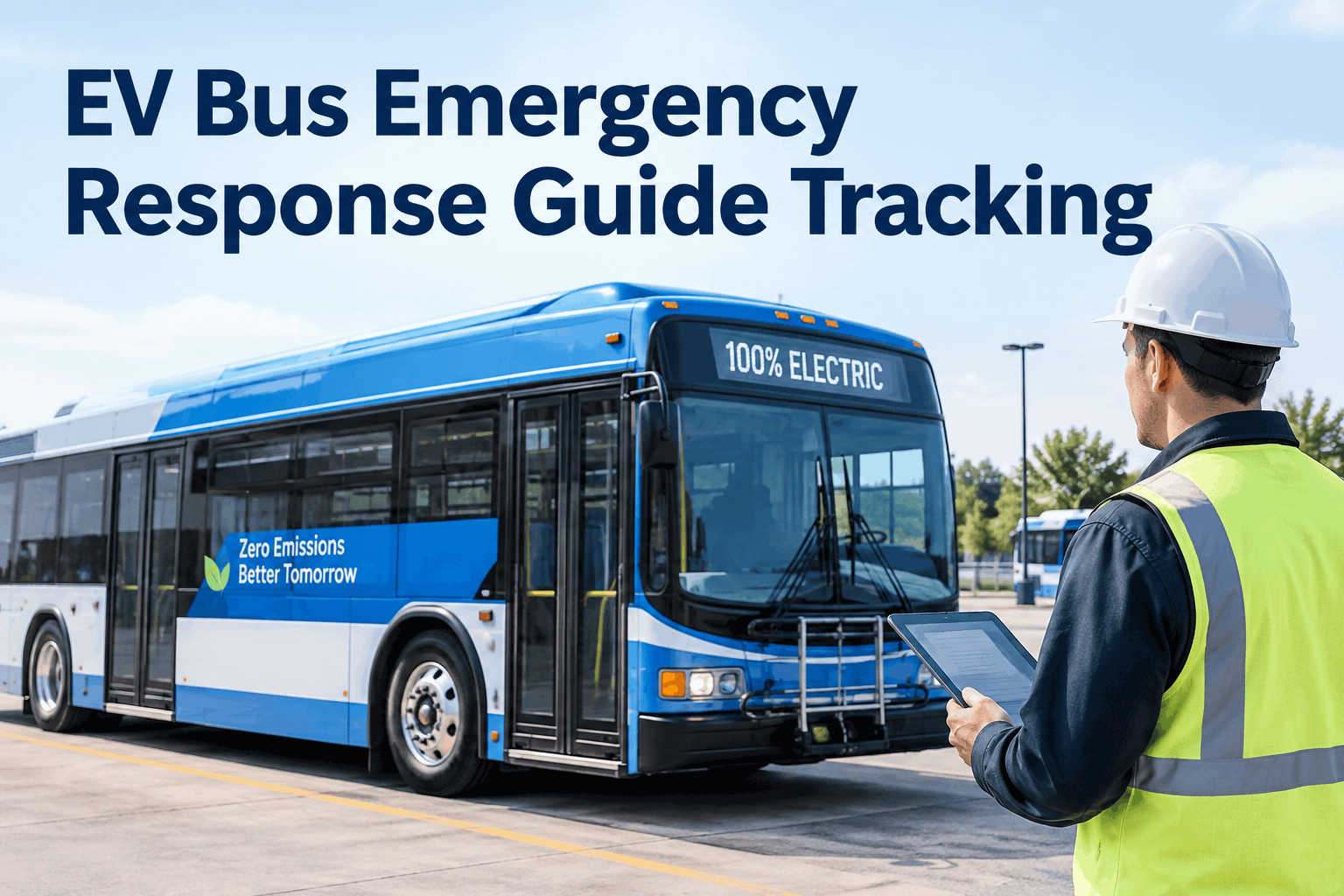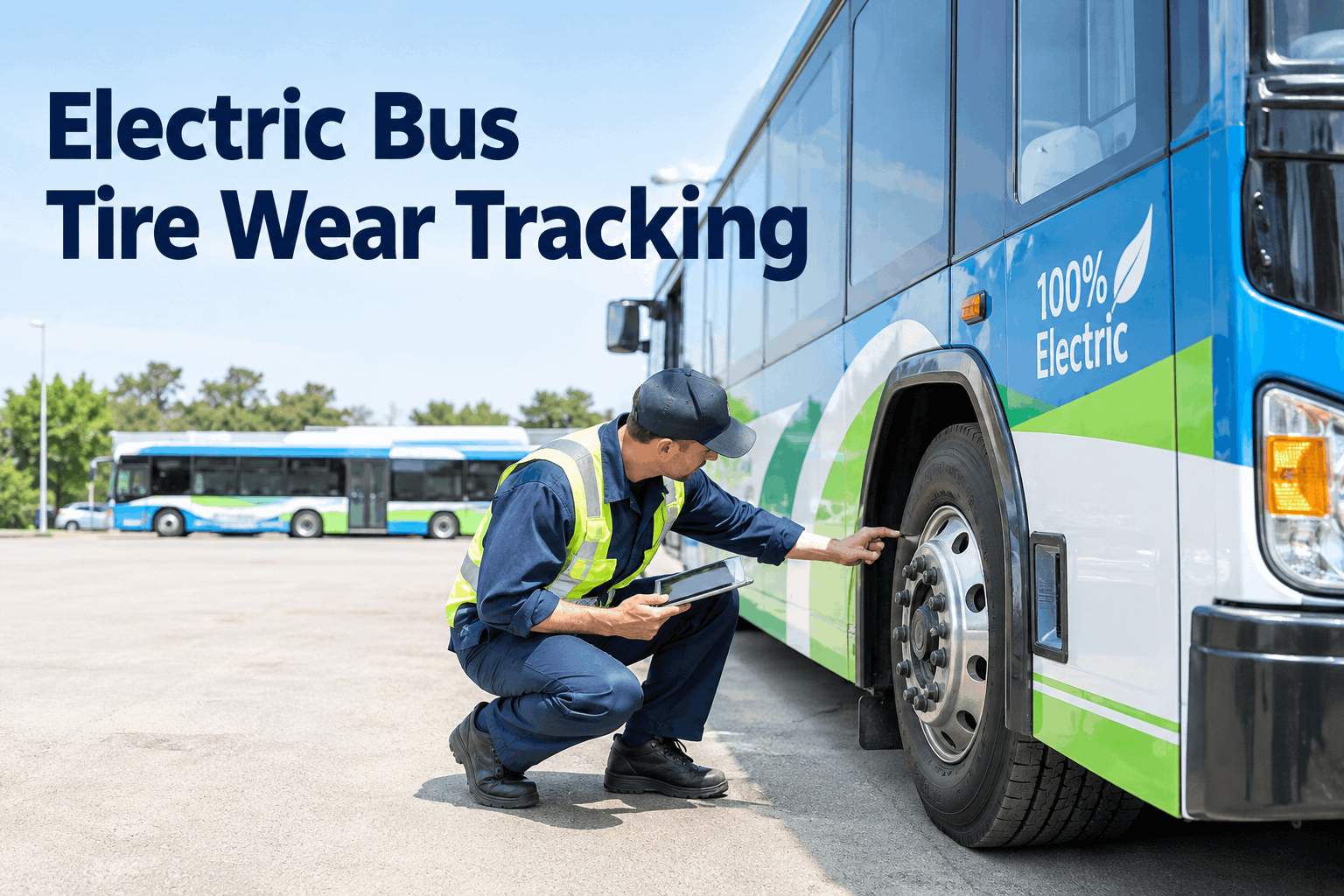
You rotate the tires on your diesel buses on a schedule that has worked for years, then you add a few electric buses and that same schedule starts coming up short. The EV tires are cording before the rotation is due. That is not bad luck, it is physics, and it is why electric bus tire wear tracking has to run tighter than your diesel playbook. Seeing the wear curve on a quick demo of per-bus tracking makes the difference obvious.
Electric Bus Tire Wear Tracking
Electric buses are heavier and deliver torque instantly, so their tires wear faster than a diesel's. Track tread per bus and you replace on data instead of getting surprised at a pre-trip.
Illustrative wear curves; real rates vary by route, load, and tire. The point is the shape: an EV reaches the replacement line sooner.
Why Electric Bus Tires Wear Faster
If your EV tires feel like they are disappearing, you are not imagining it. Three things about an electric bus push tread wear higher than a comparable diesel, and knowing them is the first step in electric bus tire maintenance that actually keeps up.
The battery adds weight
A battery pack makes an electric bus noticeably heavier than its diesel twin. More weight on every tire means more load, more heat, and faster tread loss over the same route.
Torque arrives instantly
Electric motors deliver full torque the moment the pedal moves. That instant pull at every stop scrubs the tread harder than a diesel's gradual power, especially on a stop-and-go route.
Regen braking adds scrub
Regenerative braking puts repeated deceleration force through the tires in normal driving, adding wear that a diesel coasting to a stop simply does not.
So the diesel schedule under-serves
Industry guidance and tire makers put EV tire wear roughly twenty percent higher. A rotation and inspection cadence built for diesel will leave EV tires overdue.
The takeaway is not that EV tires are bad, it is that they need a tighter clock. Fleets that set EV-specific inspection intervals and watch tread per bus stop getting caught out, which is simplest to set up in a short demo of fuel-type PM scheduling.
Catching Uneven Wear Before It Costs You a Tire
Faster wear is only half the story. Uneven wear across tire positions, from alignment, pressure, or a heavy load, quietly destroys a tire early. Tracking tread by position on each bus is how you catch it while a correction is still cheap.
Automated monitoring vendors report tracking tread this way can extend bus tire life by around 12 percent (Tyrata). Even a manual position check on a schedule gets you most of that gain.
Reading Tread Depth: When to Act
Tread depth tracking only helps if everyone reads it the same way. Here is a simple scale for a bus tire, in 32nds of an inch, so a tread-depth reading turns into a clear next step instead of a judgment call.
Swipe sideways to see all columns.
Steer tires carry a higher legal minimum than drive tires, so your record should flag by position. Always follow your state DOT limits and the tire maker's specs, and keep the readings on the bus record so you can start free and watch each tire trend over time instead of reading it cold at every inspection.
Your Electric Bus Tire Tracking Checklist
Run this against your EV fleet. Tick every box and a worn or uneven tire gets caught on a schedule, not at a pre-trip when the bus is already due out on a route.
-
EV buses have a tighter inspection intervalTires that wear about twenty percent faster need an inspection clock set shorter than your diesel schedule.CORE
-
Tread is recorded by position, not per busEach tire position gets its own reading so uneven wear shows up instead of hiding in an average.CORE
-
Tread checks are on the pre-trip inspectionDrivers flag a low or damaged tire on the daily DVIR so nothing waits for the next formal inspection.CORE
-
A worn reading opens a work orderHitting the replace threshold turns into a tracked job, so the tire is handled rather than noted and forgotten.PLAN
-
Replacement tires are stocked ahead of needA tire hitting the order-now reading triggers a stock check so the right size is on the shelf when it is time.PLAN
-
Tread history is kept per tire over timeA trend per position tells you a tire wearing too fast is really an alignment or pressure problem, early.PLAN
Six boxes, and the first three are where a blowout or a failed inspection gets prevented. You can sign up free and set these up for your own electric buses in an afternoon.
How BusCMMS Handles Tire Wear Tracking
Tracking tread by position across a fleet, with a tighter clock on the electric buses, is exactly the kind of job a bus maintenance software system is built for. Three features carry most of the load.
EV-specific inspection scheduling
Set a tighter tire inspection interval on your electric buses than your diesels, by mileage or calendar, so faster wear never outruns the schedule.
Pre-trip tire checks to work orders
A driver flags a worn or damaged tire on the digital DVIR, and that defect opens a work order so the tire is handled, not forgotten.
Tread readings on the bus record
Tread by position lives on each vehicle record, so you see a tire trending down over time instead of reading it cold at every stop.
Because the worn-tire job sits in the same queue as the rest of your PM, you can order the tire ahead through parts and inventory tracking instead of scrambling the day it fails inspection.
A Maintenance Supervisor's Take
We ran the electric buses on the same tire schedule as the diesels for about a year, and we were pulling buses for cording way too often. Once we tightened the interval and started logging tread by position, the surprises basically stopped. The inner duals were the ones getting us, and we never would have seen that from one number.
Key Takeaways on Electric Bus Tire Wear Tracking
EV tires are a faster-moving maintenance item than diesel tires, and tracking is what keeps them from becoming a downtime or safety problem. Four things to carry.
EV tires wear faster
Weight, instant torque, and regen braking push EV tire wear roughly twenty percent above a diesel's.
The diesel clock is too slow
A rotation and inspection interval built for diesel leaves EV tires overdue; set a tighter one.
Track by position
An average hides uneven wear; a reading per position catches the alignment or pressure problem early.
Replace on data
Tread trends on the record mean you plan and order ahead instead of reacting at a pre-trip.
Build electric bus tire wear tracking into your routine, with a tighter clock and a reading per position, and the tires become a planned line item instead of the thing that pulls a bus out of service on a busy morning.