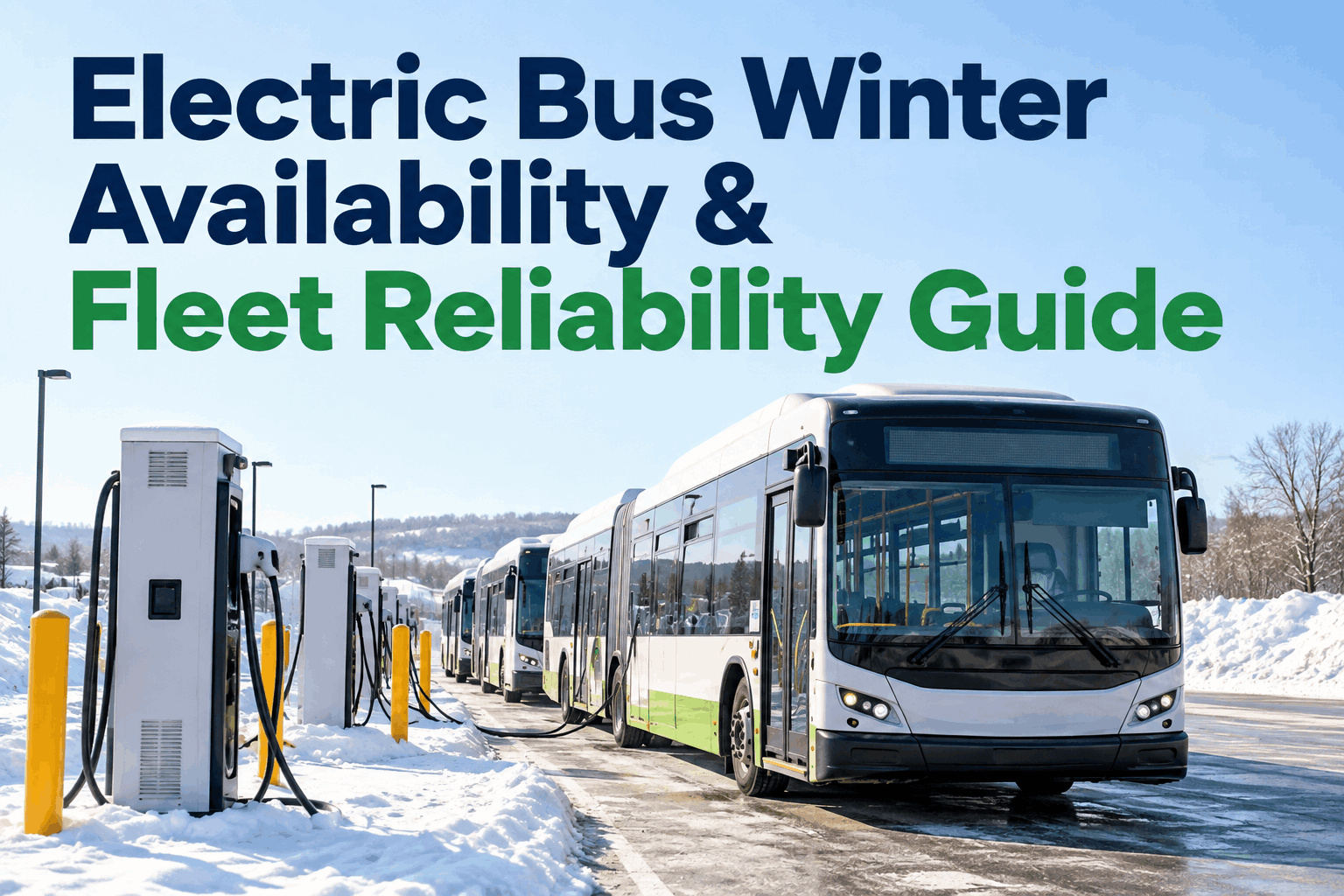
It is 9 degrees, your electric buses charged full overnight, and they still cannot cover their runs. That is the real problem with electric bus winter availability: charged, not broken, just unable to run the routes they handled in October.
Electric Bus Winter Availability: Keeping EVs Route-Ready When It Gets Cold
Cold cuts range, slows charging and breaks the dispatch math you built in warmer weather. Here is how winter actually eats into electric bus availability, and how to protect it with data instead of guesswork.
Same bus, same full charge. The gap is what breaks winter dispatch — and what you can plan around once you measure it per bus.
This is not a battery-failure story. A healthy electric bus is behaving normally when its range drops, its charging slows, and its availability falls in the cold — and the good news is that it is predictable once you track it, and most of the loss is recoverable through how you precondition, charge, and dispatch, not through buying new buses. The rest of this guide walks through why winter hits availability, the chain that turns a cold morning into a short route, and the five moves that keep the most buses on the road.
How cold weather attacks electric bus availability
Three things happen at once when the temperature drops, and they stack. None of them is a fault code. All of them pull buses off your available list if you are not planning for them.
Range drops, often sharply
Battery chemistry delivers less usable energy in the cold, and cabin heat and defrost pull from the same pack that moves the bus. A route that needed 60 percent of a charge in fall can need 85 to 95 percent on a hard winter morning. Same route, same driver — the bus just has less to give.
Charging slows down
A cold battery accepts power more slowly to protect itself, so the overnight charge you counted on finishing by 4 a.m. may still be climbing at dispatch. The bus that should have been topped off and ready is sitting on the charger at 80 percent, and your window to fix it is already gone.
Dispatch assumptions break
Your run assignments were built on warm-weather range. When each bus quietly loses a third of it, the schedule that balanced perfectly in October no longer closes. Buses that looked interchangeable are not, and the gap shows up as a scramble at 6 a.m. instead of a plan the night before.
The reason this catches fleets off guard is that each piece looks minor on its own. Put them together on the coldest week of the year and you get the same result every time: fewer buses that can actually cover their assigned run, which is the only definition of availability that matters to a dispatcher. Seeing the drop laid out per bus is the fastest way to believe it, and you can book a short walkthrough of that view to check it against your own fleet. If you want the diesel side of the same cold-weather prep, our general bus fleet winter maintenance guide covers the engine, DEF, and cold-start items that electric buses do not have — this page stays on the electric-specific availability problem.
The winter availability chain: how a cold morning becomes a short route
Follow the sequence once and it stops being a surprise. This is the same chain every cold morning, and every link in it is something you can see coming and plan around.
Temperature drops overnight
Pack temperature falls, and the bus will need cabin heat and defrost running the whole route.
Less range, slower charge
Usable range falls and the overnight charge finishes late or not at all, so the bus starts the day with less than you planned.
Bus can't cover its run
The assigned route now needs more range than the bus has, so it cannot be dispatched as scheduled.
Availability falls at the worst time
You are short buses on the coldest day, scrambling for a spare or a mid-day charge you never scheduled.
Break the chain at link one or two — precondition the bus and finish the charge before dispatch — and links three and four never happen. That is the whole game in winter: move the fight upstream, to the night before, where you still have options, instead of the morning, where you do not. The fleets that run this well have the data to know which buses need the most margin, which is where tracking winter range per unit pays off. You can walk through how that looks on a live dashboard if you want to see it before the season turns.
Five ways to protect electric bus winter availability
None of these require new buses or better weather. They move the cold-weather problem from the dispatch window, where it costs you routes, to the planning window, where it costs you nothing. Run them in order — the first two recover the most availability for the least effort, and you can start a free account to track which ones move your numbers most.
Precondition on the charger, not on the battery
Warm the cabin and the pack while the bus is still plugged in, using grid power instead of range. The bus leaves warm, so the first miles do not get taxed heating a cold cabin from scratch. This single move recovers more winter range than anything else on the list.
Build a winter range margin into dispatch
Assign runs on winter range, not summer range. If a bus loses a third of its range in the cold, plan its routes on that reduced number with a safety cushion, so the schedule still closes on the worst mornings instead of only the mild ones.
Schedule cold-season PM and battery checks
Winter is a condition, so put it on the PM calendar: battery-health checks, thermal-management system inspection, cabin heater and defrost function, tire condition. A heater that fails in January does not just make riders cold — on an electric bus it changes how the whole pack behaves.
Watch winter range per bus, not fleet-wide
Buses do not lose range evenly — an older pack or a worse-insulated unit drops further. Track the cold-weather range of each bus so you know which ones need the shortest runs and the most margin, instead of treating them all the same and getting surprised by the weak one.
Keep charging ahead of demand
Since cold charging is slower, start it earlier and sequence it so the buses on the longest runs finish first. Stagger charging so the yard is not racing the clock at 5 a.m., and keep a reserve bus fully topped to cover the one that did not finish.
Stop guessing what your buses can do in the cold
BusCMMS tracks real cold-weather range and charging per bus, and builds winter PM right into the schedule — so you dispatch on numbers your buses actually hit, not warm-weather hope.
Where BusCMMS analytics and PM keep electric buses route-ready
The reason winter catches fleets off guard is that the data lives in too many places — charger logs here, range in the telematics portal, PM on a whiteboard. BusCMMS pulls it onto one dashboard so winter availability is something you manage, not something that happens to you.
Seasonal availability tracking
See range and availability per bus by season, so the summer-to-winter drop is a number on a chart you planned around — not a scramble you discover at the gate.
Cold-season PM and preconditioning
Winter battery, heater, and thermal-system checks scheduled automatically, with preconditioning built into the daily routine so buses leave warm and keep more range.
Charging and telematics integration
Pre-built connectors pull charge state and range straight from your buses and chargers, so slow overnight charges and low-range units are flagged before dispatch, not after.
BusCMMS is built for buses from day one, so these are not generic fleet features bent to fit — the electric PM logic and availability tracking are there because transit and school fleets running EVs needed exactly this. If you would rather get hands-on first, you can set up a free account and load your own buses to see your real winter numbers.
The first winter we ran electrics, I lost two buses off the board on a nine-degree morning and had no idea it was coming — they charged fine, they just couldn't make the run with the heat on. Now I watch cold-weather range per bus like I watch fuel. My two oldest packs get the short in-town loops in January, the newer ones take the long runs, and I precondition everything on the charger before 5. Same buses, same weather. I just stopped pretending it was summer.
Key takeaways on electric bus winter availability
Winter range loss is normal, not a fault. A healthy electric bus simply has less to give when it is cold and the heat is running — plan for it instead of being surprised by it.
Availability falls because of the chain: cold cuts range and slows charging, so buses can't cover summer-built runs. Break it at preconditioning and charging, the night before.
Dispatch on winter numbers with a margin, and track range per bus — your weakest pack decides the shortest run it can take, not the fleet average.
The fix is data and routine, not new buses. Precondition on the charger, schedule cold-season PM, and keep charging ahead of demand to protect electric bus winter availability.
Cold weather is the one variable you cannot change, but it is also completely predictable — it comes every year, and it does the same thing to your buses every time. The agencies that keep electric buses route-ready through winter are the ones who measured the drop, planned dispatch around it, and moved the work upstream to the charger and the PM calendar. Do that, and the coldest week of the year stops being the week you dread. If you want to see how other cold-climate fleets set this up before the season, a quick demo is the fastest way to map it to your routes.
Get your electric fleet ready before the cold does
Set up BusCMMS, connect your buses and chargers, and head into winter knowing exactly what each bus can do — and which ones need the short runs. Rollout typically takes two to four weeks, so there is time before the season turns.
Electric bus winter availability: frequently asked questions
How much range do electric buses lose in cold weather?
It varies by bus, battery age, and how cold it gets, but a meaningful drop in the roughly 20 to 35 percent range is common on hard winter days once cabin heat and defrost are running. The exact number for your fleet depends on your buses and routes, which is why tracking real cold-weather range per unit beats relying on a general figure — your oldest pack and your newest one will not drop the same amount.
Why does charging take longer when it's cold?
A cold battery accepts power more slowly to protect itself from damage, so the charge rate drops until the pack warms up. That means the overnight charge you expected to finish early may still be running at dispatch. Starting charging earlier, sequencing the longest-run buses to finish first, and preconditioning the pack all help the charge complete on time.
What is preconditioning and why does it matter for winter availability?
Preconditioning means warming the cabin and battery while the bus is still plugged into the charger, using grid power instead of range. The bus leaves the yard warm, so it does not burn range heating a cold interior during the first miles of the route. It is the single highest-impact move for protecting winter range, because it shifts the heating load off the battery and onto the grid.
Should I dispatch electric buses differently in winter?
Yes. Build run assignments on winter range with a safety margin, not on warm-weather range. Give your longest routes to the buses with the most usable cold-weather range, and keep shorter in-town loops for older or weaker packs. A reserve bus kept fully charged covers the unit that did not finish charging. The goal is a schedule that still closes on the coldest morning, not only on a mild one.
How does BusCMMS help with electric bus winter availability?
BusCMMS tracks range and availability per bus across seasons, so the winter drop is a planned number rather than a surprise. It schedules cold-season PM and preconditioning automatically, and its telematics and charger connectors flag slow charges and low-range units before dispatch. Because it is built specifically for bus fleets, the electric PM logic and availability tracking are purpose-made for the problem, not borrowed from generic fleet software.