A transit bus catches fire and the first engine company arrives in four minutes. The crew needs one answer fast: where is the high-voltage disconnect and the battery pack. That answer lives in the vehicle's emergency response guide, and whether a responder finds it in time is the quiet core of EV bus emergency response. Keeping those guides matched to the right bus is a records job, and a quick demo of per-bus record tracking shows how.
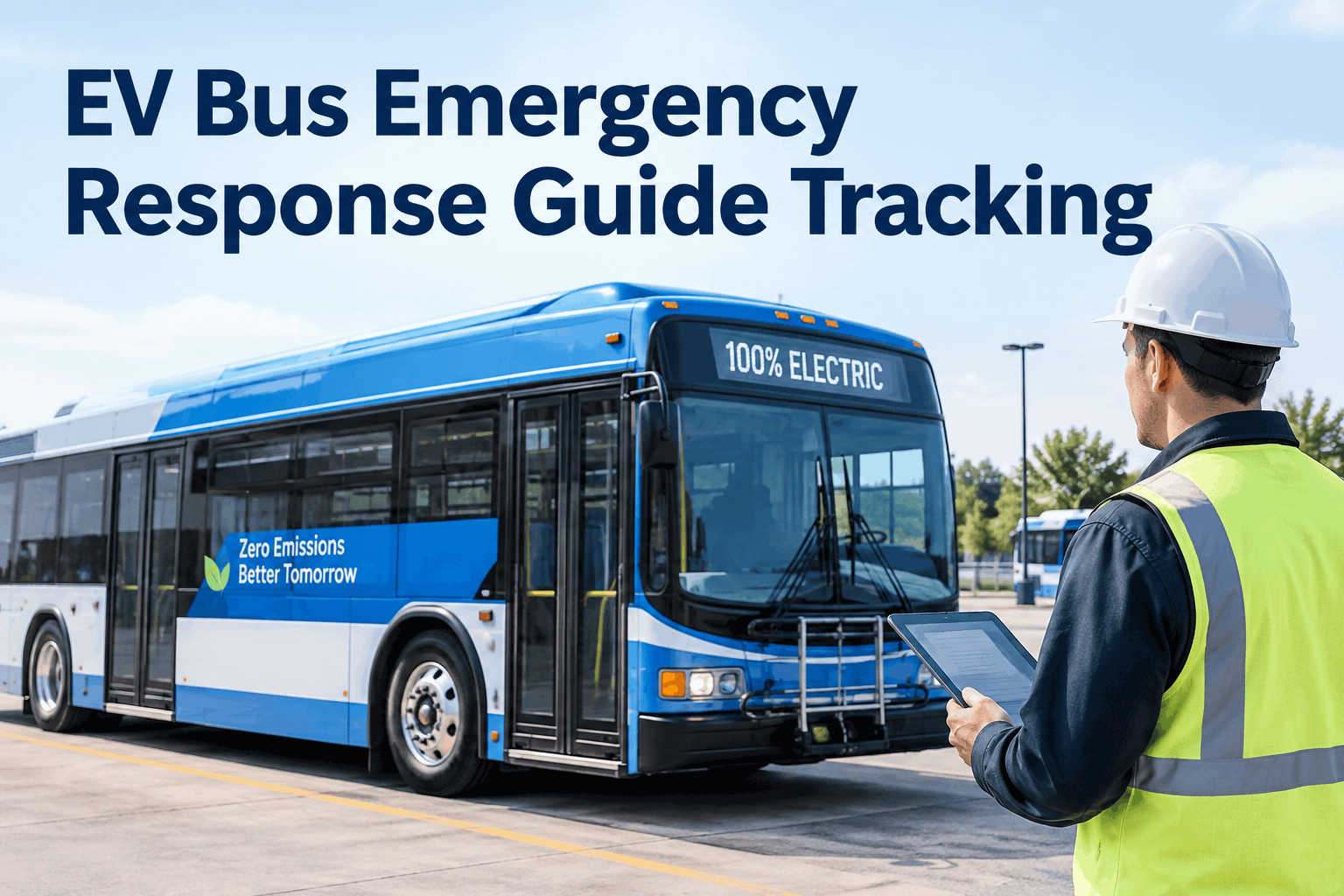
EV Bus Emergency Response Guide Tracking
Every electric bus ships with a manufacturer emergency response guide and a rescue sheet. Keeping the right one tied to the right bus, current and findable, is what turns a pile of PDFs into real safety readiness.
Why Emergency Response Guide Tracking Is Its Own Problem
On a diesel fleet, a bus is a bus. On an electric fleet, each model has its own high-voltage layout, its own cut points, and its own battery chemistry, and the document that explains all of it is only useful if someone can put their hands on the right one fast. That is where electric vehicle emergency response quietly falls apart.
The guide is a PDF in a folder
A manufacturer emails the ERG once, it lands in a shared drive, and nobody can say which bus it belongs to two years later. A document no one can find is not readiness.
Mixed models, mixed guides
Two makes of electric bus mean two different ERGs with different cut points. Grabbing the wrong one at a scene is worse than having none, and a mixed fleet makes that easy.
First responders do not know your lot
A local fire crew may never have trained on your specific electric buses. The guide and a contact who knows the fleet are what close that gap before an incident, not during one.
No proof you kept it current
When a guide is revised or a bus is added, the records have to show you kept up. Scattered PDFs cannot prove that during a safety review; a per-bus record can.
The fix is not writing new guides, the manufacturers and NHTSA already do that. It is keeping your copy tied to the right bus and ready to hand over, which teams do most reliably from one record system you can start free rather than a shared drive.
What an Electric Bus Emergency Response Guide Actually Holds
It helps to know what you are tracking. A manufacturer emergency response guide is a vehicle-specific document for first and second responders, and a rescue sheet is the short, grab-it-at-the-scene version. Both exist to answer the same questions, fast.
Manufacturers submit these guides to NHTSA, which publishes them by make and model. Your job is not to create them, it is to keep the right one attached to the right bus and ready to hand over.
What to Track for Each Electric Bus
Emergency response guide management comes down to a short list of items per bus. Track these, keep them current, and your fleet is ready to hand a responder what they need the moment they ask.
Swipe sideways to see all columns.
Five items, tracked on the bus record itself rather than in a folder someone has to go digging through. Fleets that keep this tied to each unit can pull up a bus and its full guide in seconds, which is easiest to picture by walking through a sample record in a demo.
Your EV Bus Emergency Response Readiness Checklist
Run this against your electric fleet. Each box you can tick is one less thing a responder has to guess at during an incident. The gaps are where a scattered PDF turns into a real safety risk.
-
Every EV bus has its ERG on the recordThe correct make-and-model guide is attached to that specific unit, not sitting loose in a shared drive.CRITICAL
-
A rescue sheet is attached for quick referenceThe one-page version a crew can grab at a scene is on file alongside the full guide.CRITICAL
-
The HV disconnect location is recorded per modelWhere to safely cut power is model-specific, so it is noted on each bus, not assumed to be the same.CRITICAL
-
A fleet contact is listed for respondersSomeone who knows your electric buses can be reached, so a crew is not alone with an unfamiliar vehicle.PLAN
-
Guides are reviewed when buses or docs changeNew bus, revised guide, the record gets updated and dated so nothing drifts out of date unnoticed.PLAN
-
You can produce it all for a safety reviewThe full set of guides and dates exports cleanly, so readiness is something you can show, not just claim.PLAN
Six boxes, and the top three are the ones a responder's safety rides on. You can sign up free and build these records for your own EV buses this week.
How BusCMMS Handles Emergency Response Guide Tracking
To be clear about the line: BusCMMS does not write emergency response guides, the manufacturers and NHTSA do. What it does is keep your copy of each guide tied to the right bus, current, and findable, which is the part that actually fails on a busy EV fleet.
Guides attached per vehicle
Store each bus's ERG, rescue sheet, and safety details right on its record, matched to the VIN, make, and model so the right document is never in question.
Pull up any bus in seconds
Search a unit and its full safety file is right there, so nobody is digging through a shared drive while a situation is unfolding.
Records you can export and prove
The full set of guides, dates, and contacts exports cleanly for a safety review or a first-responder coordination meeting, so readiness is documented.
Because it keeps the full maintenance and vehicle records for each bus in the same place, the safety file lives right next to the service history instead of in a separate silo.
A Safety Manager's Take
We added eighteen electric buses across two makes, and our emergency guides were a folder of PDFs nobody could match to a bus. The first time our fire department asked for the disconnect location on a specific unit, it took me twenty minutes. Now it is on the record with everything else. When they ask, I answer in under a minute.
Key Takeaways on EV Bus Emergency Response
Emergency response guide tracking is a safety discipline that happens to be a records problem. Four things to carry away.
The guide only helps if it is found
A manufacturer ERG in a lost folder is not readiness; matched to the bus and findable, it is.
Mixed EV models raise the stakes
Different makes mean different cut points; the right guide per unit is what prevents a dangerous mix-up.
Track five things per bus
ERG, rescue sheet, HV disconnect, a fleet contact, and a last-reviewed date cover the real need.
Software keeps it current
You do not write the guides; a records system keeps your copies tied to the right bus and ready.
Treat EV bus emergency response as something you prepare on a normal day, not scramble for on a bad one, and the guides, contacts, and records are already in place the moment a responder needs them.