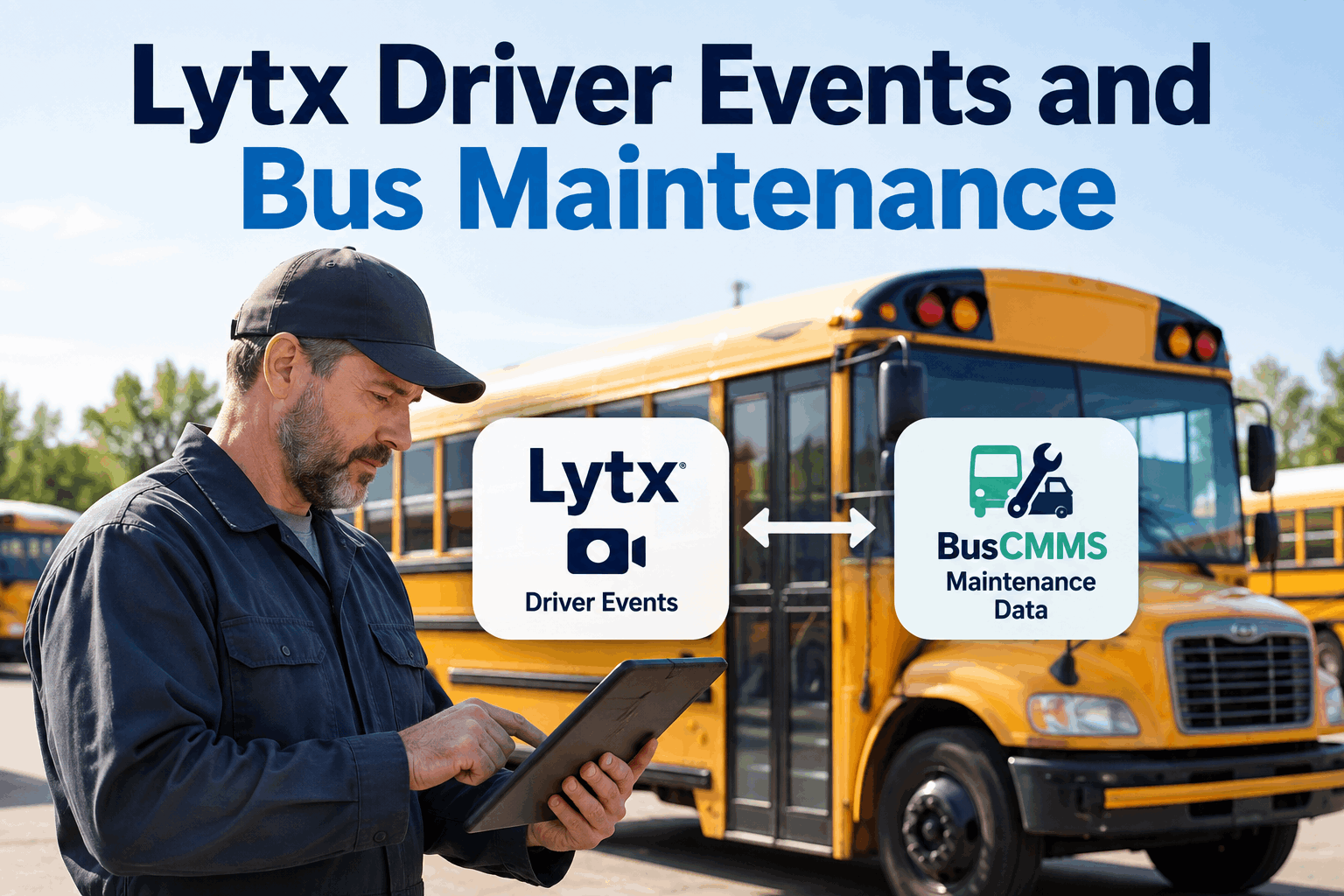
Bus 12 keeps showing up in your Lytx feed — hard braking, three times this week alone. You note it as a coaching item and move on. But that same bus is also the one eating brake pads twice as fast as the rest of the fleet, and nobody connected the two. You can see how a Lytx integration links driver events to the wear they cause.
Lytx Driver Events and Bus Maintenance: Reading Wear Before It Breaks
Lytx tells you how a bus is being driven. That behavior is a leading indicator of how it is wearing. Connect Lytx driver events to your maintenance data in BusCMMS and a harsh-braking pattern stops being just a coaching note — it becomes an early warning to inspect the brakes before they fail on a route.
What Lytx Sees That Your PM Schedule Misses
A calendar or mileage PM schedule treats every bus the same: same miles, same service. But two buses with identical odometers can wear completely differently depending on how they are driven. A route full of hard stops and tight corners punishes brakes, tires, and suspension far faster than a gentle highway run — and your PM interval never sees that difference. Lytx does.
Harsh-driving events are your fleet's early-warning system for wear. The bus racking up hard-braking events is telling you its brakes are working overtime — weeks before a mileage trigger would flag anything. The only question is whether that signal reaches your shop, or dies in a safety report. You can book a demo and watch that signal reach maintenance.
Which Driver Events Point to Which Wear
Not every event matters to maintenance, and the ones that do point to specific components. Here is how the common Lytx driver events map to the parts they quietly age.
Repeated hard stops burn through pads and rotors and flat-spot tires. A bus with a rising harsh-braking count is a brake inspection waiting to happen.
Hard launches stress the transmission and driveline and spike fuel burn. A pattern here can flag drivetrain checks and explain an MPG drop.
Tight, fast corners load the suspension and steering and wear tire shoulders unevenly. Clusters of these events point to alignment and suspension inspection.
Curb strikes and hard bumps captured on video are a reason to inspect for damage now, not discover it at the next scheduled service.
Read together, these patterns turn a safety tool into a maintenance signal. A bus that corners hard and brakes hard is not just a coaching case — it is a suspension-and-brake inspection the calendar has not scheduled yet. You can start free and map your own Lytx events to maintenance.
What the Lytx Integration Actually Does
Connecting Lytx to BusCMMS is not about watching more video — it is about letting driver-event data drive maintenance decisions automatically. Four things happen once the data is linked.
Events tie to each bus
Lytx driver events flow in through a pre-built connector, part of the Lytx Integration Network, and attach to the right bus's maintenance record — no exporting spreadsheets between two systems.
Patterns raise a flag
When a bus crosses a harsh-event threshold, BusCMMS flags it for inspection — so the fleet's roughest-running vehicles get looked at before a worn part becomes a breakdown.
Inspections open as work orders
The flag becomes a work order with the event pattern and the suspected component attached, so the tech knows exactly what to check instead of guessing from a safety alert.
You see wear by behavior
Dashboards show which buses and routes drive the most wear, so your PM and coaching both target the same high-cost vehicles instead of treating the fleet as one average.
The result is maintenance that reacts to how each bus is actually used, not just how many miles it has logged. That is the gap generic fleet software leaves and a bus-specific CMMS closes — worth seeing on your own event data in a short walkthrough of the Lytx integration.
We'd been treating Lytx as purely a safety thing — coach the driver, close the ticket. Then we lined up the hard-braking buses against our brake jobs and it was the same list. Now a bus that spikes on events gets a brake look before it ever hits the mileage interval. We are catching pads at eight millimeters instead of metal-on-metal.
Lytx Driver Events and Maintenance: The Short Version
Driving behavior predicts wear
Harsh braking, acceleration, and cornering age specific components faster than a calendar PM ever accounts for.
Lytx events are early maintenance signals
A rising harsh-event count flags a bus for inspection weeks before a mileage trigger would catch the wear.
The integration auto-flags and opens work orders
Cross a threshold and BusCMMS raises an inspection work order with the event pattern and suspected part attached.
Maintenance targets the real high-cost buses
You service by how each bus is actually driven, not by treating the whole fleet as one average vehicle.
Your Lytx data is already telling you which buses are being worked hardest. A Lytx integration just makes sure your shop hears it — so the roughest-running buses get inspected on behavior, not on luck. Fewer surprise brake failures, smarter PM, and safety and maintenance finally pointed at the same vehicles. You can start free and put your event data to work.
Lytx and Bus Maintenance: Common Questions
How do Lytx driver events connect to bus maintenance?
Lytx captures driver-safety events — harsh braking, hard acceleration, harsh cornering, impacts — through its video telematics. Those behaviors are leading indicators of component wear: hard braking burns brakes and tires, hard cornering stresses suspension and steering. By connecting Lytx events to each bus's maintenance record in BusCMMS, a rising pattern of events becomes an early signal to inspect the affected components before they fail, instead of waiting for a calendar or mileage trigger.
Can harsh-driving events actually predict component failure?
They are a strong leading indicator, not a guarantee. A bus with far more harsh-braking events than the rest of the fleet is almost certainly wearing its brakes and tires faster, so it deserves a look sooner. The value is in the pattern and the comparison: one hard stop means nothing, but a bus that consistently tops the harsh-event list is flagging real, accelerated wear you can inspect for proactively rather than discovering on the side of the road.
Does the integration create work orders automatically?
Yes. Once Lytx is connected, you can set event thresholds so that when a bus crosses them, BusCMMS flags it and opens an inspection work order — with the event pattern and the suspected component attached, so the tech knows what to check. That turns a safety alert that used to stop at coaching into a maintenance action that actually reaches the shop, without anyone manually cross-referencing two systems.
Do I keep using Lytx the way I do now?
Yes — nothing about your Lytx safety program changes. Your drivers, coaching, and video review stay exactly as they are. The integration simply adds a second use for the same event data: feeding it into maintenance so the buses being driven hardest also get inspected soonest. You get more value from data you are already collecting, with no change to how your safety team works.
How is this different from a generic fleet tool pulling Lytx data?
Generic fleet software can ingest Lytx events, but it does not know what a bus is. BusCMMS maps events to bus-specific components and workflows — brakes, suspension, and the inspection items that matter for passenger vehicles — and ships with that logic ready on day one, so most fleets are live in two to four weeks. The difference is a tool built around how buses wear and get serviced, not a trucking or construction platform you have to bend into shape.