You take over the shop, pull up the maintenance records, and there it is: forty-some buses past due on PM, some by a few weeks, a couple by months. Overdue bus PM at that scale feels like an emergency where every bus is priority one — but grounding the fleet isn't an option and neither is ignoring it. The way out isn't doing everything at once. It's seeing the whole backlog, ranking it by risk, and working it down in phases that keep buses on the road.
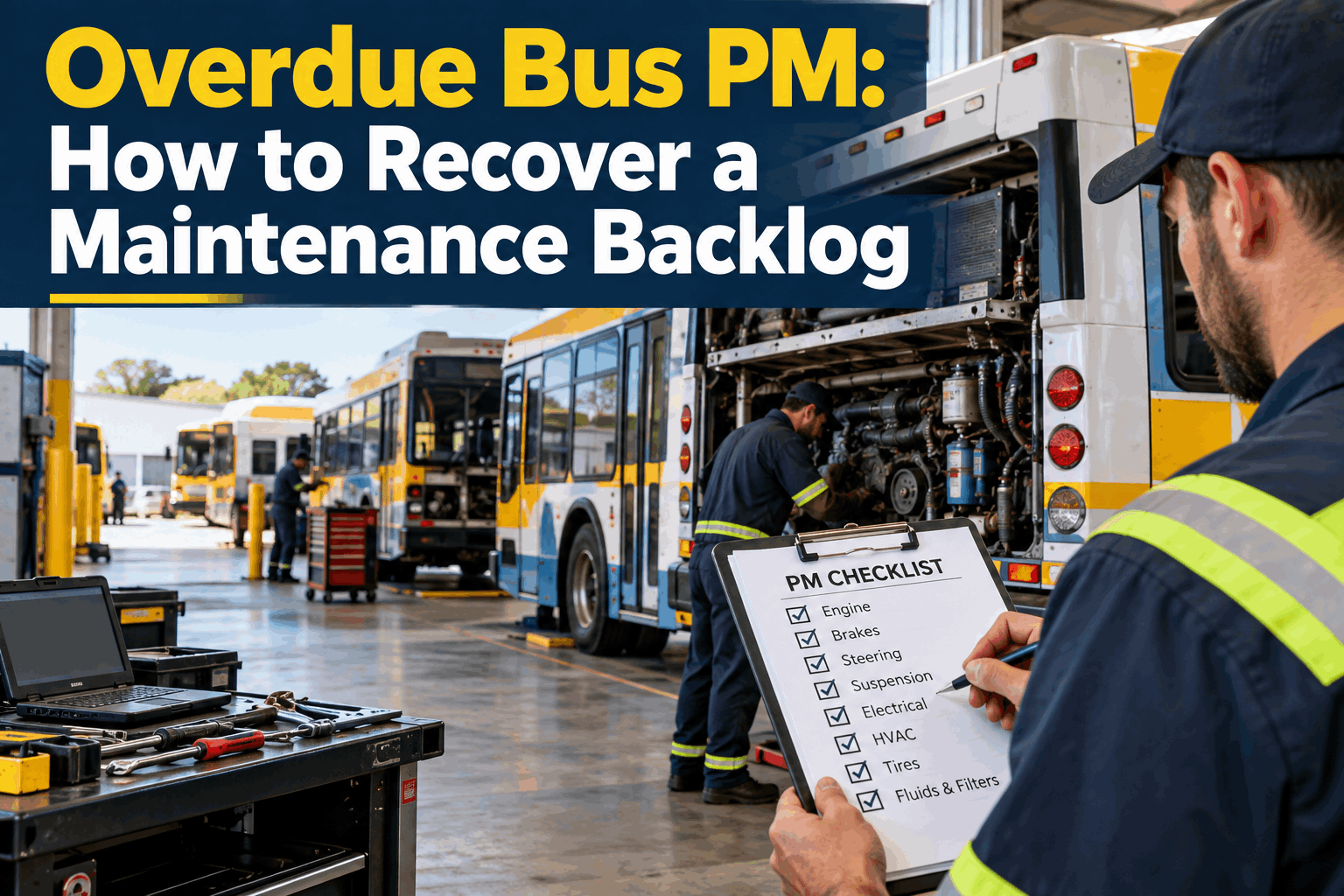
Overdue Bus PM: How to Recover a Maintenance Backlog
Inherited a fleet that's behind on service? Don't ground it and don't panic. Rank the backlog by risk, phase the catch-up, and bring it back under control without stopping routes.
First, See the Whole Overdue PM Backlog
You can't recover a backlog you can't see. The first mistake new managers make with overdue bus PM is reacting to whatever bus is loudest that morning instead of getting the full picture first. Before you touch a wrench, you need one list: every bus that's past due, what service it's overdue for, and how far past due it is. That list turns a vague sense of dread into a finite, workable problem.
What's Overdue
Every bus and the specific PM it's past due on — A-service, B-service, inspection. Not "the fleet is behind," but exactly which units and which services.
How Far Past Due
Days or miles over the interval. A bus two weeks late is a different risk than one three months and 12,000 miles past its service.
What's at Stake
Which overdue items touch safety systems — brakes, steering, wheelchair lifts, stop arms — versus which are routine wear. This drives the order of attack.
If the records are on paper or scattered across spreadsheets, building this list is the real first job — and it's exactly why fleets in this spot move to a system that surfaces the overdue list automatically. A CMMS that tracks every bus's PM status shows you the whole backlog on one screen, sorted and countable, instead of reconstructing it bus by bus from a filing cabinet. If you're coming off paper, our paper-to-automated PM scheduling guide covers that migration. Book a demo to see the full overdue-PM list on one screen.
Triage by Risk, Not by Date
Here's the instinct to fight: working the backlog oldest-first, or whichever bus complains loudest. That's not recovery, it's just a different kind of reacting. The right order is by risk — because a bus overdue on a brake inspection is a fundamentally different problem than one overdue on a cabin air filter, no matter which went past due first.
Safety-Critical — Handle First
Do not deferAnything touching brakes, steering, tires, suspension, wheelchair lifts, or the systems that protect students and passengers. A bus overdue on these should not be carrying passengers until it's addressed — this tier comes before everything, full stop. Safety is never a phasing decision.
Compliance-Due — Handle Next
Deadline-drivenOverdue items tied to state DOT inspections, FMCSA requirements, or ADA wheelchair-lift certification windows. These carry regulatory deadlines and audit exposure, so they rank right behind pure safety — a lapsed inspection is both a risk and a violation.
Routine — Phase In
SchedulableFluids, filters, standard wear items overdue but not safety- or compliance-critical. These are real and shouldn't be ignored, but they're where you have room to phase — spread across the coming weeks so the shop isn't overwhelmed and routes keep running.
The line that never moves is the safety tier. Budget pressure, a driver shortage, a route that can't lose a bus — none of it justifies putting a passenger on a bus that's overdue on a brake or steering item. The phasing flexibility lives entirely in tier three; tiers one and two set their own urgency. That discipline is what separates a real recovery plan from just spreading the risk around. Our guide to escaping reactive-maintenance mode digs into breaking the firefighting cycle that creates backlogs. Sign up free and risk-rank your overdue list in an afternoon.
Phase the Recovery So Routes Keep Running
With the backlog ranked, recovery becomes a four-phase plan instead of a fire drill. The goal is steady progress that never pulls so many buses at once that routes get cut — you're draining the backlog while keeping the fleet on the road.
Stabilize Safety
Pull every tier-one bus in immediately. These are the ones that shouldn't be running overdue at all. Address safety-critical items first, even if it means short-term spare coverage or borrowed capacity to hold routes.
Clear Compliance
Work the tier-two items against their regulatory deadlines — inspections and certification windows first by due date. This closes your audit exposure before it becomes a finding.
Drain Routine in Waves
Schedule tier-three catch-up in manageable batches — a set number of buses per week that the shop can absorb without cutting routes. Steady waves, not one overwhelming push.
Merge Into Normal PM
As buses get caught up, fold them back onto the regular PM schedule so they don't fall behind again. The backlog shrinks each week until recovery just becomes normal operations.
The pace of phase three is the lever you control. Pull too many buses at once and you cut routes; pull too few and the backlog lingers while those buses keep accumulating overdue miles. A realistic target — say, a fixed number of catch-up PMs per week on top of the incoming regular schedule — lets you show steady, visible progress to a director or board without a service disruption. And every week the count of overdue buses drops, which is exactly the number your leadership wants to see moving. Book a walkthrough to see a phased catch-up schedule built from your backlog.
Don't Rebuild the Backlog You Just Cleared
Recovering the backlog is only half the job. If you catch up and go right back to the process that created the backlog, you'll be back here in a year. The reason a fleet falls behind on overdue bus PM is almost never laziness — it's one of a few fixable process gaps. Close these and the recovery actually holds.
Notice the pattern: every cause is a visibility or planning gap, and every fix is the same system doing the watching so a person doesn't have to remember. That's the real endgame of backlog recovery — not just clearing the list once, but putting the fleet on a footing where the list can't quietly grow again. Once the PM engine is flagging services before they go overdue, "catching up" stops being a recurring emergency and becomes a state you simply maintain. Sign up free and put your PM schedule on automatic triggers.
How BusCMMS Turns a Backlog Into a Recovery Plan
Because BusCMMS tracks every bus's PM status against mileage and calendar triggers, it can show you the whole overdue picture, help you rank it, phase the catch-up, and then keep the fleet from sliding back. The features below are what turn an inherited mess into a controlled recovery.
-
Full Overdue-PM List
Every past-due bus and service on one screen, with how far overdue each is — the whole backlog made finite and countable.
-
Risk-Based Prioritization
Flag safety-critical and compliance-due items so the backlog sorts by risk, not just by date — the right order of attack, built in.
-
Phased Catch-Up Scheduling
Build the recovery in weekly waves the shop can absorb, layered on top of incoming regular PMs — steady progress without cutting routes.
-
Live PM-Compliance View
Watch the overdue count drop week by week — the progress number to show a director or board, and the early warning if it ever climbs again.
-
Automated PM Triggers
Mileage and calendar triggers flag services as due before they go overdue — the mechanism that stops the backlog from rebuilding.
-
Fuel-Type-Aware Schedules
Diesel, CNG, and electric buses each recover on their own correct PM logic, so a mixed fleet's backlog is worked accurately per powertrain.
The through-line is control. A backlog feels like chaos because it's unmeasured — you don't know how big it is, what's most urgent, or whether you're gaining. Put it in a system that counts it, ranks it, schedules it, and watches it, and the same pile of overdue buses becomes a plan with a shrinking number attached. That shift, from unknown to managed, is most of the battle. Book a demo to see the overdue count and recovery plan on one dashboard.
The New Fleet Manager's View
That's the recovery in one voice: don't ground the fleet, don't work it oldest-first, rank it by risk, phase the rest, and show a number that moves. The backlog was never the real problem — not being able to see or plan it was. Sign up free and turn your overdue list into a recovery plan this week.
The Bottom Line on Recovering Overdue Bus PM
Recovering overdue bus PM isn't about doing everything at once — it's about doing the right things in the right order. See the whole backlog first so it's finite instead of frightening. Triage by risk, not by date: safety-critical items come in immediately and are never a phasing decision, compliance-due items follow their deadlines, and routine work is what you phase across manageable weekly waves. Then close the visibility and planning gaps that created the backlog, so automated PM triggers keep it from rebuilding. Do that, and an inherited mess of past-due buses becomes a controlled recovery with a shrinking number you can show your leadership every week. The pile was never the problem — seeing and planning it is the whole fix. Book a walkthrough to see backlog recovery on a fleet like yours.