It is the third Tuesday of the month and bus 214 is back in the shop again. Oil service two weeks ago, a brake adjustment last week, and now a flickering stop arm. Three separate pulls, three bays tied up, three mornings a route ran short a bus. This is exactly where bus preventive maintenance quietly bleeds money and it is also where a quick demo of smarter PM scheduling tends to open eyes. The fix has a name: PM bundling.
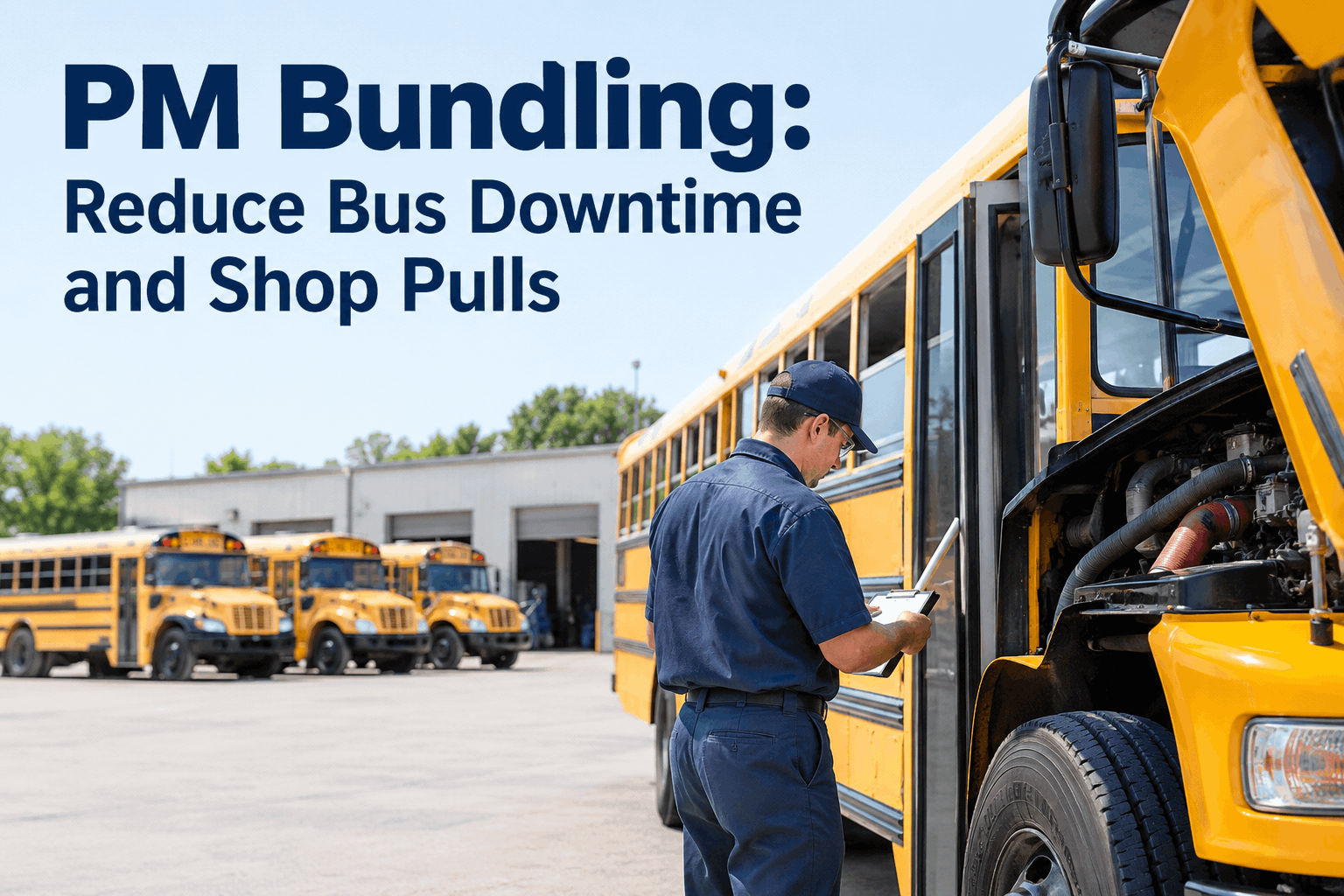
PM Bundling: Reduce Bus Downtime and Shop Pulls
Grouping the work a bus needs into one planned visit, instead of pulling it in four times a month, is the cheapest downtime you will ever buy back. Here is how the math works, and how to run it across a whole fleet.
Why Every Shop Pull Costs More Than the Wrench Time
When you approve a work order, the labor line is the part everyone sees. But pulling a bus into the shop drags a stack of hidden costs with it, and most of them are the same whether the job takes twenty minutes or two hours. That fixed overhead is the whole reason bundling preventive maintenance works.
Industry downtime research puts unplanned fleet downtime at roughly $448 to $760 per vehicle per day (Work Truck, cited by Whip Around). Even a planned pull burns part of that; the goal is to pay it as few times as you can.
What Makes a Job Bundle-Able: The Window Rule
You cannot bundle everything, and you should not try. Bundling preventive maintenance works when a job is due now or close enough that doing it early costs little. The trick is a simple due-soon window, plus three quick checks before you group the work onto one bus maintenance scheduling slot.
Swipe sideways to see all columns.
The rule in one line: anchor the bundle on a PM that is due now, pull in anything due within the window, add open safety defects, and leave far-out work and parts-blocked jobs alone. Get the parts staged first, which is where parts and inventory tracking earns its keep, and you never turn a bundled visit into a stranded bus.
A Scattered Week vs a Bundled Week
Put two weeks side by side and the difference stops being theory. Same bus, same five jobs, two ways of handling them. One leaves your shop reacting; the other leaves a bus ready and a bay open.
Scattered, job by job
- Mon: oil service, bus down half a day
- Wed: brake check, bus down again
- Fri: stop arm, third pull this week
- Four bay slots eaten, four setups
- Dispatch short a bus three mornings
- No one sees the full picture per bus
Bundled, one planned visit
- One scheduled day, all five jobs
- One setup, one teardown, one bay slot
- Parts staged the day before
- Bus back on its route that afternoon
- Dispatch plans around one known gap
- Every item logged on the bus record
The bundled week is not more work, it is the same work ordered differently. And that reordering is almost impossible to do by hand across 40 or 80 buses, which is exactly why fleets lean on a system that surfaces what is due when you book a demo rather than a whiteboard and a hope.
Your PM Bundling Checklist
Run this before you schedule a bus into the shop. If you can tick these boxes, you are bundling instead of just reacting, and your shop pull count starts dropping the first month.
-
Check every PM due on the bus, not just today'sBefore you schedule, look at what is due now and within your due-soon window on that unit.CORE
-
Fold in open DVIR defectsAny stop arm, lift, or light defect already logged on that bus rides along on the same visit.CORE
-
Confirm parts are on hand before you bookStage everything the bundle needs so the bus is not sitting in a bay waiting on a back-ordered part.PLAN
-
Set a due-soon window and stick to itA clear mileage or day window keeps you from pulling work too early and wasting component life.PLAN
-
Give dispatch one known gap, not three surprisesA single scheduled visit lets dispatch plan spare coverage instead of scrambling midweek.PLAN
-
Log every bundled item on the bus recordOne complete service history per unit keeps you audit-ready for FMCSA and state DOT inspections.CORE
Six boxes, and the first three are where most of the saving lives. You can sign up free and run this checklist against your own buses to see how many pulls you are doubling up on right now.
How BusCMMS Makes Bundling the Default
Bundling is easy to describe and hard to run on paper, because it means knowing, at the moment you schedule a bus, everything else that bus will need soon. That is a bus fleet maintenance software job, and it is built into how BusCMMS schedules work.
Every PM due, in one view
Fuel-type-specific PM scheduling tracks what is due on each diesel, CNG, or electric bus by mileage or calendar, so a due-soon list is always in front of you.
Defects and PM on one work order
Failed DVIR items and PM triggers both become work orders on the same bus, so grouping them into a single visit is a click, not a cross-check.
Pull counts you can actually see
Real-time dashboards track fleet availability and shop activity, so you can watch your shop pulls per bus fall as bundling takes hold.
The odometer readings that advance those PM due dates can flow in automatically through GPS and telematics integration, so the due-soon list stays current without anyone keying in mileage.
A Shop Foreman's Take
I used to pull the same bus in two or three times in a week and call it normal. Once we started looking at everything due on a unit before scheduling it, our shop pulls dropped by about a third. Same techs, same bays, we just stopped doing the same bus twice.
Key Takeaways on PM Bundling
Bundling preventive maintenance is one of the few moves that cuts cost and downtime without cutting any corners on safety. Four things to keep.
The overhead is the cost
Wrench time is a fraction of a pull; setup, bay, and a bus out of service are the rest, and bundling pays them once.
Use a due-soon window
Anchor on a PM due now, pull in work due soon, add open defects, leave far-out jobs alone.
Stage parts first
A bundle with a missing part is just a stranded bus; confirm parts on hand before you book the visit.
Software makes it scale
Seeing everything due per bus at scheduling time is a CMMS job, not a whiteboard one.
Treat PM bundling as a scheduling habit, backed by a system that shows what each bus needs, and you reduce bus downtime and shop pulls at the same time, with buses spending more days on the road and fewer in a bay.