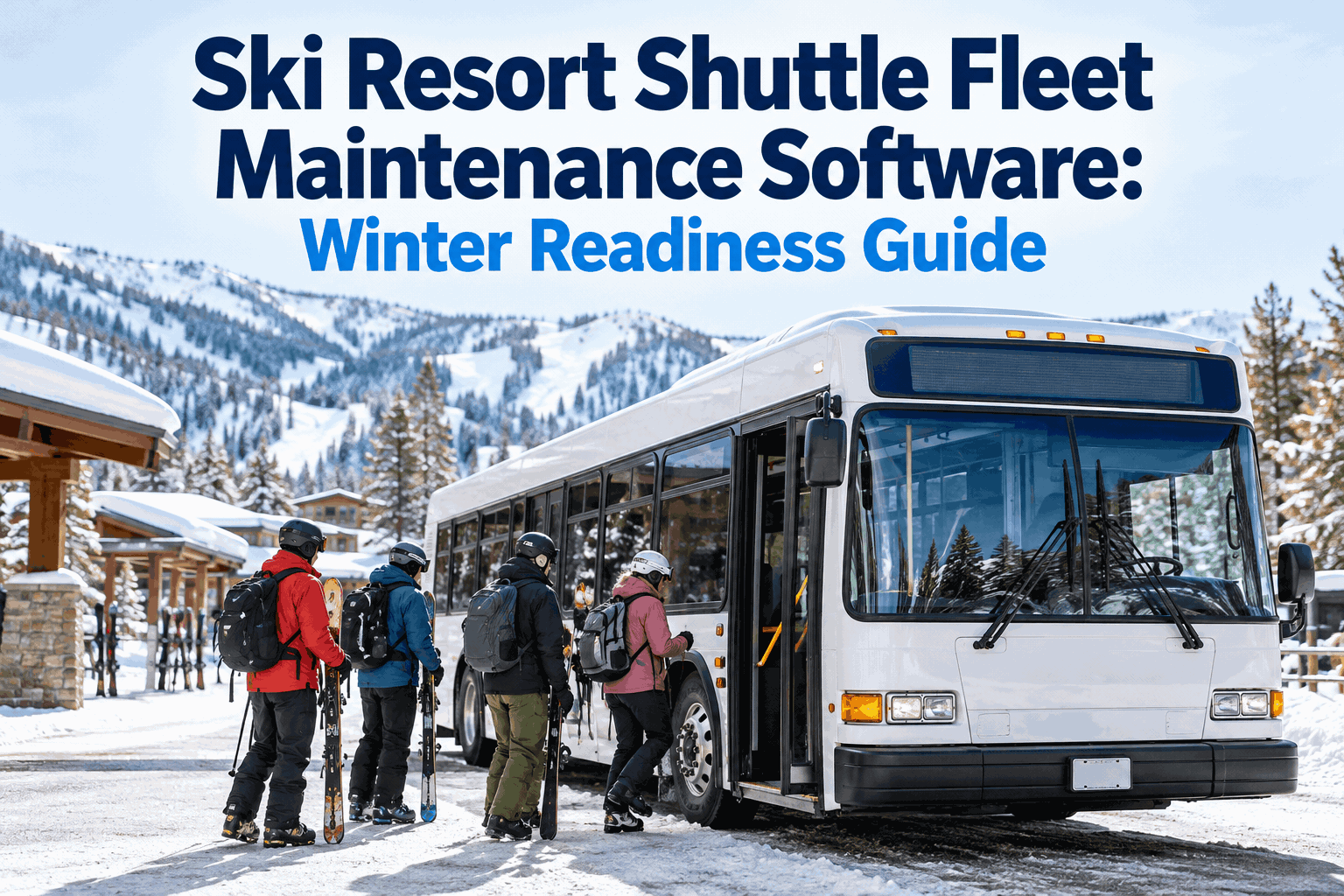
The lifts open at 8, which means the first shuttle rolls at 6:45, which means it has to start at 6:20 when the thermometer on the maintenance bay reads nine below. Ski resort shuttle fleet maintenance software exists because a resort shuttle fleet gets asked to be most reliable on exactly the mornings the cold is trying hardest to keep it parked — powder days, holiday weeks, a full load of guests and a mountain road between the lodge and the base.
Ski Resort Shuttle Fleet Maintenance Software: Keeping the Fleet Ready When the Cold Fights Back
Cold weather does not break a shuttle all at once. It drains the battery a little each night, thickens the fuel at the filter, and freezes the moisture in the air lines — until one morning the bus that ran fine yesterday will not turn over, and a hundred guests are standing in the dark. A system built for bus fleets keeps the winterization, the daily cold-start checks, and the readiness of every shuttle in one place, so you know what is ready before the lifts spin.
Why a Resort Shuttle Fleet Is Its Own Problem
A city bus that misses a run is an inconvenience. A resort shuttle that misses a run on a powder morning leaves guests who paid for a weekend standing at a stop in the cold, and it happens in the one window where demand and bad conditions peak at the same time. Three things make winter resort shuttle fleet maintenance a different job than the rest of the year.
The cold is working against you
Batteries lose cranking power overnight, diesel gels at the fuel filter, and moisture freezes in the air-brake lines. A fleet that started fine in October starts fighting you in January.
The mountain is the route
Steep grades, switchbacks and chains mean brakes, tires and the drivetrain take a beating every single run. Wear that would take a flat city route a month happens in a week up here.
Demand spikes when it is worst
Holiday weeks and storm days are when every seat is full and every road is ice. You need the whole fleet up on exactly the days the conditions are trying hardest to take a bus down.
The reliability you need is not spread evenly across the year — it is concentrated in the worst mornings of the worst weeks, which is exactly when a skipped check comes back to bite you.
The Mountain Puts Stress a Flat Route Never Sees
Pull up a typical resort run and the problem draws itself: a long climb from the base lots to the lodge and back down, over and over, all day. Every one of those descents is load on the brakes, every switchback is strain on steering and tires, and the chain-up zone adds its own wear. Mapping where the stress lands is the first step in deciding what a cold-weather fleet preventive maintenance plan has to watch.
When you can see the stress points, the maintenance plan stops being a calendar and starts being a map. If you would rather walk through your own routes with someone, you can see how it works in a short demo and point at the climbs that worry you most.
From a Failed Check to a Ready Fleet
The value of ski resort shuttle fleet maintenance software is not the checklist itself — it is what happens after a driver flags something. A cold-start that cranks slow, a brake that feels soft coming down the grade, a tire losing pressure overnight: each of those should turn into a tracked repair and roll up into one honest answer to the only question that matters at 6 a.m. — how many shuttles are actually ready.
A Ski Shuttle Cold-Start Checklist Drivers Can Actually Run
A good ski shuttle inspection checklist is short enough to do in the cold with gloves on and specific enough to catch the winter failures. These are the items that earn their place on a resort pre-trip — the red ones every single cold morning, the gold ones on a set interval that the system tracks and records for you.
- EVERY COLD MORNINGCold-start and cranking — does it turn over cleanly, or is the battery struggling?
- EVERY COLD MORNINGAir-brake build-up and release — watch for moisture freeze in the lines before you move.
- EVERY COLD MORNINGTires, pressure and chains — cold drops pressure overnight; confirm chains are aboard and sound.
- INSPECT & RECORDWinter-blend fuel and fuel filter / water separator — drained and serviced so it will not gel.
- INSPECT & RECORDCoolant glycol mix, block heater and defrost / cabin heat — checked and logged with a date stamp.
Run on paper, half of these get rushed on the mornings they matter most. You can create a free account and load your own cold-start checklist so every driver runs the same one, every day.
What Ski Resort Shuttle Fleet Maintenance Software Should Do
Not every tool labeled fleet software understands a bus, let alone a bus climbing a mountain in a storm. When you evaluate ski resort shuttle maintenance software, these are the four jobs it has to do well before anything else on the feature list matters.
Cold-weather-aware preventive maintenance
A pre-season winterization plan plus in-season PM triggered by mileage or calendar, so batteries, fuel systems and coolant get looked at before the first hard freeze, not after a no-start.
Bus-specific digital pre-trips
Daily cold-start checks on a phone, built for a bus and not a pickup, with a failed item turning straight into a work order instead of a note that disappears.
Parts and inventory ahead of the season
Auto-reorder alerts for the winter-critical parts — batteries, fuel filters, chains, wiper and heater parts — so you are stocked before the first storm, not waiting on a shipment.
A readiness dashboard for 6 a.m.
Fleet availability, PM compliance and open repairs at a glance, so the morning answer to how many shuttles are ready is a number on a screen, not a lap of the yard.
The availability, cost and rollout figures above are BusCMMS's own reported results across its customer base, not independently audited industry numbers — a reasonable guide to the range, not a guarantee for any one resort.
“The number I watch every morning before the lifts open is how many of our shuttles cranked on the first try. On the coldest week of the year that number tells me everything. The winters we got burned were always the ones where a battery or a fuel filter was overdue and nobody caught it — so now the checklist and the service history live in one place, and I can see the overdue stuff before it leaves me a bus short on a Saturday.”
Key Takeaways on Ski Resort Shuttle Fleet Maintenance Software
The cold is a daily adversary, not a one-time event — batteries, fuel and air lines degrade every freezing night, so the checks have to be daily and tracked.
Mountain grades age brakes, tires and the drivetrain far faster than flat routes, so PM intervals built for a city bus will leave you short.
Your reliability demand spikes on exactly the worst days — a readiness dashboard at 6 a.m. beats a lap of the yard with a flashlight.
Winterize before the season and roll out before the first storm — a 2 to 4 week setup means the system is working for you when it counts.
Frequently Asked Questions
What makes ski resort shuttle fleet maintenance software different from generic fleet software?
Generic fleet tools are usually built for trucks or light vehicles and treat a bus like any other asset. Ski resort shuttle fleet maintenance software is built around a bus and around winter — pre-loaded bus pre-trip checks, cold-weather preventive maintenance, and a readiness view that answers the real morning question of how many shuttles are good to roll. BusCMMS ships with that bus-specific logic on day one instead of weeks of custom setup. You can book a demo to see the resort setup and compare it to what you run now.
How does the software help with cold-weather and winter failures specifically?
It keeps your winterization plan and your daily cold-start pre-trips in one place, triggers preventive maintenance on batteries, fuel systems and coolant before the deep cold, and turns a failed cold-start check into a tracked work order. The common winter no-starts — a drained battery, gelled fuel at the filter, frozen moisture in the air lines — are exactly the items the checklist is built to catch before a bus is a no-show.
Can it handle both diesel and electric shuttles on one dashboard?
Yes. BusCMMS runs separate preventive maintenance logic for diesel, CNG and electric buses on one dashboard, triggered by mileage or calendar. That matters as more resorts add electric shuttles, since an electric bus has its own cold-weather behavior — range and charging are affected by low temperatures — and needs a different PM schedule than the diesels parked next to it.
How quickly can a resort get set up before the season?
BusCMMS reports a typical rollout of 2 to 4 weeks rather than the months a custom-configured system can take, because the bus-specific inspection forms and maintenance logic are already there. For a resort, the practical takeaway is that if you start before the season, you can be live and winterized before the first storm. If timing is tight, you can start a free account and begin logging vehicles right away.
Does a resort shuttle operation need to worry about DOT and inspection records?
It depends on how the operation is structured, and you should confirm your specific obligations with your own compliance advisor. In general, a fleet of buses carrying passengers is expected to keep maintenance and inspection records and run systematic maintenance. Keeping date-stamped driver inspections and a work-order history in one system is the practical way to have that proof ready, whatever the exact framework that applies to your operation. You can see it set up for your fleet in a demo and talk through how your records would build.
A ski resort shuttle fleet maintenance software platform will not change the weather, but it changes whether the weather catches you off guard. Keep the winterization, the daily cold-start checks and the readiness of every shuttle in one place, and the coldest morning of the year becomes a number you already trust instead of a lap of the yard with a flashlight. If you want the full picture of how a purpose-built system fits a bus operation, start with the complete guide to what a bus CMMS does, then see it mapped to your own mountain.