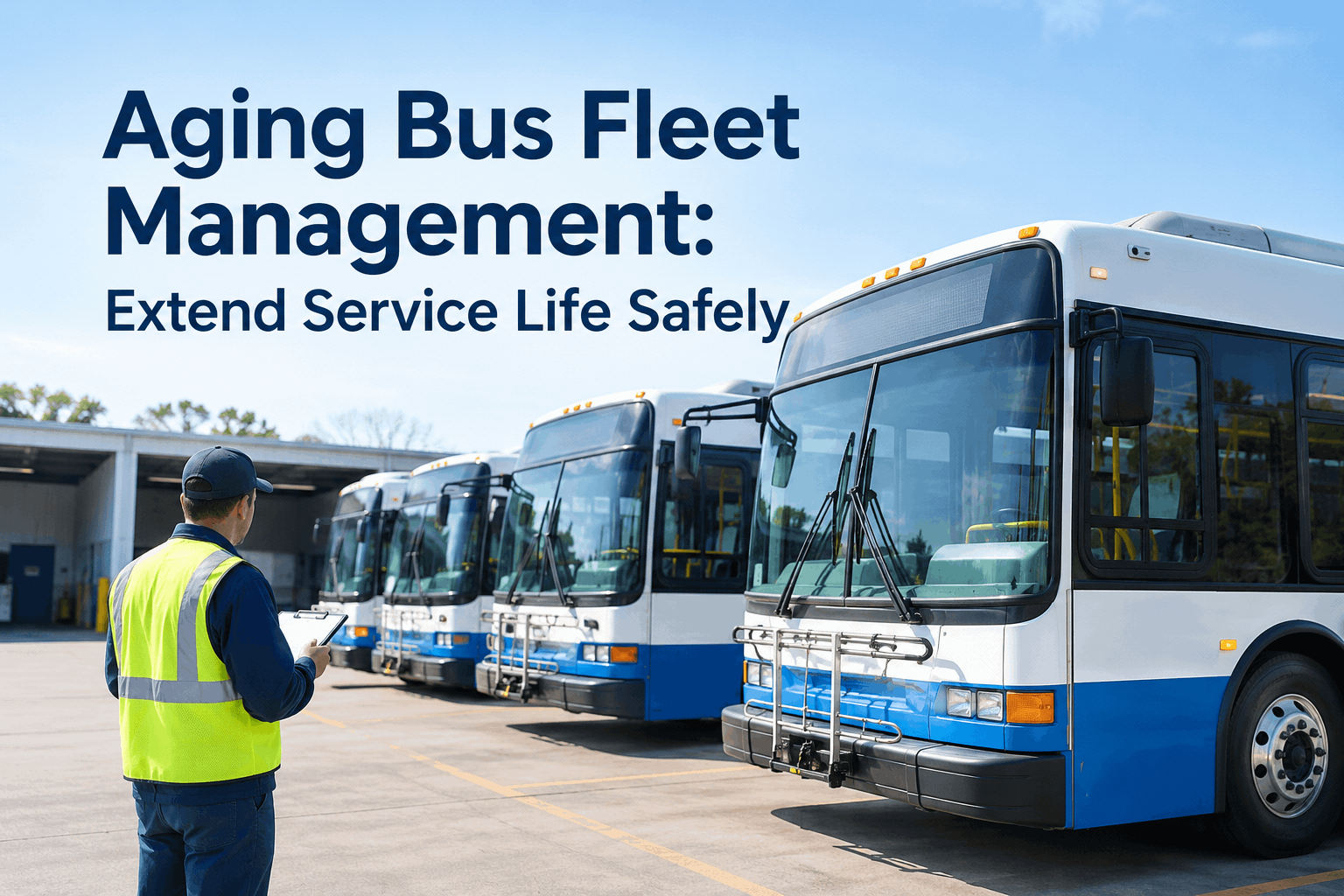
School bus CMMS software transforms how districts manage inspections, maintenance, and compliance. Instead of chasing paper DVIRs and hoping spreadsheets stay current, transportation directors gain real-time visibility into every bus, every defect, and every maintenance task.
This bus maintenance management system isn't about technology for technology's sake. It's about ensuring 26 million students get to school safely while keeping your fleet compliant and your budget intact. Modern school transportation software combines digital DVIR for school buses with automated preventive maintenance schedulingeliminating the gaps that lead to roadside failures.
"We went from 6 inspection failures per year to just 1. The bus fleet maintenance software paid for itself in the first quarter."
— Transportation Director, Midwest School District (85 buses)What Exactly is School Bus CMMS Software?
School bus maintenance software that replaces paper forms, spreadsheets, and whiteboard schedules with automated workflows. A complete bus preventive maintenance software solution handles inspections, PM scheduling, work orders, parts tracking, and compliance documentation in one platform.
Think of it as the central nervous system for your fleet maintenance operation. Drivers complete inspections on tablets. Defects automatically generate work orders. PM schedules adjust based on actual mileage. Compliance reports compile themselves.
The result? Fewer breakdowns, lower costs, and audit-ready documentation at your fingertips. For context on overall maintenance expenses, see our complete bus maintenance cost breakdown. Ready to see how it works? Schedule a quick demo or start your free trial.
Districts using purpose-built school bus CMMS report 30-50% fewer inspection failures and 25-40% reduction in emergency repair costs within the first year.
The Manual Tracking Problem (Why Spreadsheets Fail)
Manual maintenance tracking worked when fleets were smaller. Today's complexity has outpaced what paper and spreadsheets can handle.
- Paper DVIRs lost or incomplete
- Defects wait days for repair
- PM schedules missed or forgotten
- Audit prep takes hours
- No visibility into fleet health
- Reactive "fix when broken" approach
- Digital inspections with photos
- Instant defect-to-work-order flow
- Automated PM by miles/hours
- One-click audit reports
- Real-time dashboard visibility
- Proactive prevention focus
Features That Actually Matter for School Districts
Not every CMMS feature matters equally. Here's what school transportation directors should prioritize:
Drivers complete pre-trip and post-trip inspections on mobile devices. Photos document defects visually. Electronic signatures create timestamped, audit-proof records. No more lost paperwork.
PM schedules trigger based on actual usagemileage, engine hours, or calendar. Each bus tracked individually. Automated alerts ensure nothing falls through cracks.
When drivers flag issues, work orders generate automatically. Technicians get instant notifications. Repairs tracked to completion. Buses don't return to service with unresolved defects.
Built-in templates for federal and state requirements. One-click audit reports compile complete vehicle histories. No scrambling when inspectors arrive.
Drivers, technicians, and managers all work from the same system. Real-time sync means everyone sees current status. Works offline for areas with poor connectivity.
For a detailed comparison of platforms offering these features, check our analysis of top school bus maintenance software. Want to test these features yourself? Sign up for a free trial — no credit card required.
Watch a 15-minute demo tailored to your fleet size.
DOT Compliance: What School Bus CMMS Software Must Handle
Federal regulations under 49 CFR Part 396 aren't optional. Every school bus operation must meet these requirements—and paper systems make compliance unnecessarily difficult.
Daily written reports identifying defects that could affect safety. CMMS digitizes this with timestamped electronic records.
Drivers must review previous DVIR and certify defects were addressed. Digital systems track this automatically.
Complete records of inspections and repairs, retained 1+ years. CMMS stores everything with instant retrieval.
Every bus requires annual safety inspection. CMMS tracks schedules, stores documentation, sends reminders.
FMCSA penalties for documentation failures range from $1,500 to $8,000 per violation. A single audit finding can exceed your entire annual CMMS investment. See our fleet maintenance cost analysis for complete breakdown.
The ROI Question: Does School Bus CMMS Pay for Itself?
Short answer: Yes, typically within 60-90 days. Here's the math for a 50-bus district:
Electric and mixed fleets may see different numbers. Our electric vs diesel cost comparison breaks down how powertrain type affects maintenance economics. Need a custom ROI calculation for your fleet? Book a demo and we'll run the numbers together.
How to Choose the Right School Bus CMMS
Not all platforms serve school transportation equally. Here's what to evaluate:
School bus operations have unique needs. Generic fleet software requires extensive customization. Purpose-built platforms work out of the box.
If drivers won't use it, it doesn't matter how good the features are. Test the mobile app yourself. Is it intuitive? Does it work offline?
Per-bus pricing scales predictably. Per-user pricing can spiral as you add drivers and techs. Understand total cost before committing.
Vendors promising "instant setup" often deliver incomplete implementations. Ask about data migration, training, and ongoing support.
For guidance on maintaining fleet safety, see our complete guide to bus maintenance software and safety. Ready to evaluate BusCMMS for your district? Start with a free trial or schedule a personalized demo.
Get a personalized demo showing exactly how digital inspections, automated PM, and compliance tracking work for your fleet size. Walk away with a custom ROI estimate.
Common Questions About School Bus CMMS Software
What's the difference between CMMS and fleet management software?
Fleet management typically focuses on tracking, routing, and dispatch. CMMS focuses specifically on maintenance—inspections, repairs, PM scheduling, and compliance. Many districts need both, and some platforms combine both functions.
How long does implementation take?
Most districts achieve full operation in 6-8 weeks. Smaller fleets (under 30 buses) often go live in 3-4 weeks. Timeline depends on data migration complexity and training scheduling.
Will our drivers actually use it?
Driver adoption is the most common concern—and the key success factor. Modern CMMS apps are designed for simplicity. Most drivers prefer them to paper within a week. The key is choosing software with an intuitive mobile experience.
What if we already have GPS/telematics?
Good CMMS platforms integrate with existing telematics to pull mileage and diagnostic data automatically. This enhances PM scheduling accuracy and eliminates manual odometer reads.
Is cloud-based software secure enough for student data?
CMMS software doesn't typically store student information—just vehicle and maintenance data. Reputable vendors use enterprise-grade security with encryption, access controls, and regular audits.