Bus maintenance mistakes are costly — they cause breakdowns, shorten vehicle life, and compromise safety. In 2026, fleets face increasing pressure to improve uptime while controlling costs. Avoiding these top 10 maintenance mistakes can save your fleet thousands of dollars and improve reliability. This guide covers the most common errors — wrong oil, skipped PM, undocumented work orders, no DVIR review, parts misuse — and provides solutions to fix them.
Maintenance Mistakes Guide 2026
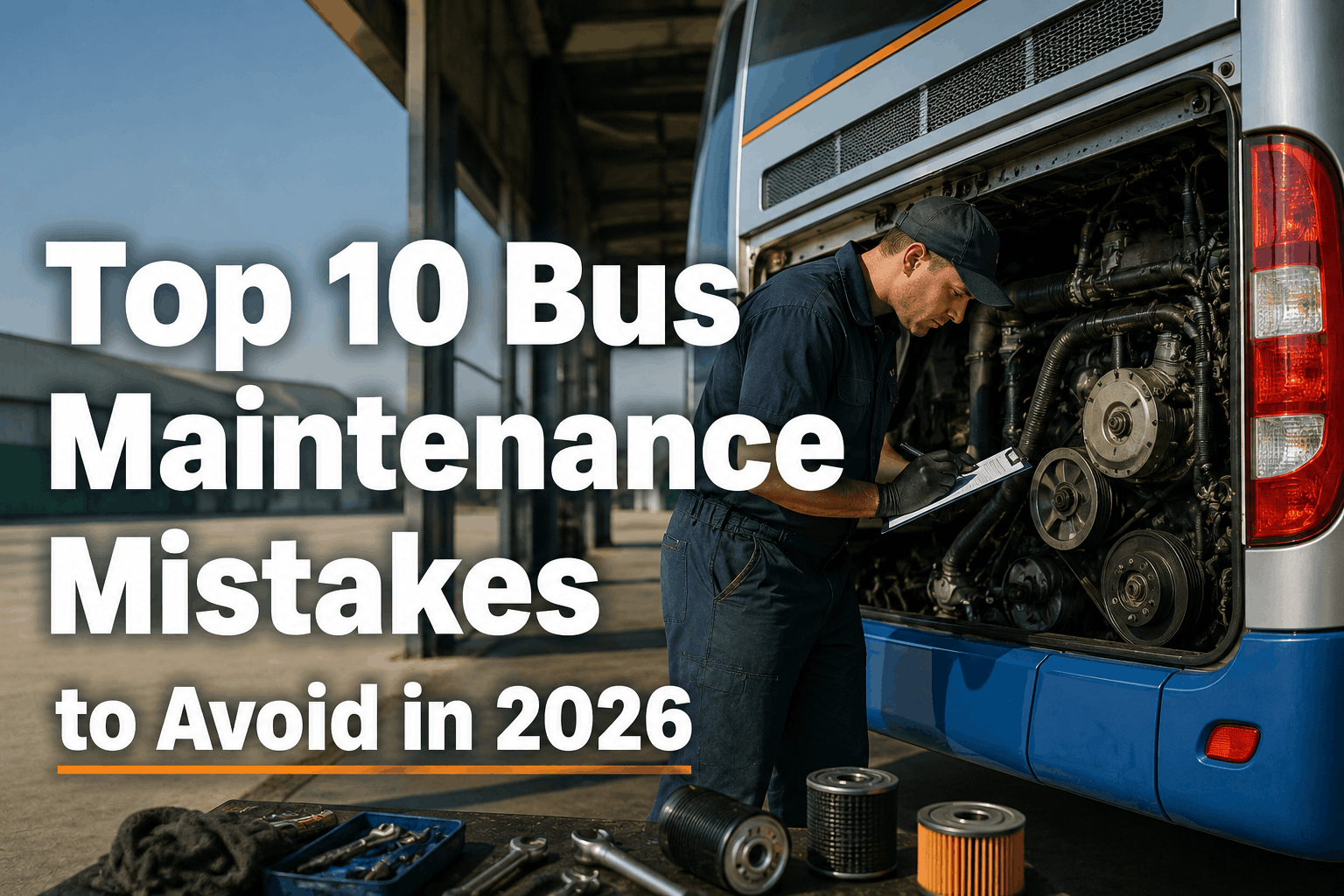
Top 10 Bus Maintenance Mistakes to Avoid in 2026
Top 10 bus maintenance mistakes to avoid in 2026. Wrong oil, skipped PM, undocumented work orders, no DVIR review, parts misuse — fix list inside.
Maintenance Mistakes Impact: The Cost of Errors
Maintenance mistakes cost fleets thousands of dollars annually in premature repairs, unnecessary replacements, and vehicle downtime. Studies show that 30-40% of maintenance costs are wasted on avoidable errors. Understanding and avoiding these mistakes is essential for fleet profitability.
30-40%
Wasted maintenance spend
$5,000-$15,000
Cost per mistake per bus
50%
Of failures from skipped PM
10
Mistakes to avoid
Top 10 Bus Maintenance Mistakes
1. Skipping Preventive Maintenance
Impact: 50% of failures result from skipped PMs. Fix: Automate PM scheduling and tracking. Make PM completion a performance metric.
2. Using Wrong Oil or Fluids
Impact: Wrong oil reduces engine life by 50%. Fix: Use manufacturer-specified oils. Track oil changes in CMMS. Train technicians on oil specifications.
3. Undocumented Work Orders
Impact: Lost history leads to repeated failures. Fix: Document every repair. Use digital work orders. Track by bus and component.
4. No DVIR Review Process
Impact: Driver-reported defects go unfixed. Fix: Implement DVIR review workflow. Route defects to technicians automatically.
5. Using Wrong Parts
Impact: Wrong parts cause premature failure. Fix: Use OEM or equivalent parts. Verify part numbers in CMMS. Train parts staff.
6. Poor Inspection Quality
Impact: Missed issues cause breakdowns. Fix: Use standardized inspection checklists. Require photos of findings. Audit inspection quality.
7. No Root Cause Analysis
Impact: Repeat failures are common. Fix: Investigate root causes of failures. Document findings. Implement corrective actions.
8. Overlooking Tire Maintenance
Impact: 10-20% fuel economy loss. Fix: Check tire pressures weekly. Rotate tires regularly. Track tire life in CMMS.
9. Failing to Update PM Schedules
Impact: Outdated PMs miss new failures. Fix: Review PM schedules annually. Adjust based on failure data and OEM updates.
10. No Technician Training Program
Impact: Poor diagnostics and repairs. Fix: Implement ongoing technician training. Track training completion. Require certifications.
Mistake Impact Comparison
Skipped PM and wrong oil cause the most extreme damage to bus fleets. No DVIR review and wrong parts cause high impact. Tire maintenance has medium impact but adds up over time. All mistakes are avoidable with proper systems and training.
Mistake Prevention & Improvement Trends
Digital adoption in maintenance has grown from 30% to 85% between 2019 and 2025. Mistake reduction has improved from 20% to 75% as fleets implement CMMS, digital inspections, and automated workflows. By 2026, most fleets will have digital systems to prevent common mistakes.
Mistake Prevention Requirements
Digital Work Order System
Implement a CMMS to track all work orders. Document every repair. Track by bus and component. Maintain complete history.
Automated PM Scheduling
Auto-schedule PMs based on mileage or calendar. Send alerts to technicians. Track completion in real-time. Investigate missed PMs.
DVIR Workflow
Implement DVIR review process. Route defects automatically. Track repair completion. Close the loop with drivers.
Parts Verification
Verify part numbers before installation. Use OEM or equivalent parts. Track parts by manufacturer. Monitor failure rates.
Technician Training
Implement ongoing technician training. Track training completion. Require certifications. Share best practices.
Root Cause Analysis
Investigate repeat failures. Document findings. Implement corrective actions. Share lessons learned across the fleet.
Preventive vs Reactive Maintenance Comparison
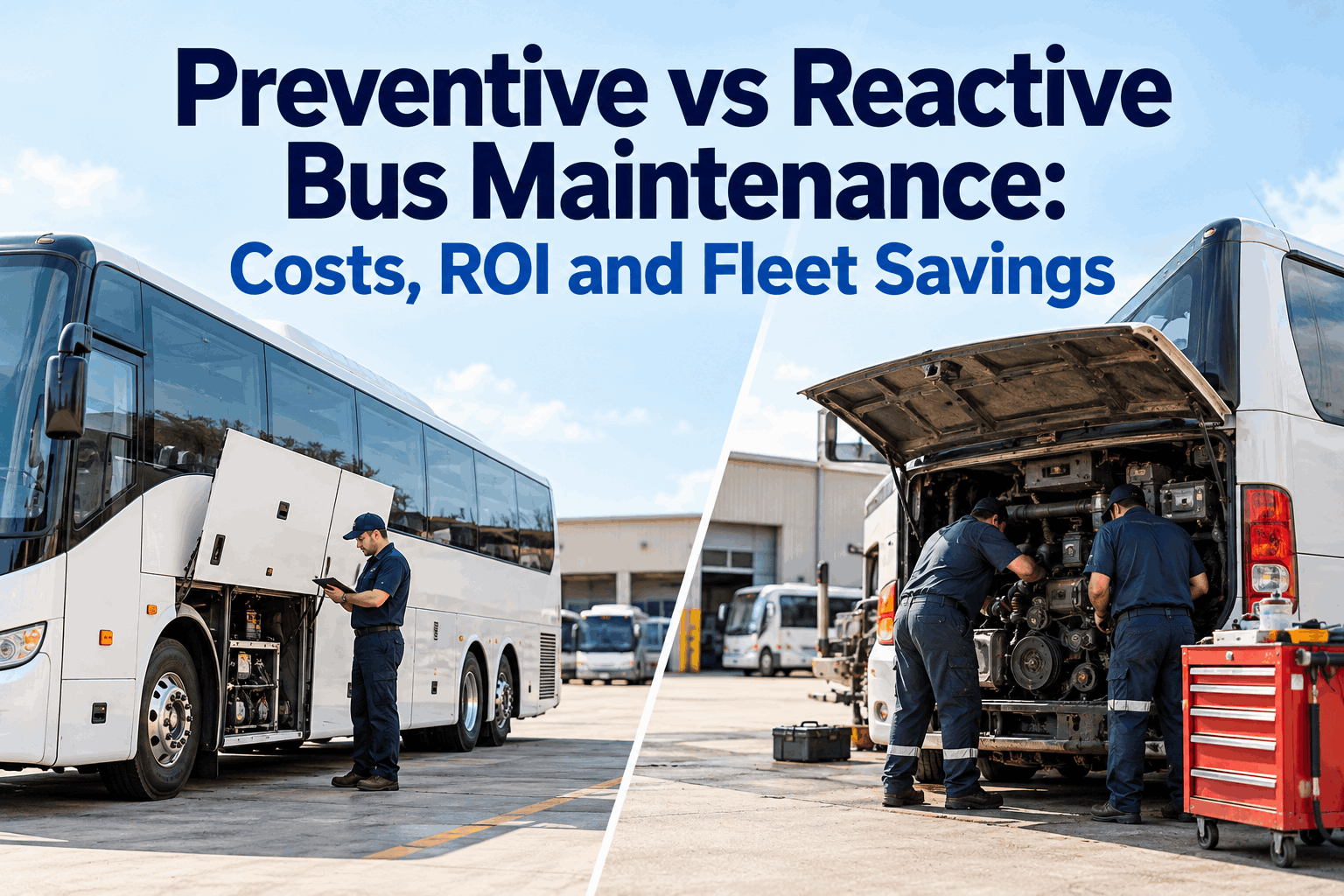
Preventive maintenance costs $2,000-$3,000 per bus annually. Reactive maintenance costs $12,000-$20,000 plus $8,000 in downtime. Preventive maintenance is 85% less expensive than reactive repairs and extends vehicle life by 30-50%.
Maintenance Mistake KPIs
Track these five metrics to measure your mistake prevention program effectiveness:
PM Compliance Rate
Target: 100% at every interval. Track by bus. Low compliance indicates scheduling or resource issues.
DVIR Review Rate
Target: 100% of DVIRs reviewed within 24 hours. Track daily. Unreviewed defects become failures.
First-Time Fix Rate
Target: 90%+ first-time repair. Track monthly. Low rate indicates diagnostic or parts issues.
Repeat Repair Rate
Target: Under 10% repeat repairs. Track monthly. High rate indicates poor root cause analysis.
Technician Training Compliance
Target: 100% of technicians current on training. Track quarterly. Untrained technicians make more mistakes.
Our fleet of 200 buses implemented these mistake prevention strategies in 2024. PM compliance improved from 72% to 98%. DVIR review rate reached 100% within 48 hours. First-time fix rate improved from 78% to 94%. Annual maintenance costs decreased by 28% — saving $1.2 million across the fleet.
Prevent Maintenance Mistakes with BusCMMS
BusCMMS automates PM scheduling, tracks work orders, manages DVIR reviews, verifies parts, and provides technician training records. Stop making costly maintenance mistakes. Book a demo to see how BusCMMS helps fleets avoid errors.
Maintenance Mistake FAQs
What is the most common bus maintenance mistake?
Skipping preventive maintenance is the most common and costly mistake. 50% of failures result from missed PMs. Implement automated PM scheduling and tracking to ensure 100% PM compliance.
How much does a maintenance mistake cost?
Maintenance mistakes cost $5,000-$15,000 per bus per incident. Skipped PM can lead to major failures costing $10,000-$25,000. Wrong oil can reduce engine life by 50%, costing $20,000+ in premature replacement.
How do I prevent maintenance mistakes?
Prevent mistakes by: using CMMS for work order tracking, automating PM scheduling, implementing DVIR review workflows, verifying parts before installation, training technicians, and conducting root cause analysis on repeat failures.
What is the impact of wrong oil in a bus?
Wrong oil reduces engine life by up to 50%, increases oil consumption, and causes premature wear. Always use manufacturer-specified oil with correct API rating and viscosity. Track oil changes in CMMS.
How do I improve first-time fix rate?
Improve first-time fix rate by: using diagnostic scanners, accessing complete vehicle history, verifying parts before installation, providing technician training, and implementing quality control checks.
Can BusCMMS prevent maintenance mistakes?
Yes. BusCMMS prevents mistakes by automating PM scheduling, tracking work orders, managing DVIR reviews, verifying parts, maintaining vehicle history, and providing technician training records. The system creates accountability and visibility across the maintenance process.
The Bottom Line
Avoiding the top 10 bus maintenance mistakes can save your fleet thousands of dollars and improve reliability. Skipped PM and wrong oil cause the most extreme damage. No DVIR review, wrong parts, and undocumented work orders cause high impact. The solution is simple: implement a CMMS, automate PM scheduling, track work orders, review DVIRs daily, verify parts, train technicians, and conduct root cause analysis. Preventive maintenance costs 85% less than reactive repairs and extends vehicle life by 30-50%. When combined with proper training and accountability, these strategies can reduce maintenance costs by 25-30% and improve fleet reliability dramatically.