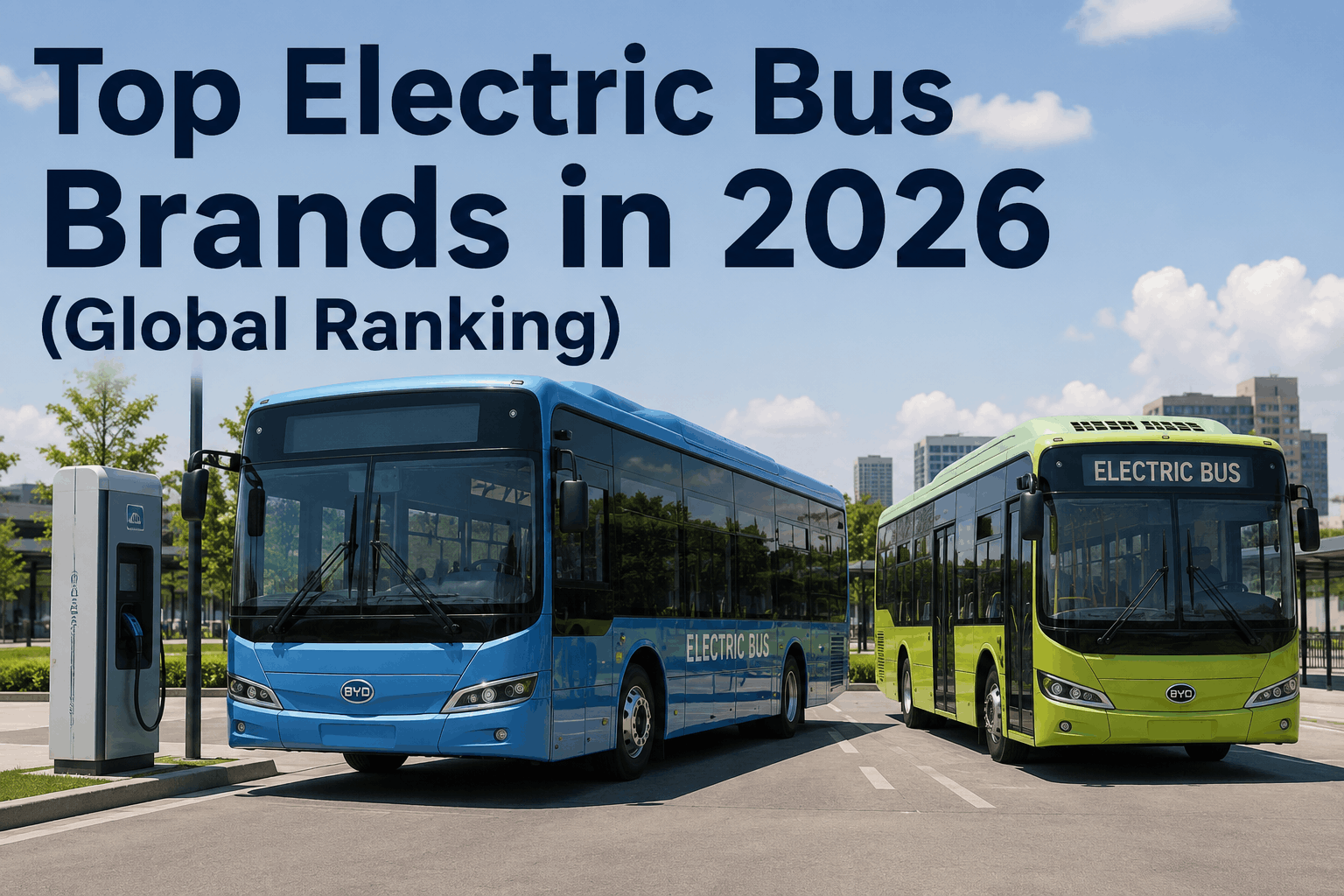
The electric bus market in 2026 is more competitive than ever, with manufacturers pushing range, battery technology, and total cost of ownership. This global ranking compares the top electric bus brands — BYD, Yutong, Volvo, MAN, Mercedes, ADL, New Flyer, Lion Electric, and more — based on range, price, maintenance requirements, and global availability. Whether you're a transit agency, school district, or private operator, this guide helps you choose the right electric bus for your fleet.
Electric Bus Guide 2026
Top Electric Bus Brands in 2026 (Global Ranking)
Top electric bus brands in 2026 — global ranking. BYD, Yutong, Volvo, MAN, Mercedes, ADL, New Flyer, Lion Electric — range, price, maintenance compared.
Electric Bus Impact: The Cost of Going Electric
Electric buses represent a significant investment but offer lower operating costs and zero emissions. While the upfront cost is higher than diesel, total cost of ownership is 20-30% lower over the life of the vehicle. Choosing the right brand is critical for maximizing ROI.
$350,000-$600,000
New electric bus cost
20-30%
Lower TCO vs diesel
150-350 miles
Average range per charge
12 years
Average electric bus life
Top Electric Bus Brands 2026
1. BYD
Best For: Global availability and proven technology. K9, K11, K12 models. Range: 250-350 miles. Used in 300+ cities worldwide.
2. Yutong
Best For: Volume and value. World's largest bus manufacturer. Range: 200-300 miles. Strong presence in Asia, Europe, Americas.
3. Volvo
Best For: Premium quality and safety. 7900 Electric, BZL Electric. Range: 200-280 miles. European engineering excellence.
4. MAN
Best For: European transit applications. Lion's City E. Range: 250-300 miles. Strong European support network.
5. Mercedes-Benz
Best For: Premium quality. eCitaro, eCitaro G. Range: 150-250 miles. German engineering and global support.
6. Alexander Dennis
Best For: Double-deck electric buses. Enviro200EV, Enviro400EV. Range: 150-250 miles. Strong in UK and North America.
7. New Flyer
Best For: North American transit. Xcelsior XE-40, XE-60. Range: 200-300 miles. Strong aftermarket support in US/Canada.
8. Lion Electric
Best For: North American school and transit buses. LionC, LionM. Range: 150-250 miles. Strong in Quebec and Northeast US.
Electric Bus Range Comparison
BYD offers the longest range at up to 350 miles, followed by Yutong and MAN at 300 miles. New Flyer and Volvo offer 280-300 miles. Mercedes and ADL offer 250-mile ranges. Range varies by battery configuration and operating conditions.
Electric Bus Price & Maintenance Comparison
Yutong offers the most affordable price at $400k. BYD follows at $450k. MAN and New Flyer are priced around $500k. ADL and Volvo are around $550k. Mercedes is the most expensive at $600k. Annual maintenance costs range from $8,000-$15,000 depending on brand and service requirements.
Electric Bus Brand Requirements
Battery Technology
Evaluate battery chemistry (LFP vs NMC), capacity, and warranty. BYD uses LFP chemistry for safety and longevity. Others use various chemistries.
Range & Charging
Match range to route requirements. Consider charging infrastructure compatibility (depot charging, opportunity charging). Support for overhead pantograph or plug-in.
Service & Support
Evaluate parts availability, service network, and technician training. Some brands have limited support in certain regions. Consider parts logistics and warranty terms.
Total Cost of Ownership
Compare upfront cost, maintenance, energy, and battery replacement costs. TCO varies significantly by brand and operating conditions.
Global Availability
Check availability in your region. BYD and Yutong have the widest global presence. Others are strong in specific markets.
Warranty & Battery Life
Compare battery warranties (typically 8-12 years). Consider battery degradation rates and replacement costs. BYD offers industry-leading battery warranties.
Electric Bus Adoption Trends
Electric bus adoption has grown from 2% to 15% of global bus sales between 2019 and 2025. By 2026, electric buses will account for 18-20% of new bus sales. China leads in adoption, followed by Europe and North America. BYD and Yutong dominate the global electric bus market.
Electric Bus Selection Checklist
Range & Duty Cycle
Match range to your routes. Consider winter performance and battery degradation over time. Plan for 20% buffer on range.
Charging Infrastructure
Evaluate depot charging vs opportunity charging. Consider electrical capacity and installation costs. Plan for future expansion.
Total Cost of Ownership
Calculate TCO including purchase, maintenance, energy, battery replacement, and charging infrastructure. Consider 12-year lifecycle.
Service & Support
Evaluate parts availability and service network. Consider technician training requirements. Plan for HV safety training.
Battery Warranty
Compare battery warranties and degradation rates. BYD offers 12-year/500,000-mile warranties. Others vary.
Manufacturer Viability
Consider manufacturer stability and long-term support. Established brands with proven track records offer lower risk.
Electric Bus KPIs
Track these five metrics to measure your electric bus program effectiveness:
Range Performance
Target: 80%+ of rated range in real-world conditions. Track quarterly. Winter performance and degradation affect range.
Charging Efficiency
Target: 90%+ charging efficiency. Track monthly. Inefficient charging increases operating costs.
Battery Health
Target: 85%+ capacity after 5 years. Track annually. Capacity loss is expected but should be within warranty.
Maintenance Cost
Target: 40-50% lower than diesel buses. Track monthly. EVs have lower maintenance costs due to fewer moving parts.
Fleet Availability
Target: 95%+ availability. Track monthly. Proper maintenance and charging schedules ensure high availability.
Our transit agency of 150 buses transitioned to BYD electric buses in 2025. We achieved 20% lower TCO than diesel buses, with range exceeding 300 miles per charge. Battery health after 2 years remains at 97% of original capacity. Maintenance costs are 45% lower than our diesel fleet. The transition has been a success.
Digitize Your Electric Bus Maintenance Program
BusCMMS provides comprehensive electric bus maintenance management including battery health tracking, charging schedules, HV safety inspections, and preventive maintenance. Customize PM intervals for electric buses and track battery capacity over time. Book a demo to see how BusCMMS supports electric bus fleets.
Electric Bus FAQs
What is the best electric bus brand in 2026?
The best brand depends on your needs. BYD offers the longest range and global support. Yutong offers the best value. Volvo and Mercedes offer premium quality. New Flyer is strong in North America. Evaluate based on range, price, support, and TCO.
How much does an electric bus cost?
Electric buses range from $350,000 to $600,000 depending on brand, battery capacity, and specifications. Yutong is the most affordable at around $400k. Mercedes is the most expensive at around $600k. BYD and New Flyer are in the $450k-$500k range.
How far can an electric bus travel on one charge?
Range varies by brand and battery configuration. BYD offers 250-350 miles. Yutong and MAN offer 200-300 miles. Volvo and New Flyer offer 200-280 miles. Mercedes and ADL offer 150-250 miles. Real-world range depends on temperature, terrain, and usage.
How long do electric bus batteries last?
Electric bus batteries typically last 8-12 years with proper thermal management and maintenance. Most manufacturers offer 8-12 year warranties on batteries. BYD offers 12-year/500,000-mile warranties. Battery capacity typically degrades to 80-85% after 12 years.
Are electric buses cheaper to maintain than diesel?
Yes. Electric buses have 40-50% lower maintenance costs than diesel buses due to fewer moving parts, no oil changes, no transmission service, and regenerative braking reducing brake wear. Regular maintenance includes battery thermal management, HV safety inspections, and tire rotations.
What charging infrastructure is needed for electric buses?
Electric buses require depot charging infrastructure (typically 50-150 kW chargers) and possibly opportunity charging along routes. Electrical capacity, installation costs, and charging schedules must be planned. Some brands offer pantograph overhead charging for rapid opportunity charging.
The Bottom Line
Choosing the right electric bus brand in 2026 requires careful evaluation of range, price, maintenance, and support. BYD leads in global availability and range with proven technology. Yutong offers the best value for volume fleets. Volvo and Mercedes offer premium quality and safety. MAN and New Flyer offer strong European and North American support. When selecting a brand, consider total cost of ownership, battery warranty, charging infrastructure, and service network. The right electric bus can reduce operating costs by 20-30% and eliminate tailpipe emissions. When combined with proper CMMS support for battery health tracking, HV safety inspections, and maintenance scheduling, electric buses deliver reliable, cost-effective, zero-emission transportation for transit agencies, school districts, and private operators.