During a routine state DOT inspection on a 40-foot transit coach, the auditor checks the roof-pod cylinder label and spots a "DO NOT USE AFTER" stamp that expired four months ago—grounding the bus on the spot. Building a disciplined CNG bus tank inspection schedule prevents expired cylinders, missed NFPA 52 leak checks, and out-of-service citations. You can see automated CNG cylinder expiration and inspection tracking in a live BusCMMS demo.
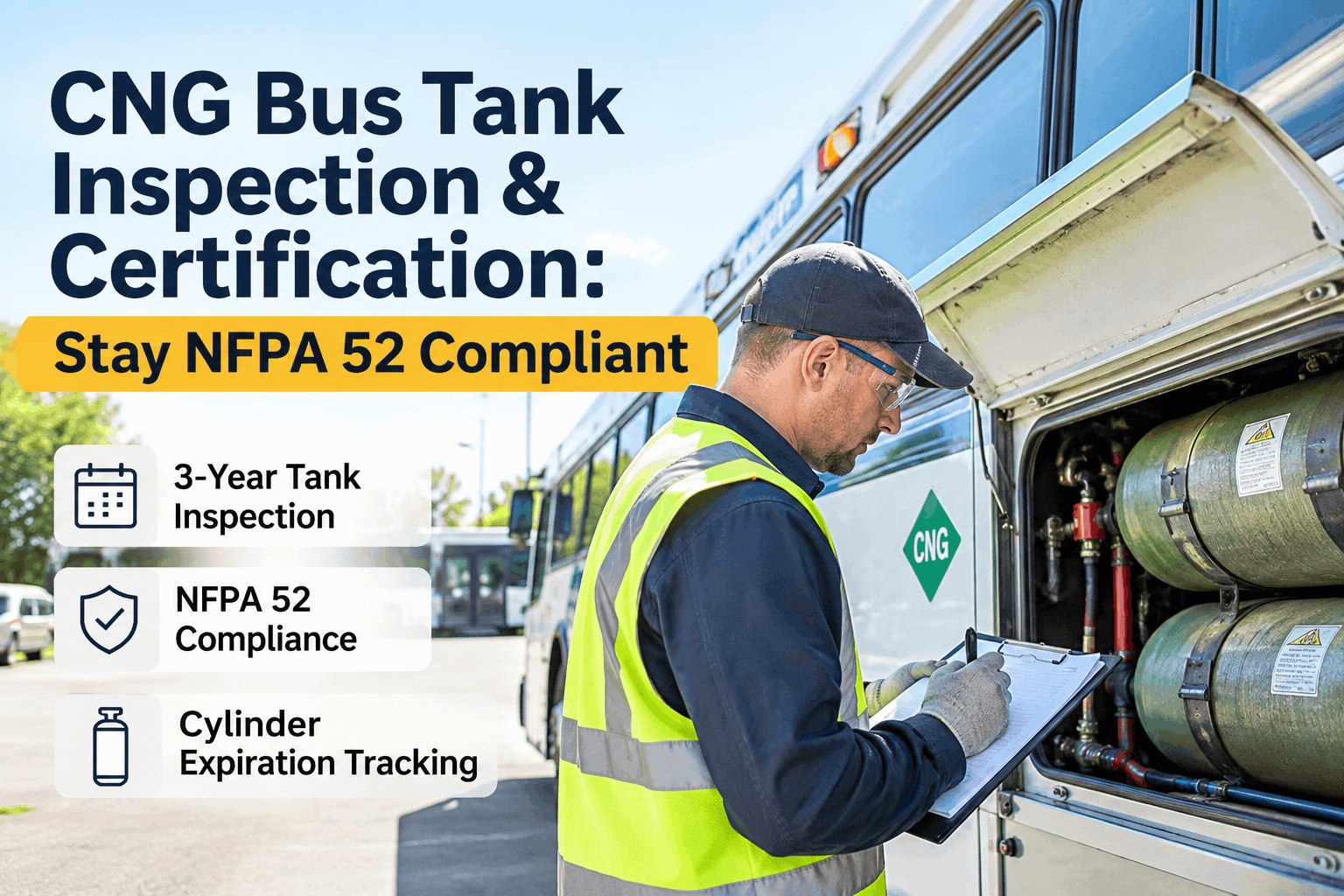
CNG Bus Tank Inspection & Certification: Stay NFPA 52 Compliant
Compressed natural gas buses store fuel at 3,600 PSI in composite cylinders with strict inspection cycles and hard 15-to-20-year expiration dates. Track visual audits, methane leak sweeps, and CSA-certified inspector sign-offs in one system.
Why CNG Bus Tank Inspection Demands Dedicated Compliance Tracking
Unlike diesel fuel tanks that last the life of a chassis, CNG cylinders are pressurized vessels governed by FMVSS 304, FMCSR 393.68, NFPA 52, and CGA C-6.4. Under NHTSA's updated FMVSS 304 rule for heavy-duty vehicles over 10,000 lbs GVWR, periodic visual inspections apply at least every 12 months (replacing the legacy 3-year or 36,000-mile label cadence used on lighter vehicles), and every cylinder requires immediate inspection after any collision, fire, or over-pressure event.
Hidden Audit Gaps
- Roof-pod cylinder expiration stamps stay buried under covers until DOT audits
- 3-year/36,000-mile and 12-month triggers fall out of sync with bus PMs
- CSA inspector certification numbers live in filing cabinets instead of work orders
Automated Lockout & Proof
- Tracks every cylinder serial number, DOT date-stamp, and "Do Not Use After" limit
- Sends 90-day advance alerts and locks out dispatch before tank expiration
- Captures CSA-certified inspector credentials and digital methane leak sweeps
High-pressure roof and underbody cylinders turn minor composite cuts into critical safety hazards.
Legacy labels trigger at 36 months or 36,000 miles; updated heavy-duty rules mandate annual checks.
DOE AFDC rules allow zero requalification past the stamped date—expired tanks must be replaced.
Fleets using BusCMMS report 95%+ availability and ~$2,800 annual savings per bus.
5-Step NFPA 52 & CGA C-6.4 CNG Bus Tank Inspection Workflow
A compliant CNG bus tank inspection goes far beyond glancing at a fuel-door sticker. Build digital NFPA 52 inspection checklists in BusCMMS covering all five steps:
Verify CSA Cert & Labels
Confirm the inspector holds an active CSA NGV credential and read every cylinder's DOT "Do Not Use After" stamp.
Remove Roof Covers & Shields
Open roof-pod enclosures and belly shields completely so 100% of composite overwrap and end bosses are visible.
Grade CGA C-6.4 Damage
Measure cuts, gouges, abrasion, and heat or chemical attack against Level 1 (pass), Level 2 (repair), and Level 3 (condemn) limits.
Inspect PRDs & Mount Straps
Check thermally activated Pressure Relief Devices (PRDs), rain caps, vent lines, and rubber-isolated mounting bands.
Run Methane Leak Sweep
Test high-pressure fittings, manual shutoff valves, and regulator seals with a calibrated electronic methane detector.
CNG Cylinder Types, High-Pressure Components & Inspection Matrix
Transit and school buses typically run lightweight Type 3 or Type 4 composite cylinders alongside high-pressure regulators and coalescing filters. Logging component-level checks inside your passenger transit and school bus CMMS catches wear before leaks occur:
| CNG System Component | Risk | Common Defect / Failure | CMMS Inspection & PM Action |
|---|---|---|---|
| Type 3 / Type 4 Composite Tanks | CRITICAL | Fiber abrasion, UV crazing, impact delamination | Inspect full circumference; condemn Level 3 damage immediately |
| Pressure Relief Devices (PRDs) | CRITICAL | Missing rain caps, clogged vent tubes, glass-bulb damage | Verify clear vent routing & intact caps on every PM |
| Mounting Brackets & Straps | HIGH | Cracked rubber isolators, loose bolts, road-salt rust | Torque mounts to spec; replace worn strap liners early |
| High-Pressure Coalescing Filter | MODERATE | Compressor oil carryover fouling fuel injectors | Drain bowl & replace element per OEM oil-change interval |
| Primary Pressure Regulator | MODERATE | Diaphragm weepage, sluggish pressure drop, coolant leak | Monitor rail pressure & inspect regulator heating loop |
| Defueling & Fill Receptacles | MODERATE | Worn O-rings, sticking check valves, damaged dust cap | Leak-test nozzle O-rings and replace torn dust caps |
Want to separate CNG fuel-system PMs from diesel checklists on one dashboard? Schedule a 20-minute walkthrough to see fuel-type-aware work orders.
6-Point CNG Fuel System & Compliance Audit Checklist
Before your next FTA triennial review or state DOT inspection, verify your shop captures these six CNG compliance records:
Per-Cylinder Expiration Dates
Log every tank's 15-to-20-year "Do Not Use After" date and set 90-day dispatch lockouts before expiry.
CSA Inspector Cert Numbers
Attach the certified inspector's CSA NGV credential number and expiration date to every visual audit.
Electronic Methane Sweep Logs
Record calibrated sniffer sweeps across roof pods, shutoff valves, and engine rails—never rely on soap alone.
Coalescing Filter Drain History
Track compressor-oil drains and high-pressure filter element swaps to protect injectors and sensors.
Ceiling Methane Sensor Calibration
Because natural gas rises, test overhead bay methane detectors and exhaust purge fans on schedule.
Collision & Fire Hold Rules
Automatically block dispatch after any tree-branch roof strike or fender impact until a CSA check passes.
High-Risk Triggers That Require Immediate CNG Tank Re-Inspection
Even if a bus is months away from its scheduled annual or 3-year/36,000-mile check, four real-world events demand an immediate out-of-cycle inspection:
Low-Clearance Branch & Canopy Strikes
Roof-mounted CNG pods absorb tree-limb and garage-door impacts. Any cracked fiberglass fairing requires pulling the shroud to inspect cylinder overwrap.
Any Traffic Accident or Fire
FMVSS 304 mandates a full CSA-certified cylinder inspection after any motor vehicle accident or thermal event before the bus returns to revenue service.
Fast-Fill Station Over-Temperature
Faulty temperature compensation at fast-fill dispensers can over-pressurize warm cylinders. Log fill-pressure anomalies and inspect PRDs immediately.
Pre-Expiration Decommissioning
At 15 or 20 years, tanks must be safely defueled, purged with nitrogen, and rendered unusable per CSA EXP 2.1—track lead times 6 months ahead.
Need an easier way to track cylinder serials and pre-expiration lead times? Start tracking your CNG bus fleet free in BusCMMS.
A Transit Maintenance Supervisor's Take
Key Takeaways for CNG Bus Tank Inspection
1. Track every tank serial
Log individual DOT expiration dates and lock out buses 90 days before end-of-life.
2. Match FMVSS 304 cadence
Schedule annual heavy-duty checks (or 3-year/36k-mile label intervals) plus post-crash audits.
3. Gate CSA sign-offs
Require active CSA NGV inspector credentials on every detailed visual inspection.
4. Drain filters & sweep
Service coalescing filters on schedule and log electronic methane leak checks.
Consistent CNG bus tank inspection workflows eliminate expired-cylinder violations and keep your high-pressure fuel systems safe—book a live BusCMMS demo with our fleet team to see CNG compliance automation in action.