At 85,000 miles, your electric school bus brake pads still measure 14mm—nearly new—so the shop skips pulling the wheels until a DOT inspector fails the rear axle for a seized caliper slide pin and rusted rotor. Mastering electric bus regenerative braking maintenance replaces pad-thickness habits with time-based corrosion and lubrication checks. You can see EV-specific brake PM schedules in a live BusCMMS demo.
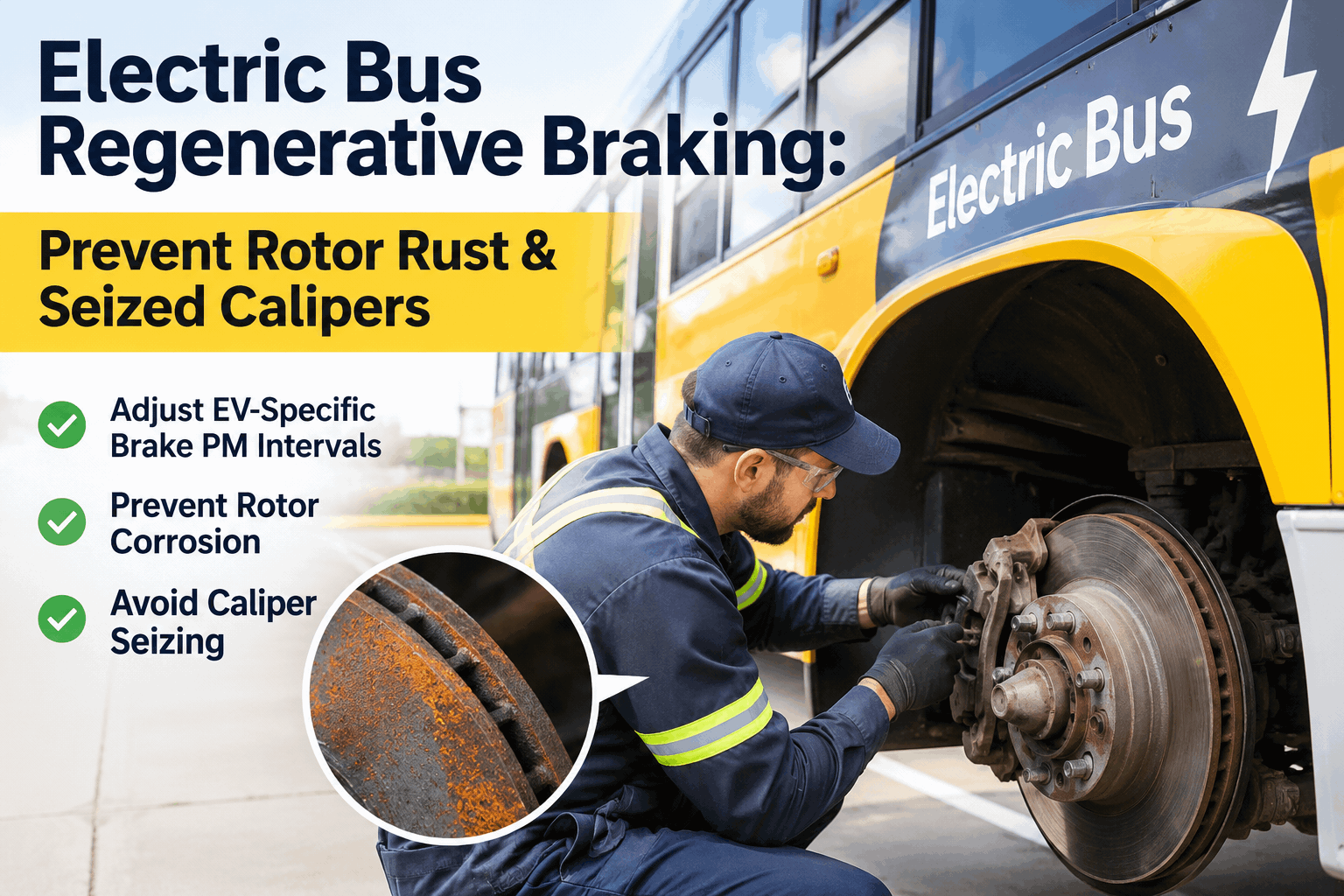
Electric Bus Regenerative Braking: Prevent Rotor Rust & Seized Calipers
Regenerative braking cuts friction pad wear by up to 70%, stretching pad life past 150,000 miles—but underused foundation brakes rust, bind, and fail DOT stroke audits unless your PM calendar adapts.
Why Electric Bus Regenerative Braking Maintenance Breaks Diesel Habits
In diesel buses, mechanics service caliper slides and air-disc hardware naturally during frequent pad replacements. On EV buses, passenger transit and school bus CMMS schedules must trigger calendar-based brake cleanings even when pads look untouched:
Traction-motor deceleration handles 60%–70% of stopping energy, leaving friction pads barely worn.
Slide pins and guide boots seize dry unless lubricated on a strict semi-annual calendar.
Lower compressor duty cycles trap condensation in wet tanks and brake relay valves.
Fleets separating EV brake PMs from diesel intervals keep 95%+ availability and save ~$2,800/bus/yr.
| Brake Component | Diesel Bus Pattern | Electric Bus (Regen) Pattern | Updated CMMS PM Rule |
|---|---|---|---|
| Brake Pads / Linings | Replaced every 45k–70k miles | Last 150k–200k miles | Decouple caliper service from pad replacement |
| Rotors & Drums | Polished daily by friction heat | Surface rust, pitting & delamination | Inspect inboard rotor faces quarterly; log burnishing runs |
| Caliper Slide Pins | Lubricated during pad swaps | Seize dry from inactivity & salt | Lubricate slides every 6 months or 12,000 miles |
| Air Dryer & Slack Adjusters | High compressor cycle heat | Moisture buildup in air tanks | Drain tanks & test air-dryer purge every 90 days |
| Hydraulic Brake Fluid | Flushed on major brake jobs | Absorbs moisture over 2+ years | Test moisture % every 12 months; flush every 24 months |
6-Point DOT & Caliper Inspection Checklist for EV Buses
Add these six checks to your BusCMMS EV brake inspection template so corrosion never triggers an out-of-service violation:
Caliper Slide Pin Lubrication
Pull and grease slide pins with high-temp silicone every 6 months regardless of pad thickness.
Inner & Outer Rotor Face Check
Inspect inboard rotor surfaces for rust-jacking and uneven pad contact during wheel-off PMs.
Air-Dryer Cartridge & Tanks
Test e-compressor air-dryer purge, and drain wet tanks to prevent winter valve freeze-ups.
Pushrod Stroke & Slack Audit
Measure chamber pushrod travel per FMCSA limits; seized adjusters hide behind regen braking.
Weekly Friction Burnishing
Instruct drivers to perform controlled service-brake stops weekly to scrub light surface rust.
Drag-Induced kWh/Mile Alerts
Flag sudden energy-per-mile spikes in BusCMMS—often the earliest sign of a dragging caliper.
Step-by-Step EV Brake PM & Burnishing Protocol
Combining shop lubrication with driver friction-burnishing habits keeps rotors clean and calipers moving freely across all four seasons:
Pull Wheels Twice Yearly
Do not rely on peek-hole pad checks. Pull wheels every 6 months to inspect inboard rotor faces for rust-jacking and uneven pad sweep.
Service Slide Pins & Abutments
Wire-brush stainless abutment clips, check rubber dust boots for tears, and apply high-temp silicone grease to caliper slide pins.
Test E-Compressor & Air Dryer
Verify air-dryer heater operation, swap desiccant cartridges annually, and drain wet air tanks every 90 days to stop winter valve icing.
Log Weekly Friction Stops
Have drivers perform 3–4 firm service-brake stops in Neutral or low-regen mode each week to scrub surface oxidation off rotors.
Diesel Brake PMs vs. EV Regenerative Brake PMs
Wear-Driven Service
- Calipers serviced only when pads wear below 4mm
- Daily friction heat keeps rotors bright and dry
- Frequent pad jobs naturally catch torn slide boots
Calendar-Driven Prevention
- 6-month caliper lube & wheel-off rotor checks regardless of pad depth
- 90-day air-dryer & tank drain alerts for low-duty e-compressors
- kWh/mile drag alerts catch seized calipers before DOT audits
Protecting State DOT Pass Rates on Zero-Emission Buses
State DOT and FMCSA inspectors check rotor condition, caliper drag, and pushrod stroke—not whether regenerative braking saved your pads. Shifting to calendar-based 6-month slide pin lubrication, quarterly inboard rotor checks, and 90-day air-dryer purges keeps electric buses passing inspections on the first pull.
Zero-Drag Caliper Release
Confirm wheels spin freely after service-brake release; even minor slide-pin binding spikes kWh/mile and overheats hubs.
E-Compressor Moisture Control
Electric air compressors run cooler than diesel gear-driven units, making 90-day tank drains and dryer cartridge swaps essential.
Rotor Thickness & Pitting
Measure rotor runout, and check inner faces for rust-jacking flaking during every semi-annual wheel-off inspection.
Digital Stroke Audit Trail
Log pushrod travel measurements per axle inside BusCMMS so safety directors have audit-ready brake records year-round.
Winter Salt, Regen Calibration & Friction Balance
In icy conditions, traction-control modules temporarily reduce regenerative braking torque so rear wheels do not slip—suddenly shifting stopping loads back onto foundation brakes. If caliper slides are seized or rotors are heavily pitted from months of underuse, stopping distances suffer right when winter roads are slickest. Keeping semi-annual caliper lubrication and weekly burnishing runs logged in BusCMMS guarantees full mechanical braking power on demand.
Post-Storm Undercarriage Rinse
Flush brine and de-icing chemicals off rear calipers, backing plates, and slack adjusters every two weeks during snow months.
Keep Slide-Pin & Boot Kits Ready
Maintain min/max parts stock for stainless abutment clips, dust boots, and silicone brake grease so PMs never wait on parts.
Pairing 6-month slide pin lubrication with weekly driver burnishing stops keeps foundation brakes responsive, prevents costly rotor replacements, and eliminates surprise out-of-service citations during state DOT and FMCSA brake inspections.
Building 6-month caliper slide lubrication and 90-day air-dryer purges into your preventive maintenance calendar protects stopping power and prevents costly rotor replacements.
A Lead Brake Technician's Take
Key Takeaways for Electric Bus Regenerative Braking Maintenance
1. Schedule by calendar
Trigger caliper slide lubrication every 6 months instead of waiting for pad wear.
2. Pull wheels for rotors
Inspect inboard rotor faces for rust-jacking and pitting before DOT audits.
3. Service air dryers
Drain tanks and replace cartridges every 90 days to stop valve freeze-ups.
4. Watch kWh/mile drag
Use energy efficiency spikes to catch binding calipers before range suffers.
Effective electric bus regenerative braking maintenance shifts your shop from mileage-based pad swaps to calendar-based corrosion control—book a BusCMMS demo or set up your EV brake PM templates free.