When fifteen electric buses plug in simultaneously at 4:30 PM on utility peak rates, one 15-minute demand spike can double your depot's monthly electric bill—while two buses parked in Bay 3 for brake work miss their overnight charge window. Smart electric bus depot charging management aligns charging schedules with shop maintenance holds. You can see how BusCMMS coordinates repair bays and charging windows in a live demo.
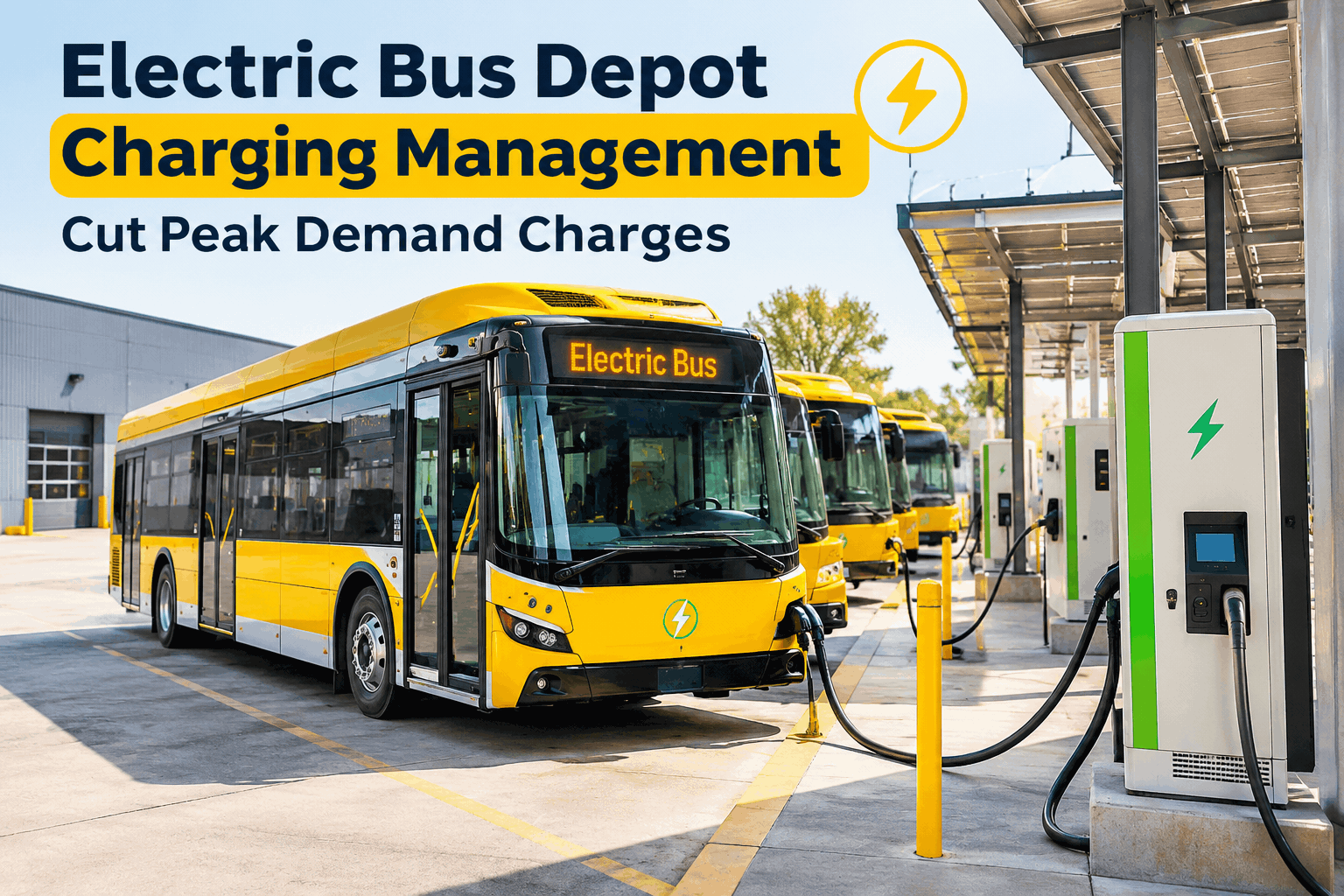
Electric Bus Depot Charging Management: Cut Peak Demand Charges
Unmanaged plug-and-charge habits trigger utility kW demand penalties, and leave shop-held buses uncharged. Stagger overnight loads and sync charger availability with active maintenance holds.
3-Phase Overnight Charging Schedule That Avoids Utility Spikes
Spreading depot demand across an off-peak 12-hour window—for example, smoothing a 7.5 MW peak down to a 625 kW average—can cut peak kW demand charges by 90%+. Align maintenance holds with charging windows in BusCMMS using three rules:
Shop Triage & Peak Lockout
Hold non-urgent charging during utility peak tariffs while mechanics clear DVIR defects, tire checks, and PMs.
Staggered Off-Peak Charging
Ramp Level 2 and managed DC chargers sequentially so transformer load stays flat and predictable all night.
Top-Off & Preconditioning
Finish balancing cells to 90%–100% SOC and precondition cabins on shore power right before pull-out.
Commercial tariffs set your monthly demand charge from the single highest 15-minute kW spike.
Spreading load across a 12-hour overnight window flattens kW demand and avoids utility ratchets.
Syncing shop release times ensures repaired buses move to live chargers before midnight.
Fleets coordinating EVSE and shop schedules report 95%+ availability and ~$2,800/bus annual savings.
Electric Bus Depot Charging Management: Resolving Bay & Load Conflicts
Coordinating energy managers and shop foremen inside one passenger transit and school bus CMMS eliminates these five daily friction points:
| Depot Conflict | Operational Impact | CMMS + Charging Solution |
|---|---|---|
| Bus Held in Repair Bay | Misses overnight charge slot; unready at 5 AM | Flag bay-release time so hostler moves bus to charger before 11 PM |
| Unplanned Midday Fast Charge | Triggers peak utility kW demand ratchet | Assign shorter routes to lower-SOC buses; reserve DCFC for emergencies |
| Charger Outage at Dispenser | Next-in-line bus never receives power | Auto-route faulted dispenser to CMMS and reassign bus to open stall |
| Early Morning Preconditioning | Draws extra kW while final buses top off | Stagger shore-power preheat 20 minutes after bulk charge completes |
| 100% Hot-Soak Parking | Accelerates summer battery degradation | Delay bulk charging until 9 PM and cap short-route targets at 85% |
Want to see how depot energy schedules align with shop work orders? Schedule a 20-minute BusCMMS demo.
6-Point Depot Charging & Energy Control Checklist
Verify your depot operations cover these six habits to keep utility bills predictable and morning routes 100% charged:
Lock Out Peak Windows
Block non-emergency DC fast charging during utility 4 PM–8 PM peak demand periods.
Sync Bay Release Times
Require mechanics to log estimated bay-clear times so hostlers plug buses in before midnight.
Track Dispenser Health
Keep 30-day cabinet filter PMs and cable checks current so dispensers deliver full rated kW.
Match SOC to Route Tier
Prioritize 100% overnight charge targets for 90+ mile rural runs and 85% for short urban loops.
Stagger Preconditioning
Run cabin and pack preheating in waves between 4:00 AM and 5:15 AM to avoid morning spikes.
Audit kWh/Mile vs. Utility Bill
Reconcile charger energy logs against route miles monthly to spot efficiency drift early.
Unmanaged Plug-In vs. CMMS-Coordinated Depot Charging
Without coordination between utility rate schedules and shop maintenance holds, depots pay twice—once in peak kW demand ratchets and again in missed morning routes:
Peak Spikes & Uncharged Buses
- Drivers plug in simultaneously at 4:30 PM on peak utility tariffs
- Buses held in repair bays miss overnight charge windows
- Faulted dispensers sit unnoticed until 5:00 AM pull-out
Flat Load & 100% Pull-Out
- Staggered 9 PM–3 AM charging cuts peak demand charges 90%+
- Shop bay-release times trigger hostler moves to open chargers
- 30-day EVSE filter PMs keep every stall delivering rated power
4-Step Daily Depot Charging & Shop Handoff Routine
Post-Trip DVIR & SOC Scan
Log return SOC and driver defects immediately so buses needing shop bays are separated from healthy units.
Release Cleared Buses
Mechanics close work orders and flag cleared VINs in BusCMMS so hostlers move them to assigned charge stalls.
Run Off-Peak Load Curve
Charge long-route buses first under managed kW caps, keeping transformer load flat through the night.
Verify 100% Pull-Out Board
Confirm every dispatched bus reached target SOC and completed cabin preconditioning before drivers arrive.
Coordinating Multi-Fuel Depots Without Separate Spreadsheets
Most school districts and transit agencies operate electric buses alongside diesel, propane, or CNG coaches for years during fleet transition. Managing charger availability, repair-bay holds, and overnight load windows inside BusCMMS keeps dispatchers, mechanics, and utility managers working off one live schedule—preventing demand spikes and morning pull-out delays.
Live Stall & Bus Readiness
See which buses are cleared from the shop, plugged into healthy chargers, and on track for 100% SOC by 5:00 AM.
Predictable Monthly Utility Bills
Avoid surprise 15-minute kW demand ratchets by keeping bulk charging inside off-peak overnight windows.
Balancing Utility Tariffs, Battery Health & Morning Readiness
Lower kW charging rates overnight not only slash commercial utility demand charges—they also reduce thermal stress on lithium-ion cells compared to back-to-back DC fast charging. Coordinating hostler plug-in schedules, shop repair-bay release times, and staggered preconditioning waves in BusCMMS gives depot supervisors full visibility from 4:00 PM return through 5:00 AM pull-out.
Avoid Demand Ratchet Clauses
Many utilities lock in elevated demand charges for months after a single peak spike—making off-peak scheduling essential.
Prefer AC Overnight Bulk Charging
Reserve high-power DC fast chargers for midday opportunity top-offs while using gentler AC Level 2 power overnight.
Aligning off-peak utility tariffs with shop bay release schedules ensures every bus hits morning pull-out at target State of Charge without triggering expensive 15-minute utility demand penalties.
A Transit Operations Superintendent's Take
Key Takeaways for Electric Bus Depot Charging Management
1. Avoid 4 PM spikes
Delay bulk charging until off-peak utility windows to eliminate demand ratchets.
2. Sync shop bay holds
Track repair-bay release times so hostlers never leave repaired buses unplugged.
3. Stagger preheat waves
Run morning cabin preconditioning after bulk charging finishes to keep kW flat.
4. Keep EVSE healthy
Maintain cabinet filters and cables so managed schedules deliver full rated power.
Disciplined electric bus depot charging management lowers utility demand charges and keeps morning routes 100% ready—book a BusCMMS demo to connect charger availability with your shop board.