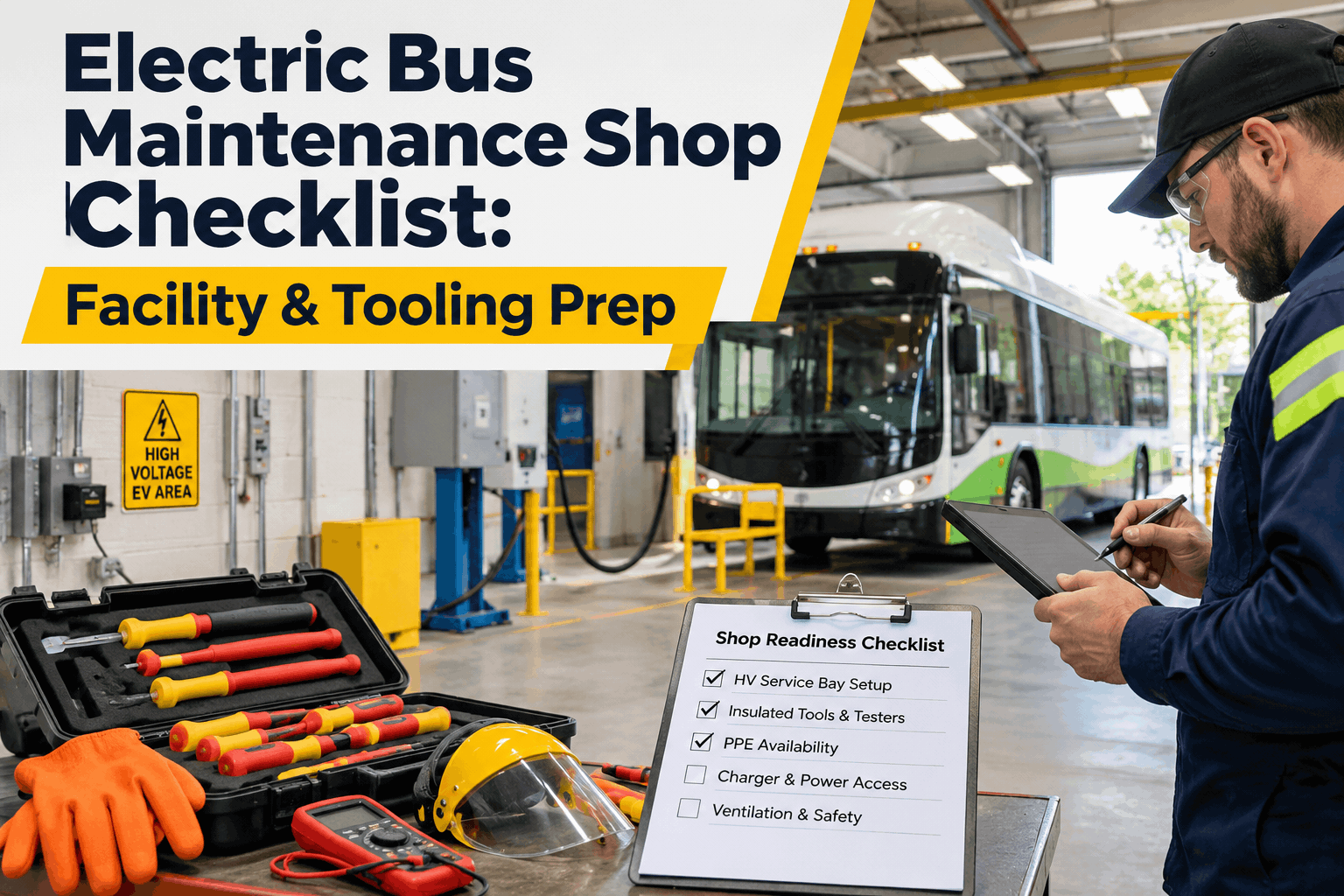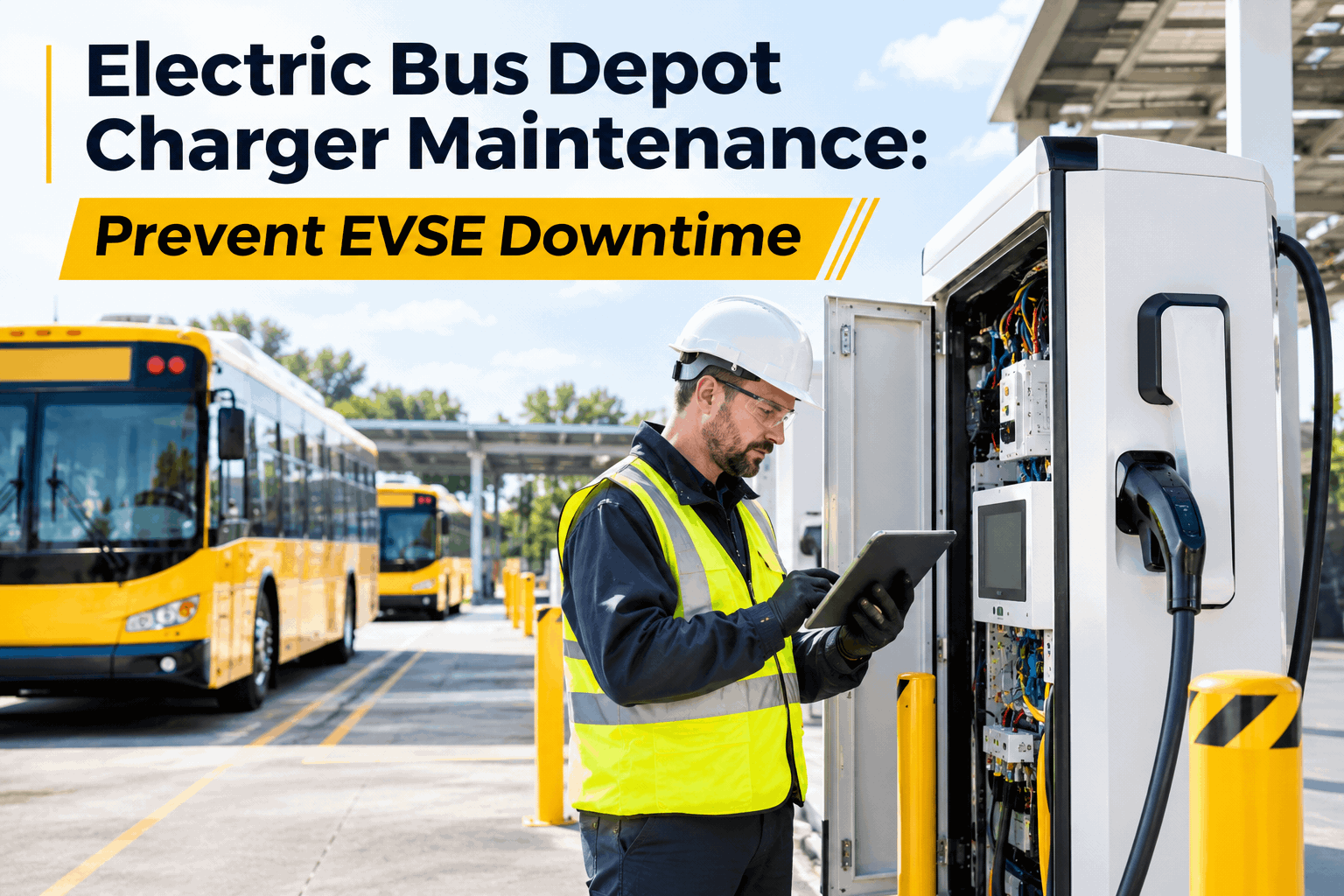
At 5:15 AM, your lead driver unplugs Bus 09 and sees a red ground-fault code on the DC dispenser—the pack sat at 14% all night because a cracked cable boot tripped the charger at midnight. Treating every dispenser as a tracked asset turns electric bus depot charger maintenance from morning firefighting into scheduled shop work. You can see how BusCMMS tracks EVSE uptime and fault codes in a live demo.
Electric Bus Depot Charger Maintenance: Prevent EVSE Downtime
In a 1-to-1 depot, one dead charger grounds a morning route. Track EVSE inspections, connector wear, OCPP fault codes, cabinet filter PMs, and vendor SLAs alongside your bus work orders.
Why Electric Bus Depot Charger Maintenance Belongs Inside Your CMMS
Most school districts and transit agencies track bus repairs inside a maintenance system while charger alerts sit in a separate utility portal or vendor email thread. When a dispenser trips at 1:30 AM, neither the night hostler nor morning dispatch sees the fault until pull-out.
Reactive Morning Scrambles
- Chargers have no asset ID, PM calendar, or spare parts stock in the shop
- Drivers swap buses across stalls blindly, masking failing dispensers
- Vendor SLA response times go untracked across scattered email chains
Proactive EVSE Uptime
- Every pedestal, power cabinet, and cable whip has recurring PM triggers
- OCPP fault codes auto-create work orders and flag stall unavailability
- Min/max inventory keeps spare CCS1 handles, seals, and filters stocked
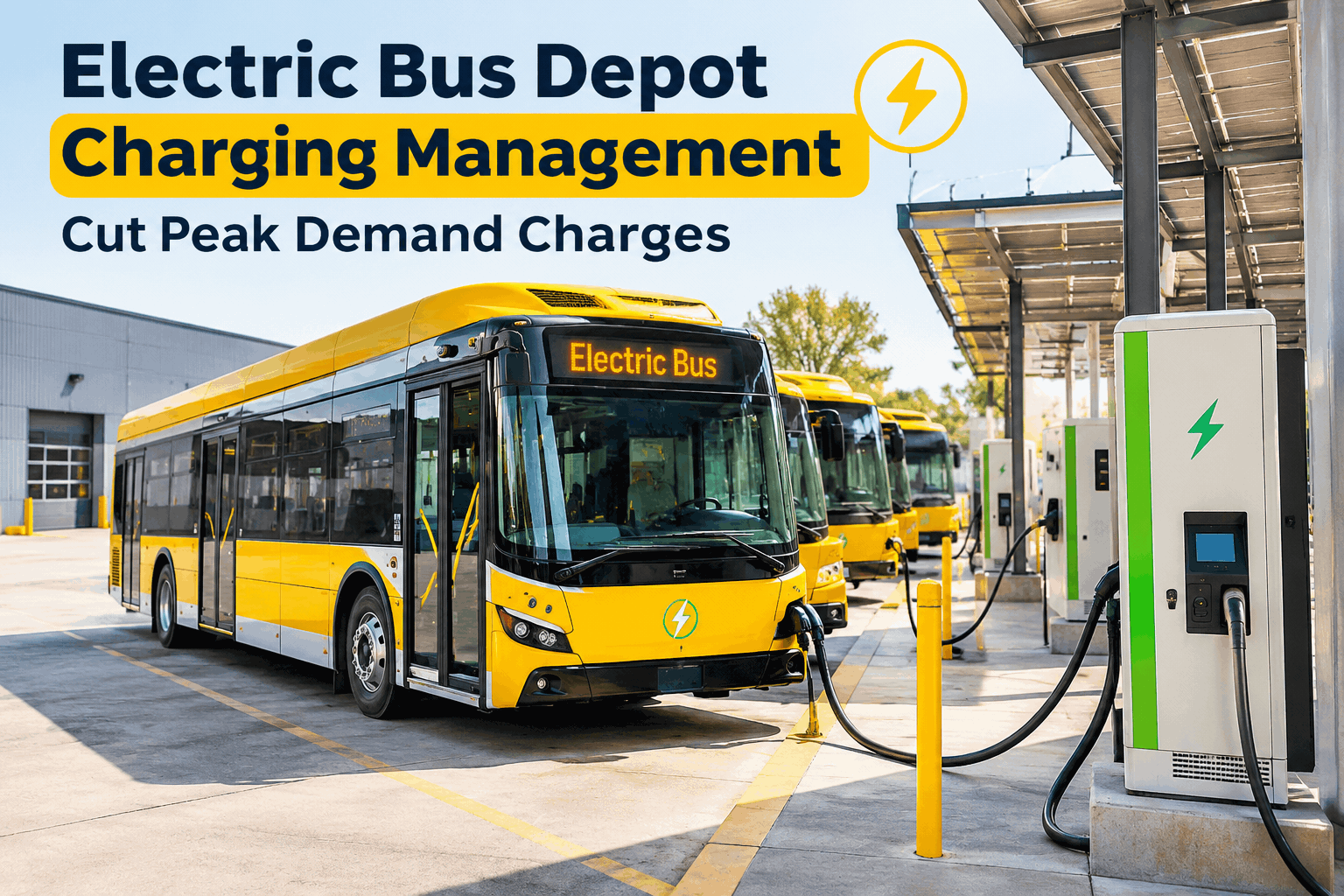
When a 12-bus depot relies on 12 dispensers, a single overnight charger outage puts a morning route at immediate risk.
Clogged DC fast-charger intake filters trigger thermal derating and cut overnight charging speeds by 30%–50%.
Import every charger serial number, warranty expiration date, and PM template alongside your buses in weeks.
BusCMMS fleets report 95%+ availability and ~$2,800 annual savings per bus by preventing surprise downtime.
5-Step Preventive Maintenance Workflow for Depot EVSE
Consistent electric bus depot charger maintenance prevents connector arcing, water intrusion, and surprise vendor callouts. Build recurring EVSE PM templates in BusCMMS using these five shop checks:
CCS1 Pin & Latch Check
Inspect DC power pins for pitting, discoloration, or bent control-pilot pins, and confirm the mechanical thumb latch clicks cleanly.
Cable & Retractor Inspection
Walk the full length of liquid-cooled or heavy DC cables for tire-crush flat spots, jacket cracks, and retractor tension.
Cabinet Filters & Fans
Vacuum dust, pollen, and winter road salt from power-cabinet louvers and confirm cooling fans spin freely without bearing noise.
E-Stop & GFCI Trip Test
Cycle emergency shutoff buttons, test ground-fault circuit protection, and check bollard base seals for standing water.
Vendor SLA & Firmware Log
Record OCPP error codes, open warranty tickets, and vendor response times per charger asset ID to enforce uptime guarantees.
Common Depot Charger Faults & Work Order Actions
Logging exact fault symptoms inside your passenger transit and school bus CMMS stops drivers and mechanics from blaming healthy buses when a dispenser is the real culprit:
| Fault Symptom / OCPP Code | Severity | Likely Root Cause | CMMS Work Order Action |
|---|---|---|---|
| Ground-Fault / GFCI Trip | CRITICAL | Moisture inside CCS1 handle or nicked cable jacket | Lock out dispenser; log megger test & replace cable whip |
| Session Drops at 15–20 Min | HIGH | Power-cabinet thermal derate from clogged air filters | Clean intake filters; verify power-module fan RPM |
| Handshake / Pilot Timeout | MODERATE | Worn control-pilot pin or dirty bus charge port | Inspect connector pins and schedule bus port cleaning |
| Liquid-Cooled Cable Overtemp | HIGH | Low cable coolant or failing dispenser pump | Check coolant reservoir level; dispatch vendor SLA ticket |
| Screen Frozen / Offline | MODERATE | Cellular/Ethernet drop or OCPP firmware hang | Power-cycle breaker; log vendor ticket if recurring |
| Broken Latch / Holster | MODERATE | Driver drop impact or winter ice buildup | Pull spare handle kit from min/max inventory; swap whip |
Need to coordinate charger repairs with morning bus availability? Book a 20-minute demo to see EVSE and bus work orders together.
Depot EVSE Hardware & Vendor Audit Checklist
Before winter peak or a federal grant audit, verify your shop captures these six charger records:
Asset ID & Serial Mapping
Assign every pedestal, power cabinet, and dispenser its own asset ID tied to bay number and breaker panel.
Spare Cable & Handle Stock
Set min/max inventory alerts for spare CCS1 handles, O-rings, gaskets, and cabinet air filters.
Vendor SLA Response Logs
Timestamp every vendor ticket from fault open to technician arrival to enforce 24- or 48-hour uptime SLAs.
Breaker & E-Stop Testing
Log quarterly emergency shutoff, bollard integrity, and panel torque checks in one audit-ready history.
Driver Plug-In DVIR Checks
Train drivers to report loose holsters or bent pins on post-trip DVIRs before a cable gets run over.
FTA / Grant Uptime Reporting
Export monthly charger availability percentages and repair histories for Clean School Bus or FTA reviews.
Seasonal Depot Charger Challenges & Shop Fixes
Weather, dust, and daily bus traffic punish outdoor dispensers. Preparing your shop for these four seasonal stressors keeps overnight charging uninterrupted:
Ice & Salt Infiltration
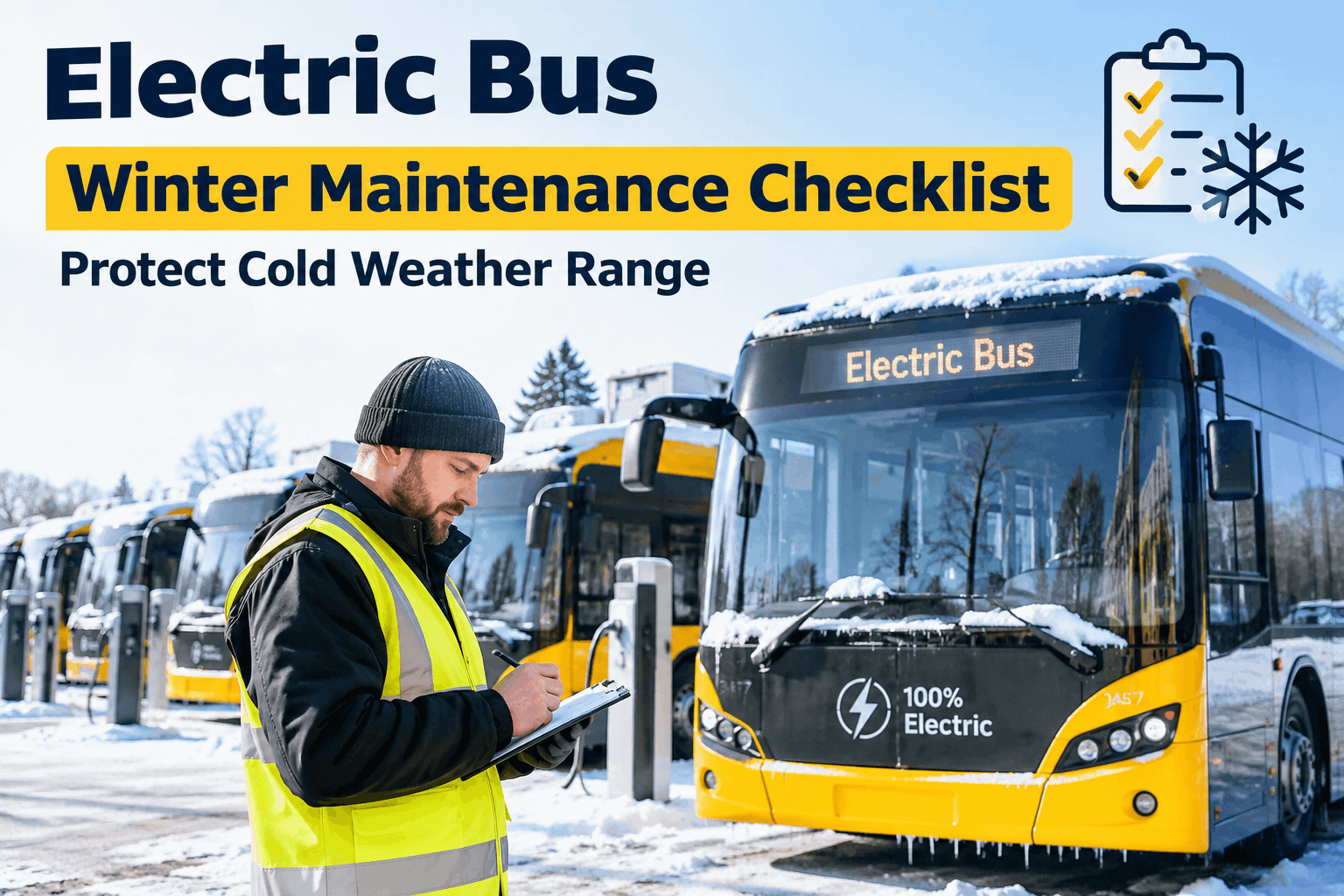
Road salt corrodes CCS1 pilot pins and freezes holster latches. Apply dielectric contact cleaner and inspect rubber boot seals every two weeks during snow months.
Pollen & Cottonwood Clogs
Airborne seeds pack DC fast-charger intake screens within days, triggering 2 AM thermal derates. Schedule 30-day cabinet filter vacuums before warm weather arrives.
Liquid-Cooled Cable Leaks
High-amperage DC cables rely on internal coolant loops. Check dispenser sight glasses monthly for glycol weepage and verify chiller fans spin at full speed.
Bollard & Retractor Impacts
Tight depot backing lanes lead to clipped pedestals and crushed cable jackets. Log minor housing scrapes on driver DVIRs so mechanics repair strain reliefs early.
How BusCMMS Prevents Morning Pull-Out Surprises
When chargers, buses, and spare parts live in one shop board, maintenance supervisors spot recurring dispenser faults before they strand a route. Logging OCPP error codes alongside filter PMs and vendor SLA timestamps gives transportation directors clear accountability across every depot stall.
A Depot Supervisor's Take
Key Takeaways for Electric Bus Depot Charger Maintenance
Track chargers as assets
Give every dispenser and power cabinet its own CMMS asset profile and PM schedule.
Inspect cables & filters
Prevent GFCI trips and thermal derates with 30-day filter and connector checks.
Log vendor SLAs
Document ticket timestamps and OCPP fault codes to hold hardware vendors accountable.
Stock wear parts
Keep spare CCS1 handles, seals, and filters on auto-reorder before failures strand buses.
Reliable electric bus depot charger maintenance protects your morning pull-out rate—book a live BusCMMS demo or start tracking your depot chargers free.