Electric buses have fewer moving parts than dieselbut they still need structured maintenance. The difference: instead of oil changes and exhaust systems, you're monitoring battery health, thermal management, and regenerative braking. This checklist covers every system at the right intervals, so nothing falls through the cracks.
Daily Pre-Trip Inspection
Every shift starts here. These checks take 5-10 minutes and catch issues before they strand buses on route. Learn more about EV service intervals.
Battery & Charging
Verify State of Charge (SOC) meets route requirements
Check charging port — no damage, debris, or moisture
Confirm no battery warning lights on dashboard
Verify charger disconnected and cable stored properly
Walk-Around Visual
Check tire condition and pressure (visual)
Inspect all exterior lights — headlights, markers, brake lights
Check mirrors and cameras for damage or obstruction
Verify no fluid leaks under vehicle (coolant)
Safety Systems
Test service brake — firm pedal, no warning lights
Test parking brake engagement and release
Test all passenger doors — open/close cycles
Verify emergency equipment present (extinguisher, kit)
Weekly Systems Inspection
Performed every 40-50 hours of operation. These checks go deeper than daily inspections without requiring full shop time.
Tire Service
Measure tire pressure (all positions)
Check tread depth — minimum 4/32"
Inspect for cuts, bulges, uneven wear
Verify lug nut torque (spot check)
Fluid Levels
Check brake fluid reservoir
Check windshield washer fluid
Inspect power steering fluid (if equipped)
Visual check of coolant expansion tank
Electrical
Test all interior lighting
Test HVAC operation — heat and A/C
Test destination signs and PA system
Verify 12V auxiliary battery voltage
Cleaning
Clean charging port contacts
Clean battery compartment vents
Clean HVAC cabin filter intake
Clean camera lenses and sensors
Digitize Your EV Checklists
Bus CMMS provides pre-built electric bus inspection templates with pass/fail logic, photo documentation, and automatic defect escalation.
Quarterly PM Inspection (Every 6,000 Miles)
This is where you catch problems before they become failures. Transit agencies following manufacturer recommendations perform these checks quarterly or every 6,000 miles, whichever comes first.
High-Voltage Battery System
Record battery State of Health (SOH) from BMS
Check for battery fault codes — clear minor, escalate major
Inspect HV cable connections and insulation
Verify battery pack mounting — no loose bolts
Check battery compartment for moisture or debris
Thermal Management System
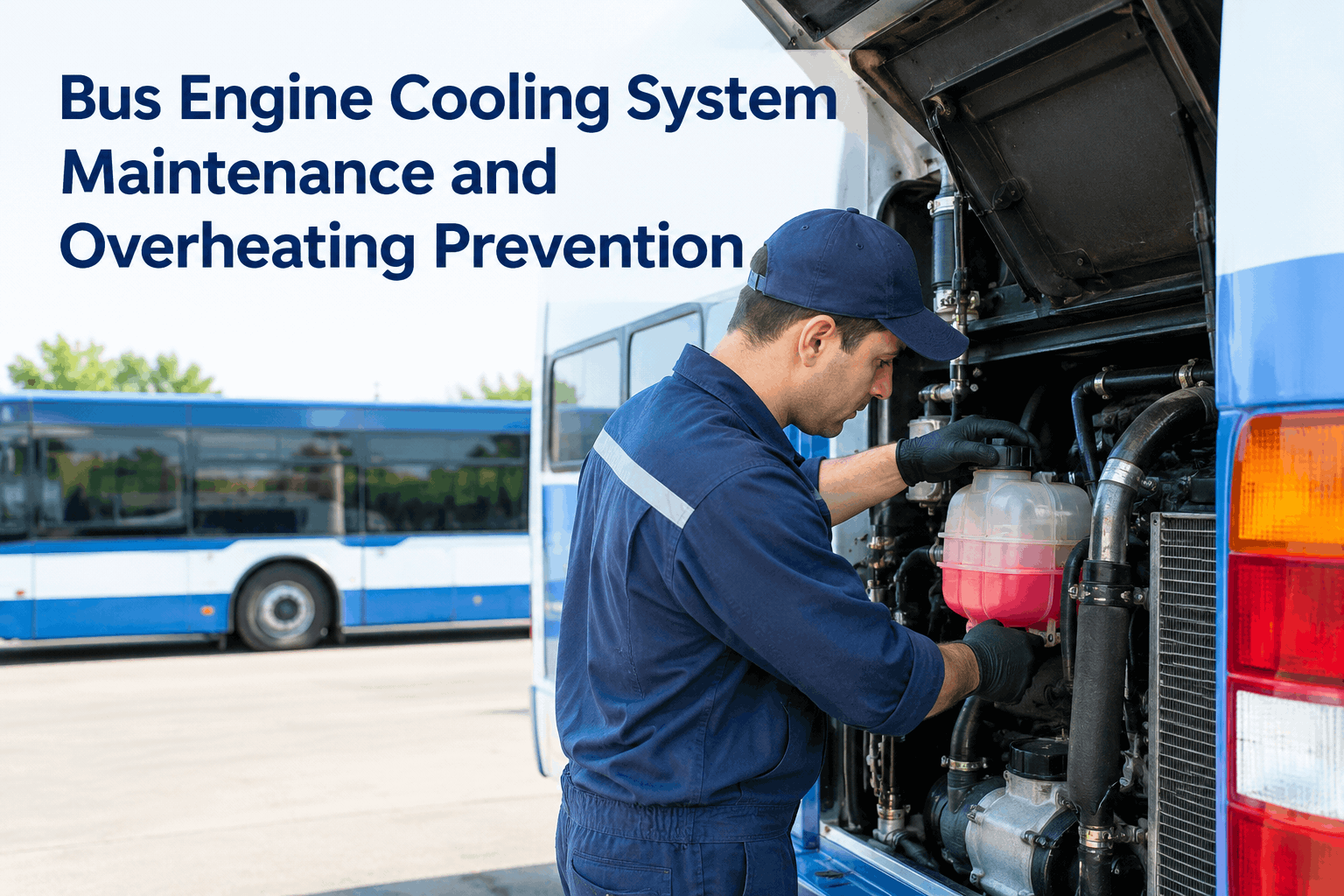
Check coolant level in expansion tank
Inspect cooling lines for leaks or chafing
Test coolant pump operation
Check radiator/heat exchanger for blockage
Verify battery temperature stays within range during operation
Drive Motor & Inverter
Check motor mounts and mounting bolts
Inspect motor cooling system (air or liquid)
Listen for unusual motor noise during test drive
Check inverter for fault codes
Verify regenerative braking function
Brakes & Suspension
Measure brake pad thickness — all wheels
Inspect rotors for scoring or heat damage
Check brake calipers for sticking (rust buildup)
Inspect air springs/bellows for cracks
Check shock absorbers for leaks
Need help building PM schedules? Explore the best CMMS options for electric fleets.
Annual Deep Service Checklist
Once per year or every 25,000 miles, your EV fleet needs comprehensive inspection and service. This is where you replace wear items and perform extended maintenance tasks.
Charging Infrastructure PM
Your chargers need maintenance too. Industry data shows only 71% of charging attempts succeed on the first try—proper PM changes that. Learn about EV maintenance challenges.
Monthly
Clean connector contacts and pins
Inspect cables for damage or wear
Test emergency stop function
Verify display and payment system
Quarterly
Check electrical connections (torque)
Test communication with backend
Verify power output accuracy
Inspect enclosure weatherproofing
Annual
Full electrical safety inspection
Firmware/software updates
Replace worn cables/connectors
Thermal imaging scan
Track Every Inspection Automatically
Bus CMMS schedules PM by mileage or calendar, assigns to qualified technicians, and documents everything for compliance.
Frequently Asked Questions
How often should electric buses have preventive maintenance?
Transit agencies typically follow manufacturer recommendations for quarterly PM or every 6,000 miles, whichever comes first. Daily pre-trip inspections and weekly systems checks supplement these scheduled services to catch issues early.
Do electric bus brakes really last longer?
Yes. Regenerative braking handles 70-90% of normal deceleration, dramatically reducing friction brake use. Brake pads can last 70,000-100,000+ miles compared to 30,000-50,000 for diesel buses. However, you still need to inspect for rust and sticking calipers since the brakes are used less frequently.
What's the most critical maintenance item for electric buses?
Battery health monitoring. The thermal management system keeps battery temperature in optimal range, and tracking State of Health (SOH) lets you predict degradation before it impacts route capability. Fleets using advanced monitoring see 29% better battery longevity.
Do we need special technicians for EV bus maintenance?
For high-voltage systems, yes. Technicians working on battery packs, inverters, and HV cables need specific training and certification. However, 60-70% of EV maintenance—tires, brakes, HVAC, suspension—uses the same skills as diesel bus work.
Should charging infrastructure have its own maintenance schedule?
Absolutely. Charger failures strand buses just as effectively as vehicle failures. Monthly cleaning, quarterly electrical checks, and annual deep service prevent the 29% first-attempt failure rate seen at poorly maintained stations.