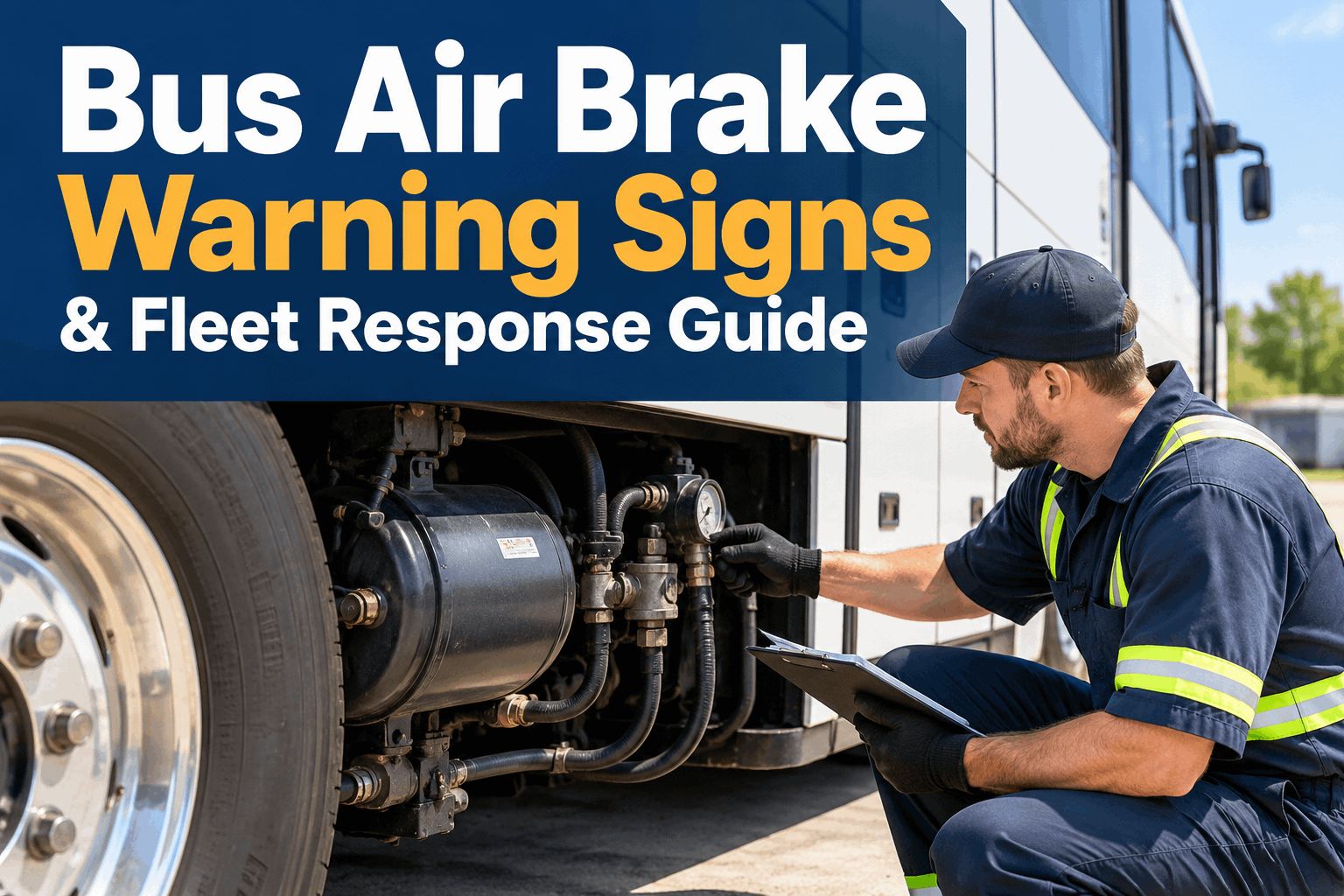
Bus air brake warning signs are not routine maintenance notes. A low-air-pressure alarm, a persistent air leak, or unexpected brake response can turn a normal school route or transit run into a serious safety event. Drivers need to recognize the warning, stop safely, and report exactly what happened; the maintenance team needs to evaluate the defect and document the repair before the bus returns to service. Book a demo to see how BusCMMS connects driver brake reports with shop work orders.
Bus Air Brake Warning Signs: Recognize, Stop, Report, Verify
The important question is not “Which part should we replace?” It is “What warning did the driver see, what action keeps the bus safe, and what evidence does the shop need before release?”
Operational illustration, not a substitute for the bus manufacturer's instructions, applicable regulations, or fleet emergency procedures.
The Warning Signs Drivers Must Not Ignore
An air-brake system uses compressed air to operate the service brakes and associated controls. The exact warning devices, operating pressures, and test procedures depend on the bus and its equipment. Treat the following as recognition and reporting guidance—not a do-it-yourself diagnosis.
Low-air-pressure warning light or buzzer
A warning indicates pressure has reached a system-defined low threshold. Drivers should follow their training and the vehicle's instructions to stop safely; they must not continue a passenger route while an unsafe brake condition exists.
Rapid or unexplained air-pressure loss
Pressure that fails to build as expected or drops abnormally can point to a leak, compressor or supply problem, or another defect. The cause requires qualified inspection.
Unexpected braking or reduced stopping response
Unusual pedal feel, pulling, delayed response, grabbing, or a bus that does not slow as expected may indicate a braking defect. Drivers must report the behavior even if no dashboard warning appeared.
Persistent hissing or audible air leaks
Some air discharge is normal during system operation. Continuous or abnormal leakage, particularly alongside pressure loss, needs assessment rather than guesswork about the source.
Parking-brake or spring-brake abnormalities
Unexpected application, failure to release, or other parking-brake behavior requires immediate attention. Spring-brake systems involve stored mechanical energy and are not suitable for untrained intervention.
Repeated warnings after a recent repair
Even if a warning clears temporarily, repeated complaints can indicate an unresolved issue. Preserve the earlier work order and verify whether the original defect was actually corrected.
Pressure Warning vs. Air Leak vs. Brake Response: What Each Tells You
A warning identifies a condition; it does not automatically identify a failed component. This simple fault map helps the dispatcher and shop collect useful information without turning the driver into a mechanic.
Drivers should never be asked to crawl under a bus, disconnect air lines, cage spring brakes, or attempt mechanical testing on the roadside. The practical handoff is a clear report plus the fleet's established emergency and defect procedures.
The Fleet Response: What Happens After a Brake Warning?
A driver report is only the first handoff. The defect must reach dispatch and maintenance, be assessed under the fleet's safety process, and stay open until a qualified person verifies the repair.
Stop safely, follow emergency instructions, communicate the warning and location, and avoid unsafe continued operation.
Time, bus ID, warning, symptomsArrange appropriate assistance, passenger protection or transfer as needed, and remove the affected bus from route assignment pending assessment.
Service status and notificationInspect using the correct OEM procedures and applicable requirements; document the cause, correction, and verification.
Findings, labor, parts, testsConfirm required repair and verification records are complete before approving return to service.
Approval and closure historyA digital DVIR and connected work order make that handoff easier to audit. Book a demo to see BusCMMS driver defect reporting and repair follow-up.
How a Brake Defect Moves Through BusCMMS
BusCMMS is a maintenance record and workflow tool—not an air-brake diagnostic instrument. Its value is keeping the original symptom, inspection, repair work, and service history connected so a repeated warning does not become a new mystery.
Inspection history
Preserve the first driver complaint and compare repeat air-brake concerns on the same bus.
Repair accountability
Connect inspection findings, parts, labor, and work-order completion to the vehicle.
Preventive follow-up
Track manufacturer-required brake inspections and applicable scheduled service.
For teams transitioning from paper inspection forms, Sign up to organize brake defect reports and maintenance history in BusCMMS.
What to Check Before a Bus Returns to Service
Do not close an air-brake complaint solely because the warning stopped sounding. The shop needs evidence that the reported condition was investigated and corrected under the proper technical and safety requirements.
- 01Original warning documented
Record the driver report, vehicle identification, date, and operating conditions.
- 02Cause investigated
Use qualified personnel and the correct bus/chassis/brake-system procedures. Avoid guessing from one symptom.
- 03Corrective work recorded
Retain replaced components, repairs performed, and relevant work-order details.
- 04Applicable verification completed
Document manufacturer-directed checks and any required regulatory inspections or tests.
- 05Release approved
Only authorized personnel return the vehicle to service once the safety issue is resolved.
A Practical Brake Warning Response Checklist for Fleet Managers
Use this as an operational documentation checklist alongside—not instead of—your established driver training, OEM instructions, and applicable federal or state requirements.
Drivers know warning indicators, reporting channels, and the required pre-trip inspection process.
The bus is stopped safely and the driver follows emergency procedures without attempting roadside repairs.
The vehicle's service status is clear, and any needed passenger or route arrangements are made.
A qualified technician diagnoses and records the defect, repair, and verification.
Required checks and authorization are complete; unresolved safety defects remain open.
Recurring complaints are compared with prior work orders and maintenance history.
Related reading: the complete guide to bus CMMS explains how inspection, maintenance, and work-order records connect across a fleet.
Key Takeaways: Air Brake Warnings Are Safety Events
Recognize the warning. Low pressure, abnormal leakage, and unsafe brake response require prompt attention.
Stop and report. Follow the bus manufacturer's instructions and fleet emergency procedures.
Diagnose before release. Only qualified personnel should determine the cause and verify the repair.
Keep the history. BusCMMS helps connect the original defect, corrective work, and repeat complaints.
Bus air brake warning signs should lead to a consistent safety response, not an improvised repair. When the warning, dispatch decision, shop diagnosis, and verification are documented together, fleet managers can see what happened and whether the defect was truly resolved.
Bus Air Brake Problems: Common Fleet Questions
What does a low-air-pressure warning mean on a bus?+
It indicates that system air pressure has reached a warning threshold defined by the vehicle's equipment and applicable requirements. The driver should follow their training and the manufacturer's instructions, stop safely, and report the issue. Do not assume the warning identifies a particular failed part or that the bus is safe once the alarm stops.
Can a bus continue operating with an air-brake warning?+
A bus with an unsafe or unresolved braking condition must not continue normal passenger service. Drivers should follow the manufacturer's instructions, fleet emergency procedures, and applicable regulations. A qualified assessment and required repair verification determine whether the vehicle may return to service.
What are common signs of an air leak in a bus brake system?+
Possible signs include persistent abnormal hissing, pressure that fails to build normally, repeated low-pressure warnings, or unusual pressure loss. Some air discharge is part of normal operation, so the sound alone does not establish the cause. A qualified technician should evaluate the system using the correct procedures.
Who should decide whether a bus with brake defects is out of service?+
Drivers must respond safely to warnings and report defects; dispatch and fleet management should follow established procedures for holding a bus from service. Qualified inspectors or technicians and authorized fleet personnel evaluate defects and release the vehicle in accordance with applicable legal requirements and manufacturer instructions.
How can BusCMMS help manage air-brake defects?+
BusCMMS can organize digital inspection reports, vehicle-specific work orders, preventive maintenance tasks, and repair history. This helps teams trace the original driver complaint through technician follow-up and documentation. It does not diagnose air-brake faults, perform mechanical tests, or automatically certify a bus as safe.