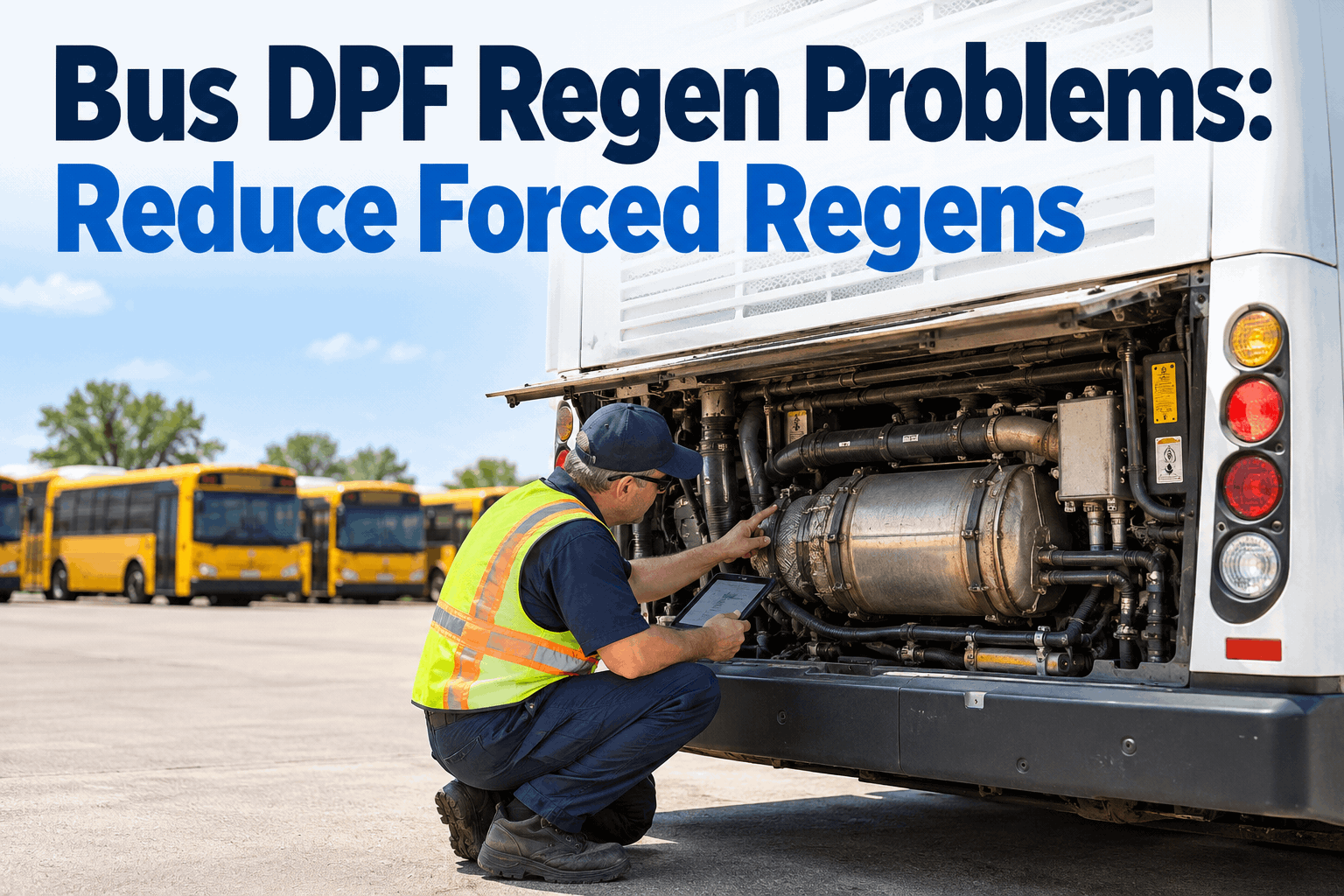
Bus DPF regen problems show up the same way every time: the dash asks for a parked regen again, third time this month, same bus. The filter is loading soot faster than it can burn it off. You can see regen history tracked per bus in a demo — but first, why it keeps happening.
Bus DPF Regen Problems: How to Reduce Forced Regens
Regeneration is a ladder. The higher the soot load climbs, the more it costs you in downtime — from a free passive burn to a bus parked at the shop. The goal is to keep every bus near the bottom.
Why Buses Get Frequent Forced Regens in the First Place
A diesel particulate filter is designed to clean itself while the engine runs hot on the highway. The trouble is that a school or transit bus rarely runs the way the filter was designed for. Three parts of a bus's day work against it.
Short routes, never up to temperature
Passive regen needs sustained high exhaust heat — roughly 575°F and up. A route of short hops with stops every few blocks never holds that heat long enough to burn soot off on its own.
Long idling at the curb and the yard
Morning warm-ups, loading and unloading, and layovers mean the engine spends a lot of its day idling cold. Idle produces soot while making almost no heat to clear it.
Interrupted regens that never finish
An active regen starts, then the bus shuts down at the end of the run before it completes. The partly burned soot stays in the filter, compounds with the next load, and the system escalates.
None of this is a broken filter — it's a duty-cycle problem. The bus's normal day simply never lets the DPF clean itself the easy way, so it climbs the ladder. You can start a free account and track regen patterns across your diesels.
How a Soot Load Climbs the Regen Ladder
Every forced regen started life as a passive one that never got the chance to run. Following the soot load up the ladder shows exactly where a bus's day falls off, and where you can step in before it reaches the shop.
Ignore it long enough and the ECM locks out self-regen and derates the engine — a speed limit that can strand a bus mid-route. You can start a free account and watch soot-load and regen codes per bus.
Spotting the Chronic Regenerators in Your Fleet
Not every diesel bus has a regen problem — usually a few do, and they're the ones on the shortest, slowest routes. The pattern is easy to see once you track forced regens per bus over time: a healthy bus stays flat, a problem bus climbs.
A climbing regen count is an early warning you can act on — before it becomes a derate on a loaded bus. You can book a demo to see regen frequency charted for your own buses.
What Actually Reduces Forced Regens on a Bus
You can't rewrite the routes, but you can change how often a bus reaches the top of the ladder. Some of this is operational, some is maintenance — and knowing which bus needs which is the whole trick.
Swipe sideways to see all three columns.
The first move is almost always idle and route; the filter is usually fine. Book a demo to see idle time and regen codes side by side per bus.
A Practical Checklist to Prevent DPF Regen Problems
When a bus starts asking for parked regens too often, work this list in order. The first items are free and fix most cases; the last ones are for when the duty cycle isn't the whole story.
- Let parked regens finish when requestedThe cheapest fix of all. A completed parked regen resets the cycle; a deferred one just pushes the bus toward a shop-forced regen and a derate.FIRST
- Cut unnecessary idle timeIdling loads soot while making almost no heat to clear it. Reducing warm-up and layover idle is the single biggest lever on most routes.FIRST
- Rotate chronic buses onto longer runsIf a bus lives on short hops, swapping it onto a longer route now and then gives the exhaust the sustained heat passive regen needs.THEN
- Check sensors and EGR on frequent regeneratorsA failing pressure or temperature sensor, or a sticking EGR valve, can trigger regens that aren't actually needed. Diagnose before you blame the route.THEN
- Schedule DPF cleaning on intervalAsh builds up no matter how well you drive and can't be burned off. A planned cleaning is far cheaper than chasing regens or replacing a clogged filter.THEN
Catching a failing sensor early can be the difference between a roughly $400 repair and a DPF assembly running into the thousands. The order above saves the most for the least.
How BusCMMS Helps With Bus DPF Regen Problems
BusCMMS can't shorten a regen, but it gives you the one thing that makes them manageable: visibility into which buses are regenerating too often and why — so you fix the few that matter instead of guessing across the whole fleet.
Regen history per bus
Reads regen and soot-load fault codes from your telematics and tracks how often each bus regens, so the chronic ones stand out.
Early alerts before a derate
A rising regen count or a high-soot code opens a work order, so a bus gets attention before the ECM derates it on a route.
DPF service on schedule
Builds DPF cleaning into each diesel bus's preventive maintenance, so ash gets handled on a plan instead of after a clog.
BusCMMS reports bus fleets running at 95%+ availability once maintenance and fault codes run on one system — a company-reported figure from its own customer base, not independently audited, but a fair picture of what catching problems early is worth. For the bigger picture, see the complete guide to what a bus CMMS does.
A Shop Foreman's Take
Key Takeaways on Bus DPF Regen Problems
Frequent forced regens are almost never a broken filter — they're a bus whose day never lets the DPF clean itself. Fix the duty cycle first, and watch the buses that keep climbing. Four things to remember.
Regen is a ladder
Passive to active to parked to forced — each step up costs more downtime.
It's a duty-cycle problem
Short routes and heavy idle keep the exhaust too cool for passive regen.
A few buses cause most of it
Track regens per bus and the chronic regenerators show themselves.
Idle and route beat parts
Fix idle, let regens finish, and clean ash on schedule before replacing anything.
Handled early, bus DPF regen problems rarely reach the shop: let the parked regens finish, cut the idle, watch the buses that keep climbing the ladder, and keep ash on a cleaning schedule. The filter was usually never the problem — the day the bus runs was.