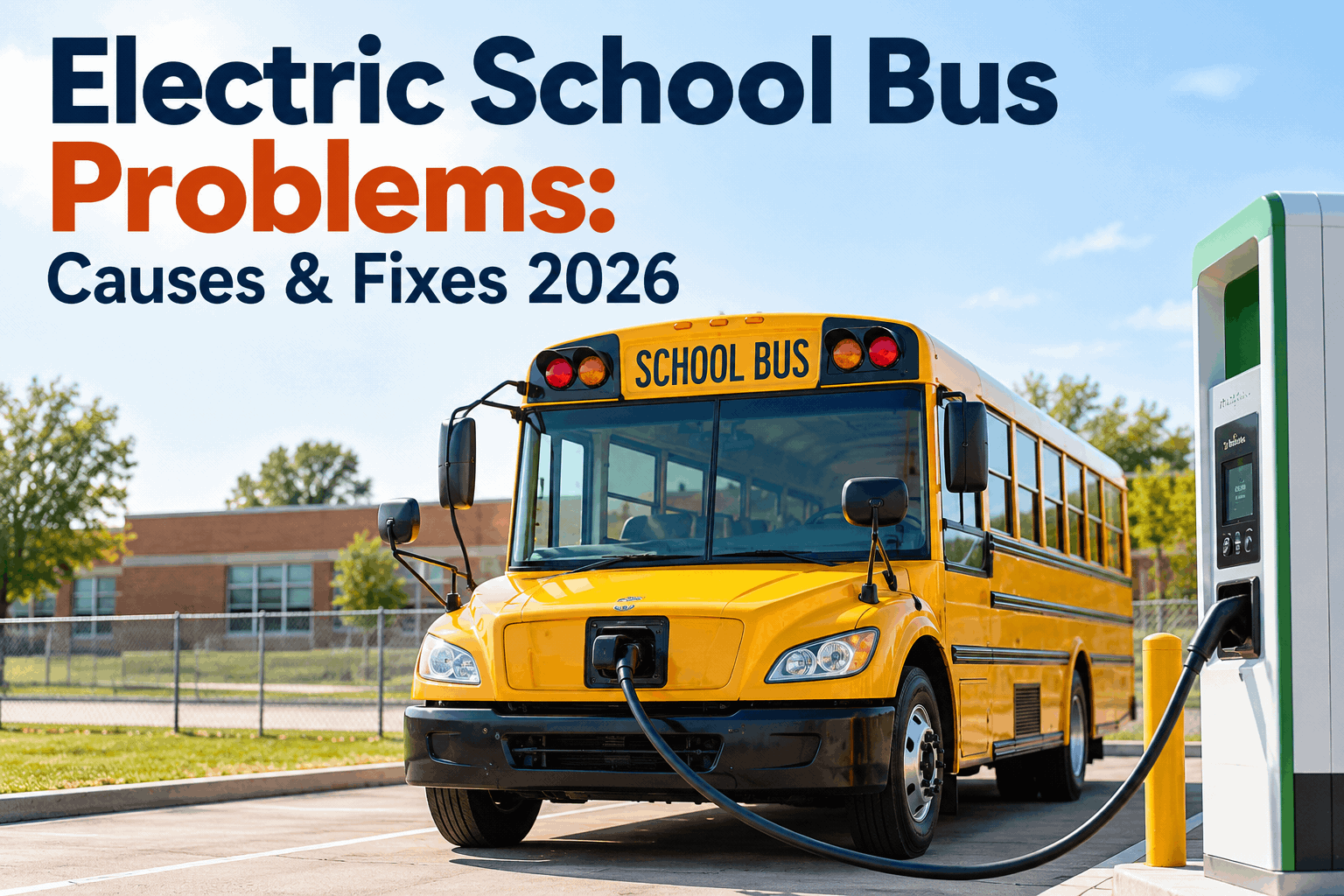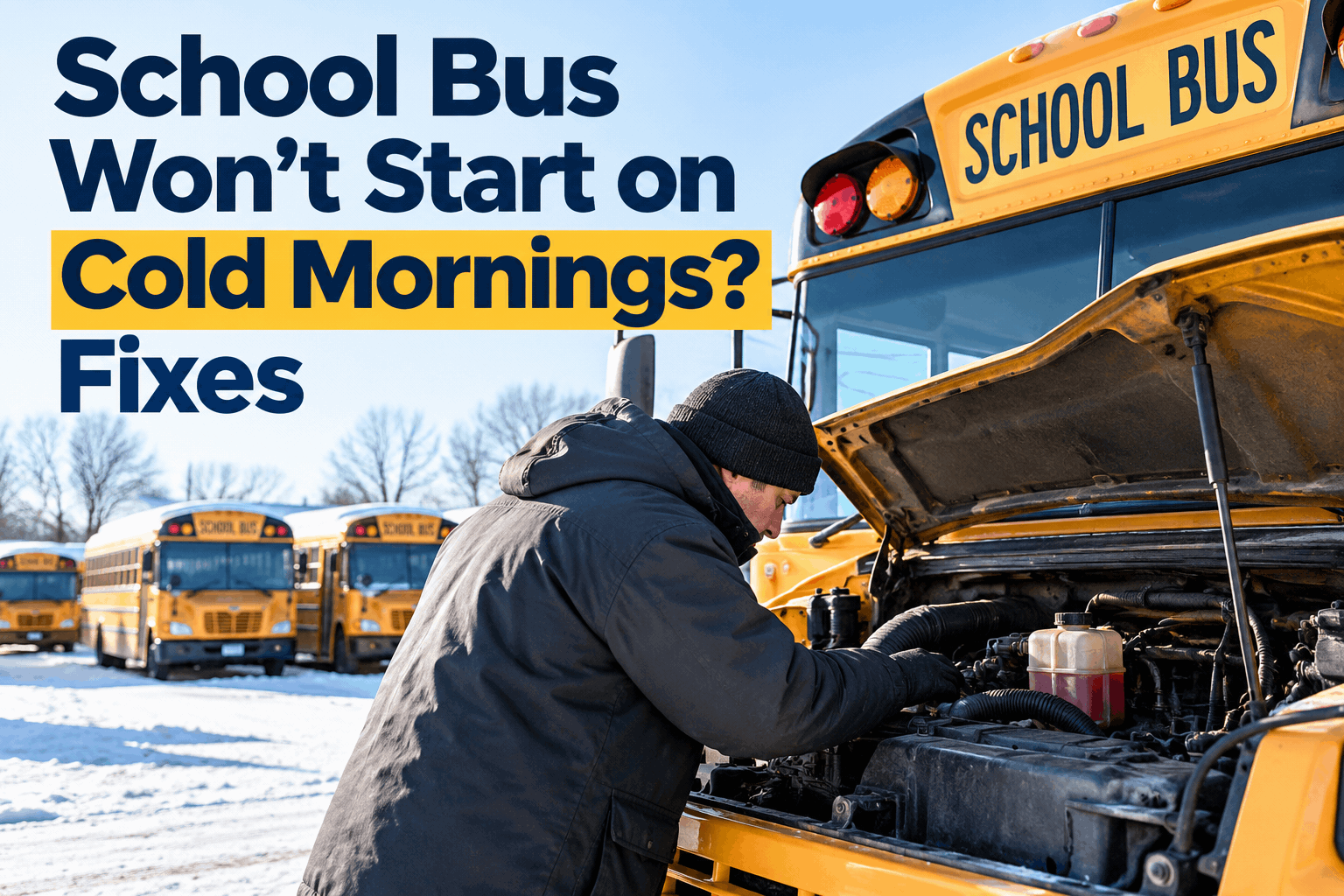
When a school bus won't start on a cold morning, a route of kids is already waiting at stops in the dark. The first thing to know is whether it cranks or not, because that splits the problem in two. You can see how winter PM heads off these no-starts in a demo — but first, how to diagnose one fast.
School Bus Won't Start on a Cold Morning? Here's How to Fix It
Every cold no-start is one of two problems. Turn the key and listen: if it won't crank, it's electrical; if it cranks but won't fire, it's fuel, glow, or compression. Start there.
Why Cold Weather Makes a Diesel School Bus Hard to Start
A diesel doesn't have spark plugs — it lights fuel with the heat of compression. Cold works against that in three ways at once, which is why a bus that started fine in October suddenly won't turn over in January.
Batteries lose power in the cold
A battery can lose around a third of its cranking power at freezing and more than half near 0°F. The same battery that cranked fine all fall simply can't spin a cold engine fast enough.
Diesel fuel gels and waxes up
As temperatures drop, wax forms in untreated diesel and starts clogging the fuel filter — the most common place fuel gels. The engine cranks but can't pull fuel through.
Cold steel fights compression
Cold cylinders bleed off the compression heat a diesel needs to ignite. Starting at 0°F can be several times harder than on a mild day — which is what glow plugs and block heaters are there to offset.
None of these come out of nowhere. They're the predictable failures of cold weather — which means almost every cold no-start is preventable with the right fall prep.
How Much Cranking Power a Battery Loses in the Cold
The battery is behind more cold no-starts than anything else, and the reason is simple chemistry: a battery's available power falls as the temperature drops, right when a cold engine demands the most to turn over.
This is why a fall load test matters: a battery at 60% health reads fine in warm weather and dies at the first freeze. You can start a free account and schedule battery testing before winter.
Diagnosing a School Bus That Won't Start: Cause and Fix
Once you know which branch you're on — won't crank, or cranks but won't fire — the likely causes narrow fast. Work this table top to bottom; the first items are the most common and the quickest to check.
Swipe sideways to see all three columns.
One safety note: don't spray starting fluid into a glow-plug or grid-heater diesel — it can ignite and cause real damage. Book a demo to see repair history logged per bus so the same bus doesn't surprise you twice.
The Cold-Morning Quick-Check, in Order
When a bus won't start and a route is waiting, run these in order. They move from the fastest, most common fixes to the ones that need a tech — so you rule out the easy things first.
- 1Listen: crank, click, or nothing?This one sound tells you which half of the problem you're in before you touch a tool.
- 2Check the wait-to-start lamp cycledCold diesels need the glow plugs to finish. Don't crank until the lamp goes out.
- 3Eyeball the battery and cablesCorrosion, a loose clamp, or a bad ground is a two-minute find and a frequent cause.
- 4Confirm the block heater was plugged inAn unplugged or failed heater is an easy miss on a bus that sat out overnight.
- 5If it cranks and won't fire, suspect fuelGelled fuel or a waxed filter is the usual cranks-but-won't-start cause in deep cold.
Most cold no-starts are solved in the first three steps — a battery, a connection, or a glow-plug cycle. The deeper the cold, the more it leans toward fuel. You can start a free account and log each no-start to its bus.
Preventing Cold No-Starts: A Winter PM Timeline
The cheapest no-start is the one that never happens. Almost everything that strands a bus in January can be caught in the fall, when the shop has time and the bus is warm. Here's the season laid out.
Draining the water separators daily is the one in-season habit that quietly prevents the worst of it — water in the fuel freezes and blocks the line. You can book a demo to see this whole plan scheduled across your fleet.
How BusCMMS Prevents Cold-Morning No-Starts
BusCMMS can't warm up the bus for you, but it makes sure the winter prep actually happens — and that the bus that no-started last week doesn't get overlooked this week.
Seasonal winter PM scheduled
Battery load tests, glow-plug and block-heater checks, and winter-fuel reminders fire on schedule every fall — not when someone remembers.
No-start history per bus
Every failed start and repair is logged against the bus, so a chronic cold-starter shows itself instead of hiding in the daily scramble.
Parts ready before you need them
Batteries, fuel filters, and glow plugs tracked with reorder points, so the winter parts are on the shelf when the first freeze hits.
BusCMMS reports bus fleets running at 95%+ availability once preventive maintenance runs on one system — a company-reported figure from its own customer base, not independently audited, but a fair picture of what catching these failures early is worth. For the bigger picture, see the complete guide to what a bus CMMS does.
A Transportation Director's Take
Key Takeaways: School Bus Won't Start in the Cold
A cold no-start feels like an emergency, but it's a short list of predictable causes — and nearly all of them are preventable. Four things to remember.
Crank or no crank splits it
No crank is electrical; cranks-but-won't-fire is fuel, glow, or compression.
The battery is the usual suspect
Cold cuts cranking power by a third or more. A fall load test catches it.
Deep cold means fuel
Gelled fuel and a waxed filter are the classic cranks-but-won't-start cause.
Fall prep beats a tow
Batteries, glow plugs, block heaters, and winter fuel — handled before the freeze.
When a school bus won't start on a cold morning, listen first, work the branch you're on, and rule out the easy causes before the hard ones. Then make sure next winter is quieter: load-test the batteries in the fall, check the heaters and glow plugs, switch the fuel in time, and the first freeze stops taking your routes with it.