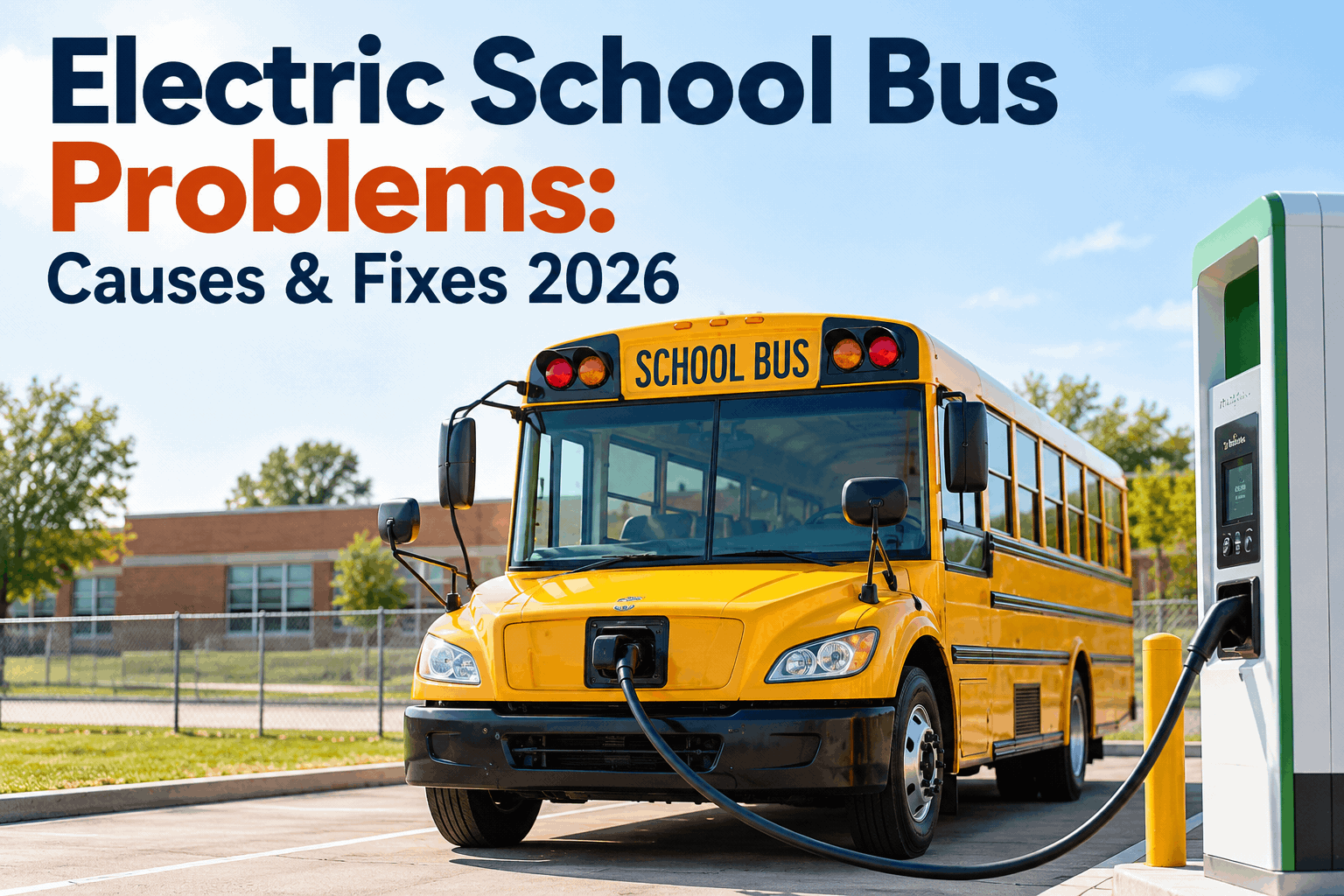
Electric school bus problems are real, but most aren't the dealbreakers the headlines suggest — they're a short, known list, and nearly all have a practical fix. You can see how fleets track EV reliability in a demo; first, here is what's actually going wrong in 2026.
Electric School Bus Problems: What Fleets Report and How to Fix Them
Charging, cold-weather range, cost, parts — the issues come up again and again. Ranked by how often fleets raise them, here's the real 2026 problem list, not the hype on either side.
Are Electric School Buses Actually Unreliable?
Mostly, no — the drivetrain itself is simpler and has fewer things to break than a diesel. What fleets run into isn't the bus failing on the road so much as the ecosystem around it: chargers, range on cold mornings, and getting parts and trained hands when something does go wrong.
The bus is rarely the problem
An electric motor has a fraction of the moving parts of a diesel engine. Most "EV problems" are really charging, infrastructure, or logistics problems around a bus that runs fine.
The issues are predictable
Nearly every problem fleets report is a known one with a known fix — cold-weather range, charger uptime, parts lead times. None of them are surprises if you plan for them.
Tracking beats surprises
The fleets that struggle are the ones caught off guard. The ones that do well see the problem coming — a charger offline, a range trend, a battery flag — and act early.
So the honest answer is that electric school buses are reliable when the operation around them is — and that's the part a fleet actually controls.
The Real Electric School Bus Problems, and the Fix for Each
Here's the working list — every problem fleets actually report, what's behind it, and the practical move that addresses it. None of these require accepting a bus that won't do the job; they require planning the operation around it — and a quick demo shows how each one gets tracked on a real fleet.
Swipe sideways to see all three columns.
Cold-weather range is the one that catches the most fleets off guard — it has its own playbook in our EV bus cold-weather range guide. You can start a free account and log these issues per bus.
Which Problems You Can Manage, and Which You Plan Around
Not every EV problem is the same kind of problem. Most are operational — things a fleet can reduce with planning, tracking, and preventive maintenance. A smaller share are hard constraints you design routes and budgets around. Sorting them is half the battle.
You can manage
- Charging faults — monitor and respond fast
- Cold-weather range — pre-condition and route smart
- Battery degradation — track state of health early
- Parts delays — stock common items, track warranty
You plan around
- Grid capacity at the depot
- Very long rural route lengths
- Higher upfront purchase cost
- Charger installation lead times
The left column is where a maintenance system earns its keep — most EV problems are the kind you can see coming. Book a demo to see the manageable ones tracked on your fleet.
Why Tracking Turns Problems Into Uptime
The difference between a fleet that fights its electric buses and one that runs them well usually isn't the buses — it's whether problems get caught early or discovered on a cold morning. Tracked reliability holds; reactive reliability drifts down as small issues pile up. A charger that fails overnight is a minor fix if an alert catches it at 4 a.m. and a stranded route if nobody sees it until the driver turns the key. A battery losing range is a planned reassignment if you watch the trend and a mid-winter scramble if you don't. Same buses, same problems — the only variable is whether you were watching.
Same buses and the same winter — the gap is entirely whether the fleet saw the problems coming. That's a tracking problem, not a bus problem.
How BusCMMS Keeps Electric School Bus Problems in Check
BusCMMS can't rewire the grid or stop a battery aging — but it makes the manageable problems visible and the trends catchable, so your electric buses spend more time on routes and less time as a surprise in the shop.
Battery and charging monitoring
State-of-health trends and charging-fault logs per bus, so a fading battery or a dead charger shows up as a trend, not a stranded route.
EV-specific preventive maintenance
Electric buses follow their own PM schedule — battery, thermal, and charging checks — on the same dashboard as your diesels.
Downtime and problem history
Every issue logged against the bus, so a chronic problem child shows itself and you can prove uptime to the board.
BusCMMS reports bus fleets running at 95%+ availability once every bus is on one system — a company-reported figure from its own customer base, not independently audited, but a fair picture of what catching problems early is worth. For the bigger picture, see the complete guide to what a bus CMMS does.
A Transportation Director's Take
Key Takeaways on Electric School Bus Problems
The problems are real but short and known — and the fleets that do well are simply the ones that see them coming. Four things to carry into it.
The bus is rarely the problem
Most issues are charging, range, or logistics around a bus that runs fine.
Every problem has a known fix
Charging, cold range, parts, battery — none are surprises if you plan for them.
Sort manage-able from plan-around
Most move with good operations; a few you design routes and budgets around.
Tracking is what holds uptime
Caught early, problems stay small. Discovered on a cold morning, they cost routes.
So the real story on electric school bus problems in 2026 is calmer than the headlines: a known list of mostly operational issues, each with a practical fix, on top of a bus that's simpler than the diesel it replaced. Match EVs to the right routes, plan around the hard constraints, and track the rest — the easiest way to start is to put your buses on one system and watch the problems stay small instead of managing you.
Electric School Bus Problems: FAQ
Are electric school buses unreliable?
No — the bus itself is usually more reliable than the diesel it replaced, with far fewer moving parts, no engine or transmission to fail, and regenerative braking that spares the brakes. Most of what fleets call "electric bus problems" are charging faults, cold-weather range, or parts-and-service delays — issues around the bus, not failures of the bus. Fleets that track charging and battery health per bus run their electric fleets at the same availability as their diesels.
What are the biggest problems with electric school buses in 2026?
In rough order of how often they disrupt routes: charging and infrastructure (a failed overnight charge is the number-one cause of a missed morning route), cold-weather range loss, parts and service lead times, driver and technician learning curve, and battery degradation over years. The first four are operational and largely solvable with monitoring and planning; battery degradation is slow, predictable, and a years-out budgeting question rather than a daily problem.
How much range does an electric school bus lose in cold weather?
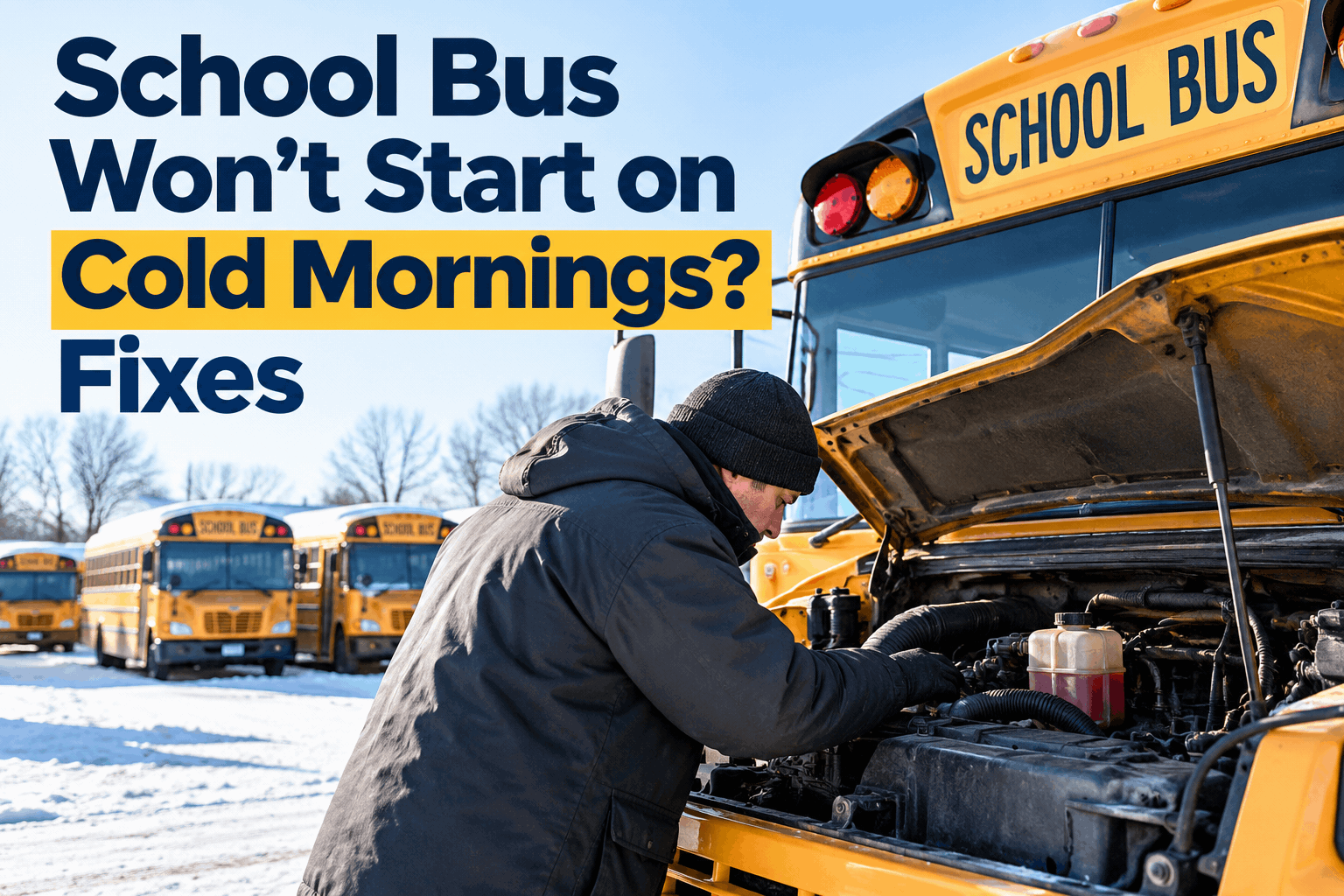
Cold-weather range loss is real — batteries deliver less in freezing temperatures and cabin heat draws from the same pack — and it's the constraint most likely to catch a fleet off guard mid-winter. The practical fix is to match electric buses to routes with real-world winter range headroom, use preconditioning while the bus is still plugged in, and keep a diesel or propane bus assigned to your longest cold-weather routes. For the detail, see our guide on electric bus cold-weather performance.
How long do electric school bus batteries last?
Degradation is gradual — packs lose usable capacity slowly over years, not suddenly, and most are warrantied for a long service window. The real risk isn't a battery dying but range quietly shrinking until a route that fit in year one no longer fits in year five. Tracking state-of-health per bus turns that from a surprise into a planned route reassignment or replacement years ahead.
How do you manage electric school bus reliability?
Treat the problems as a known list, not a mystery. Monitor chargers so an overnight failure pages someone before the morning, track battery state-of-health per bus, schedule EV-specific preventive maintenance, and log every issue against the bus so chronic problems surface. Keep electric and diesel on one system so you see the whole fleet's availability in one place. The buses rarely fail — losing sight of them is what costs routes.